



Victorian Bijouterie
Victorian bijouterie tables and vitrine cabinets offer glass-topped display spaces designed to showcase small treasures.
Victorian Bijouterie
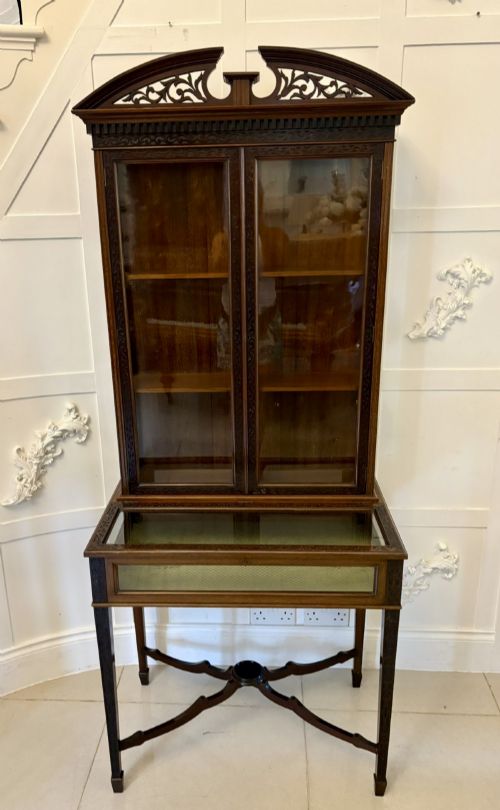
When you search for victorian bijouterie, you encounter display tables, vitrine cabinets, and jewellery boxes intended for showing off small collectibles. The forms range from compact tabletop boxes to large freestanding display cabinets and tables.
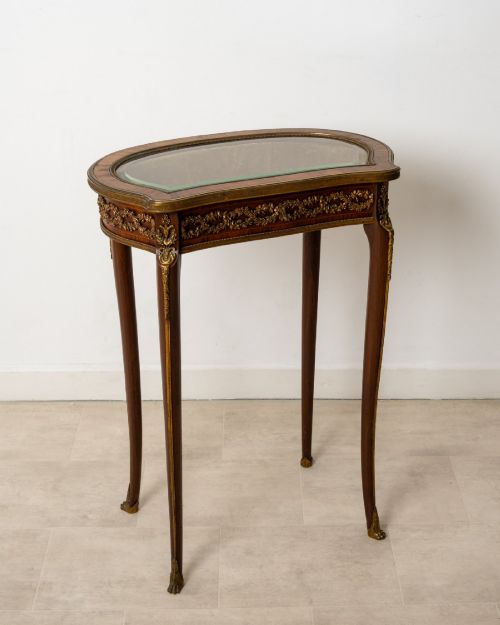
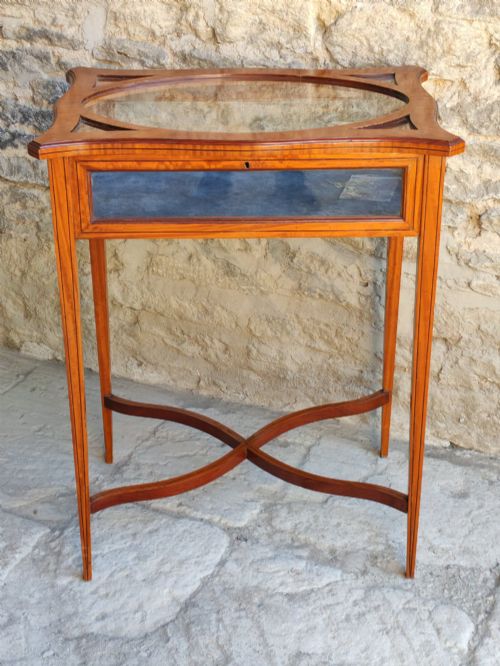
You are most likely to meet mahogany bijouterie tables featuring glass tops and glazed sides, alongside rosewood, satinwood, and kingwood examples dated from the mid to late nineteenth century. French styles like Louis XV revival and English Chippendale revival appear frequently among these furnishings.
How they were made
Cabinet makers utilised solid timbers and veneers including mahogany, rosewood, satinwood, kingwood, and bamboo, often enhanced with marquetry inlay and brass mounts. Ormolu or gilded bronze mounts frequently decorated the corners, legs, and frames of French-influenced pieces.
Interior surfaces were typically lined with velvet or fabric to cushion delicate objects. Glazing panels fitted into hinged lids and doors allowed light to illuminate the interior display well from multiple angles.
Victorian Bijouterie Retail Price Guide 2026
Typical asking prices for victorian bijouterie among the pieces listed under this phrase on Sellingantiques today, from the lower quarter to the upper quarter. They describe what is for sale here now, not the wider market.
Papier mache makes a surprise appearance alongside fine mahogany and bamboo, proving Victorians loved displaying treasures in unexpected places.
What varies in quality
The refinement of the timber selection and the crispness of the carving or marquetry inlay separate standard examples from finer pieces. Superior items display well-matched veneer grains and neatly fitted joints across complex shapes like octagonal or circular frames.
The weight and detail of the ormolu or brass mounts also indicate grade, with heavier, finely chased metalwork appearing on superior tables. High-quality interiors feature clean, well-fitted velvet or fabric linings suited for the presentation of valuable items.
The Victorian Bijouterie Glossary
- Bijouterie table
- A glass-topped table designed specifically for displaying small valuable items such as jewellery and trinkets. These pieces often feature hinged lids allowing access to the lined interior.
- Vitrine
- A glass-fronted or glass-sided cabinet used for exhibiting porcelain, curiosities, or collections. They stand on legs or rest upon bases depending on the period design.
- Ormolu
- Gilded bronze mounts applied to furniture for decorative effect. This technique was widely utilised during the nineteenth century on French revival pieces.
- Marquetry
- Decorative patterns formed by the insertion of different woods, veneers, or shell into a solid wood surface. It frequently decorates tabletops and cabinet fronts.
- Kingwood
- A dense, richly figured timber often used as a veneer in fine cabinet making. Its dark grain provides strong visual contrast.
Victorian Bijouterie: Frequently Asked Questions
What is a bijouterie table?
A bijouterie table is a specialist display furniture piece featuring a glazed top and sides designed to exhibit small collections.
They were utilised in nineteenth-century drawing rooms to showcase personal treasures, medals, and jewellery to guests.
How do I date a piece?
Dating relies on identifying timber choices, construction techniques, and stylistic influences recorded in the piece.
Period markers include characteristic revival styles like French Louis XV or Chippendale, combined with nineteenth-century framing methods.
Where were these placed?
These tables and cabinets stood in principal reception rooms where visitors gathered for conversation.
Their glass surfaces invited close inspection of the small items kept safe beneath the hinged lids.
What materials are used?
Construction utilises structural hardwoods like mahogany and rosewood, often complemented by exotic veneers such as satinwood and kingwood.
Metal elements include brass and ormolu mounts, while interiors contain velvet or fabric cushioning.
How should I clean the glass?
Glass panels require gentle cleaning with standard glass cleaner applied to a cloth rather than sprayed directly.
Care must be taken to prevent liquid from seeping into the surrounding wooden frames or fabric linings.