
Victorian Bar Link Chain
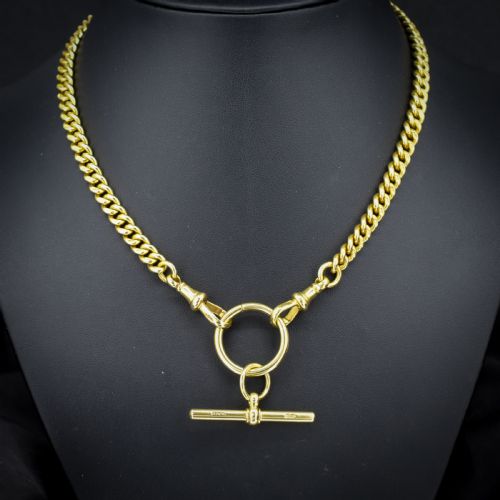
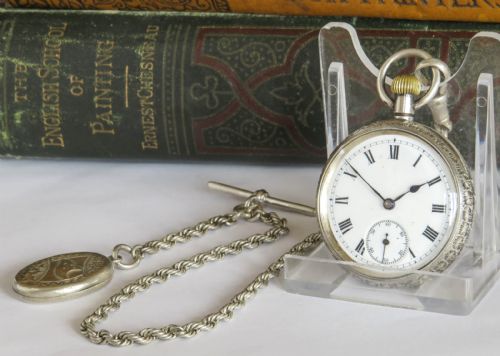
A victorian bar link chain brings together metalwork and utility, serving as a dependable pocket watch tether or a substantial necklace.
Victorian Bar Link Chain
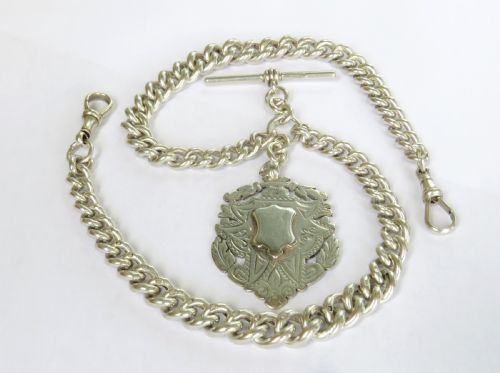
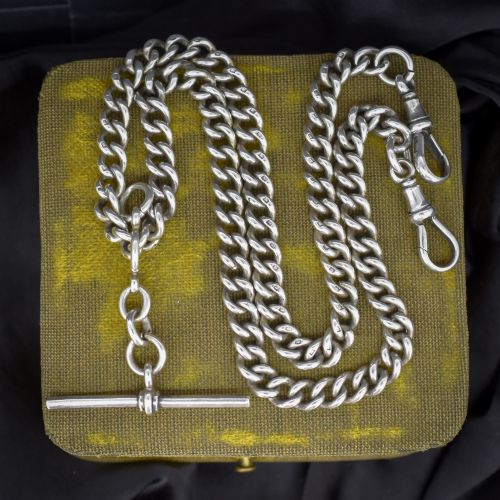
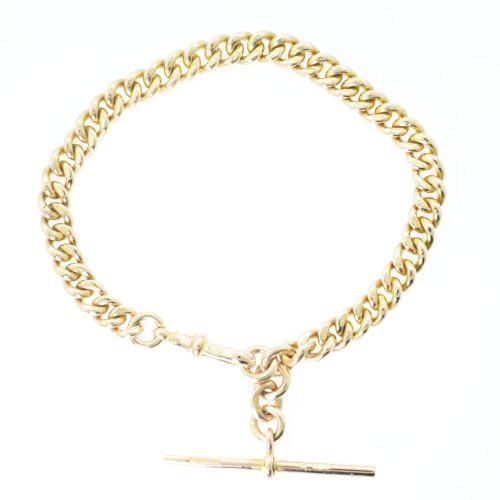
A victorian bar link chain is a specific style of antique jewellery designed primarily to secure pocket watches to waistcoats through the inclusion of a T-bar and dog clips. These items originate predominantly from the nineteenth century and the early twentieth century, spanning periods from the 1880s through to the 1920s.
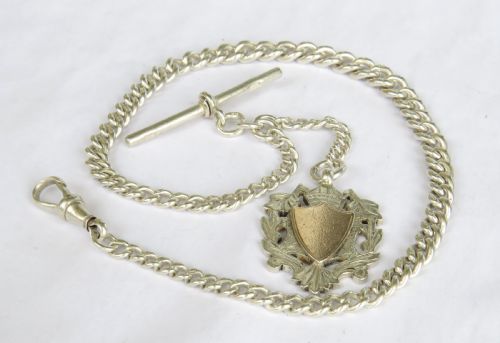
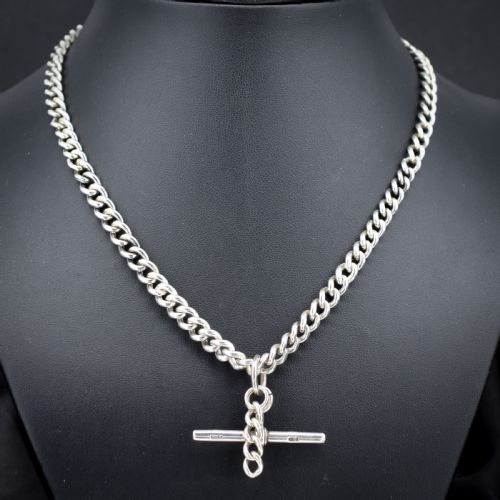
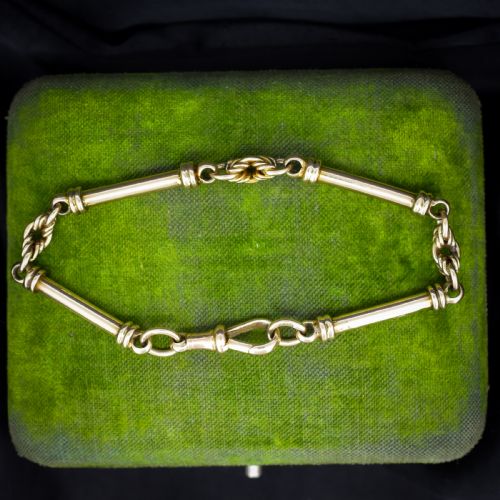
The versions most commonly met on this page combine structural metal links with elongated bar components, frequently configured as albert chains or repurposed as necklaces and bracelets. They appear in sterling silver, various purities of gold including nine carat and eighteen carat, alongside rolled gold variants.
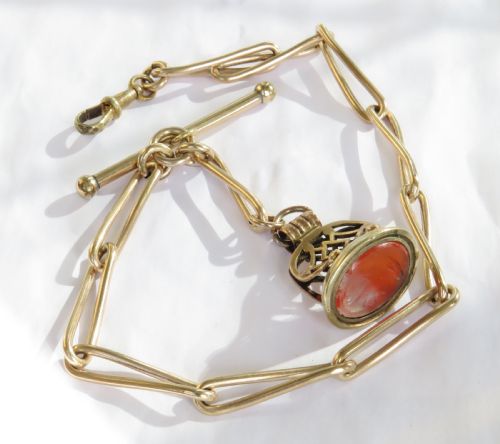
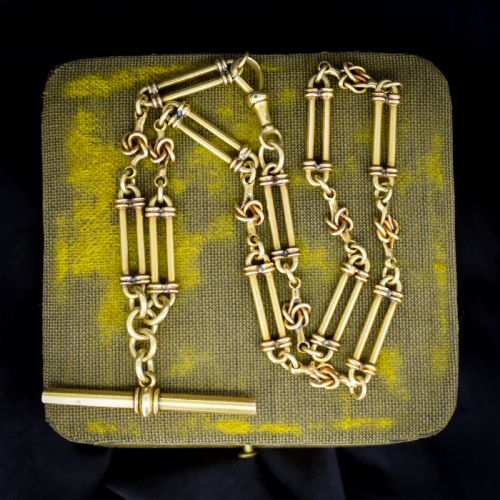
Many examples retain original functional appendages such as swivel fobs, bloodstone accents, carnelian drops, and keys. Their construction ranges from uniform curb links to fancy formations incorporating love knots and star motifs.
Materials and Construction
Silversmiths and goldsmiths fashioned these chains from solid sterling silver or yellow and rose gold, while rolled gold provided an accessible alternative using a thin layer of gold bonded to a base metal core. Individual links were hand-assembled and soldered, creating flexible strands capable of withstanding daily wear.
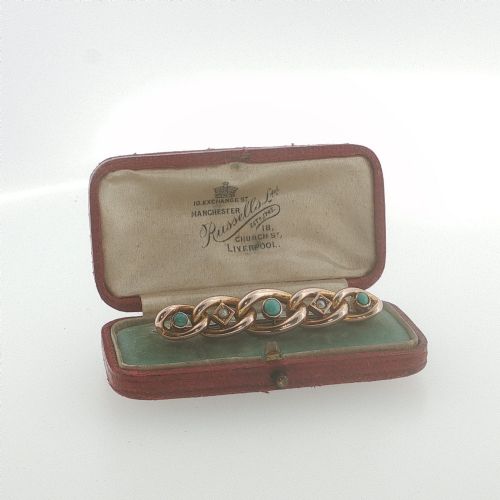
Components such as tubular bars, dog clips, and T-bars were cast or drawn separately before being joined to the main chain body using jump rings. Gemstones like turquoise, seed pearls, carnelian, and bloodstone were bezel-set or mounted into accompanying fobs to complete the ensemble.
The listings span the late nineteenth century through to the 1920s, featuring sterling silver, nine carat rose gold, and rolled gold.
Markers of Distinction
The overall weight and gauge of the metal dictate the presence and durability of a piece, separating hollow or lightweight rolled gold items from heavy, solid silver and gold albert chains. Substantial gram weights indicate higher intrinsic value and robust manufacturing.
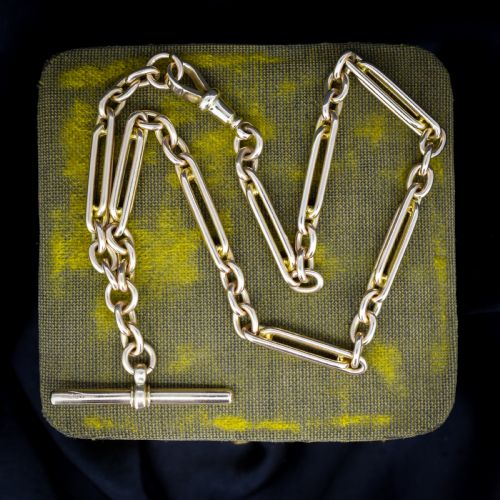
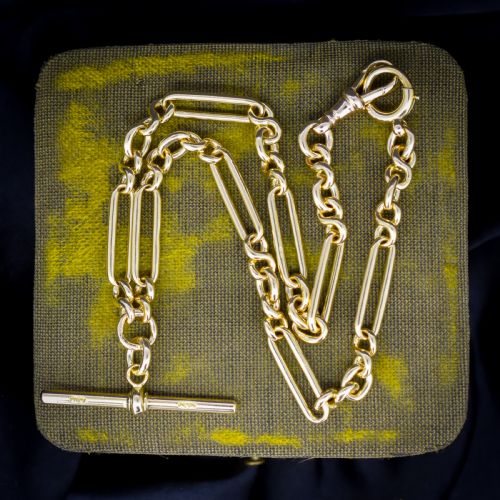
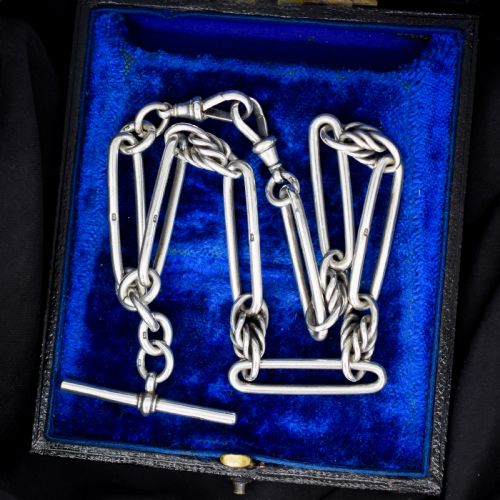
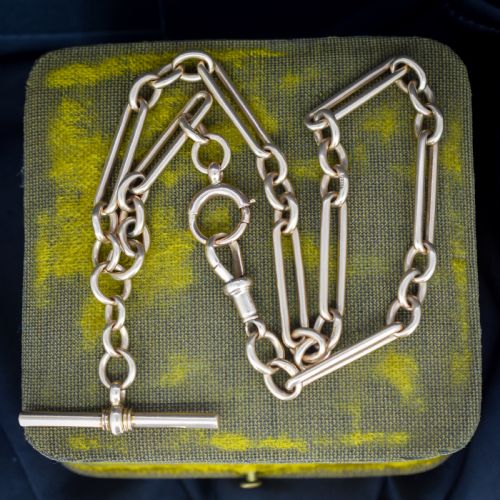
Completeness and originality drive distinction, particularly the survival of matching hallmarks, original swivel dog clips, functional T-bars, and period-correct fobs. Intricate link variations, such as trombone patterns paired with love knots, reflect superior craftsmanship compared to simple uniform designs.
The Victorian Bar Link Chain Glossary
- Albert chain
- A type of watch chain designed to secure a pocket watch in a waistcoat pocket, typically featuring a T-bar at one end and a dog clip at the other.
- T-bar
- A short transverse bar attached to the centre of a watch chain, used to anchor the chain through a buttonhole on a garment.
- Dog clip
- A spring-loaded swivel clasp attached to the end of a chain for securing pocket watches, fobs, or charms.
- Trombone link
- An elongated rectangular metal link resembling the slide of a trombone, often alternated with smaller connecting rings.
- Fob
- A small ornament, seal, or medallion attached to a watch chain for decorative or practical use.
Victorian Bar Link Chain: Frequently Asked Questions
How do I wear a victorian bar link chain today?
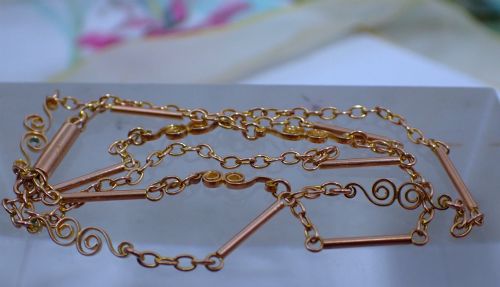
These pieces function readily as contemporary necklaces or wrap bracelets, depending on their original length and proportions.
Many owners attach pendants or keep the original dog clips and T-bars as part of the decorative presentation.
How can I date a silver watch chain?
British silver pieces frequently carry hallmarks stamped directly onto the individual links or the T-bar, indicating the assay office, standard of silver, and date letter.
Comparing the specific link style and accompanying fobs also helps narrow down the period of manufacture.
Were these chains only used for pocket watches?
While originally manufactured to secure pocket watches and their accessories, many were also worn as substantial neck chains or long guard chains.
Modern styling frequently repurposes them as standalone necklaces or multi-wrap bracelets.