




Victorian Bamboo Shelf
A victorian bamboo shelf brings lightness and exotic pattern into a room through natural cane frames and panels.
Victorian Bamboo Shelf
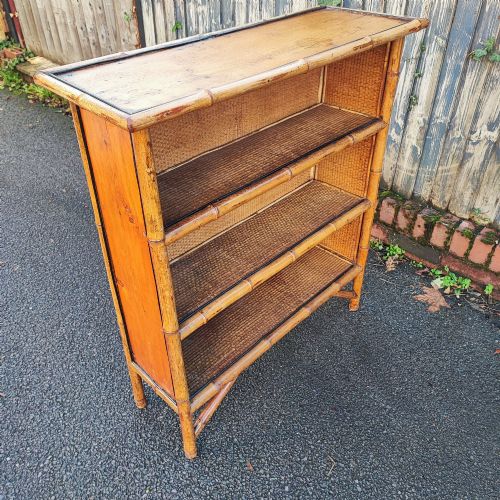
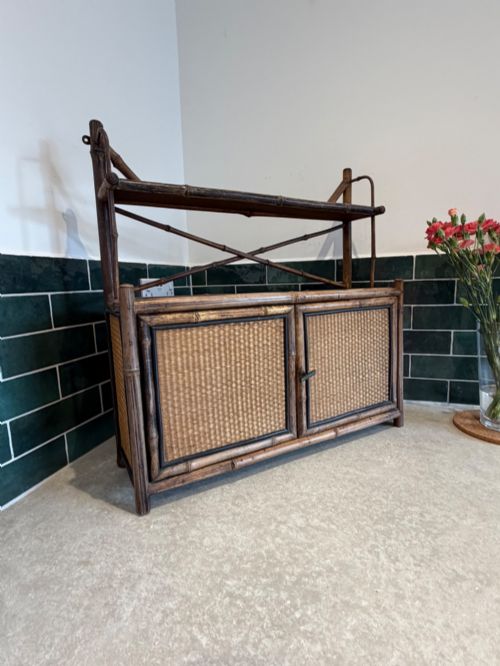
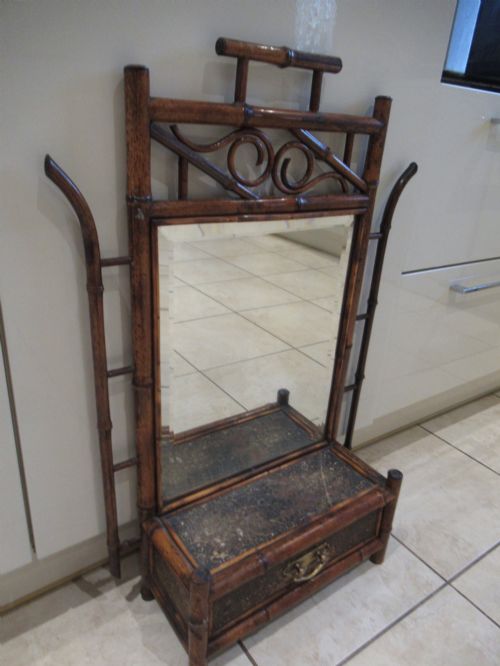
A victorian bamboo shelf combines natural cane supports with wooden or lacquer surfaces to create open display units for small objects and books. These pieces reflect late nineteenth-century interest in distant lands through upright étagères, wall-hung mirrors with brackets, and corner cabinets.
The most common examples on this page date from the 1880s and 1890s, capturing the height of the Aesthetic Movement and Victorian Chinoiserie styles. Makers built these freestanding or wall-mounted frames to hold ornaments, ceramics, and daily necessities without crowding the floor space.
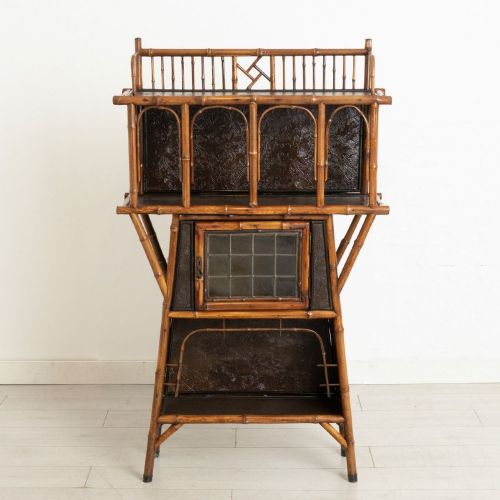
Alongside traditional shelving units, buyers encounter related bamboo occasional tables and display cabinets that incorporate glass panels or leather tops. Each form utilises the flexible nature of cane to construct sturdy yet visually light furniture for sitting rooms and parlours.
Materials and construction
Makers constructed the primary frames of these pieces using flexible natural bamboo poles, joined with wooden pegs and internal dowels to maintain structural stability. This cane framework is frequently paired with contrasting lacquer panels, glass doors, or embossed paper inserts.
Decorative surfaces often display Japanese-inspired motifs through lacquer work or decoupage paper applied directly to the wood and bamboo panels. Brass hardware and leather inserts appear on tables and cabinets, adding durability and varied texture to the organic cane structure.
Victorian Bamboo Shelf Retail Price Guide 2026
Typical asking prices for victorian bamboo shelf among the pieces listed under this phrase on Sellingantiques today, from the lower quarter to the upper quarter. They describe what is for sale here now, not the wider market.
Makers occasionally decorated table tops with paper decoupage, transforming simple cane stands into colourful conversation pieces.
Assessing quality in bamboo furniture
Quality rests upon the tightness of the joinery and the rigidity of the bamboo frame, as cane naturally shrinks and loosens over time. Superior pieces maintain a solid stance without excessive wobble in the upright supports.
The finish of the lacquer and the preservation of paper or glass inserts distinguish standard utility items from finer Aesthetic Movement commissions. Original surfaces retain their intended sheen without heavy modern repainting or missing structural sections.
Leonard Wyburd·Liberty and Co
The Victorian Bamboo Shelf Glossary
- Etagere
- A set of open shelves for displaying small objects and ornaments. This tiered furniture form became popular during the nineteenth century for showcasing decorative ceramics.
- Aesthetic Movement
- A late nineteenth-century design style emphasising visual beauty over narrative meaning. Pieces from this period often incorporate Japanese motifs and asymmetrical arrangements.
- Chinoiserie
- European artistic interpretation of Chinese decorative styles and motifs. This aesthetic appears on lacquer panels and decorative surfaces within bamboo furniture.
- Decoupage
- The art of decorating a surface by applying cut-out paper pieces. Victorian makers used this technique alongside lacquer to ornament table tops and panels.
- Occasional table
- A small, movable table designed for specific, intermittent use in a room. These items complement larger shelving units and cabinets in period interiors.
Victorian Bamboo Shelf: Frequently Asked Questions
How do I clean bamboo furniture safely?
Dust these pieces regularly with a soft, dry brush to prevent dirt accumulation within the natural grooves of the cane.
Avoid using liquid polishes or soaking the material, as excess moisture can weaken the internal joints and damage paper or lacquer inserts.
Can a wall-hung shelf hold heavy books?
These wall-mounted units were originally designed to display light decorative objects, ceramics, and small curiosities rather than heavy volumes.
Loading them beyond their intended capacity risks straining the bamboo frame and loosening the wall fixings.
How do I date a piece of bamboo furniture?
Dating relies on stylistic clues such as Aesthetic Movement motifs, construction methods, and materials like embossed paper or early lacquer.
Most surviving pieces date from the final decades of the nineteenth century through the early twentieth century.