

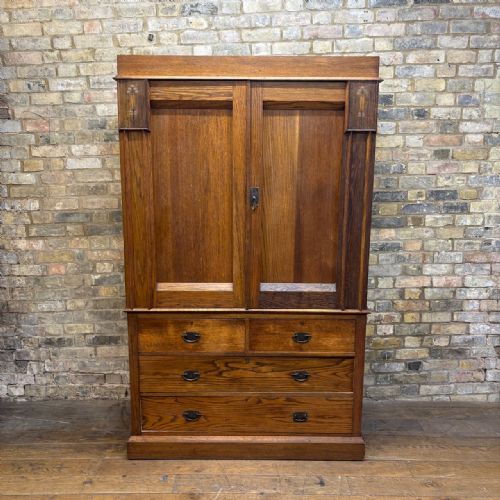
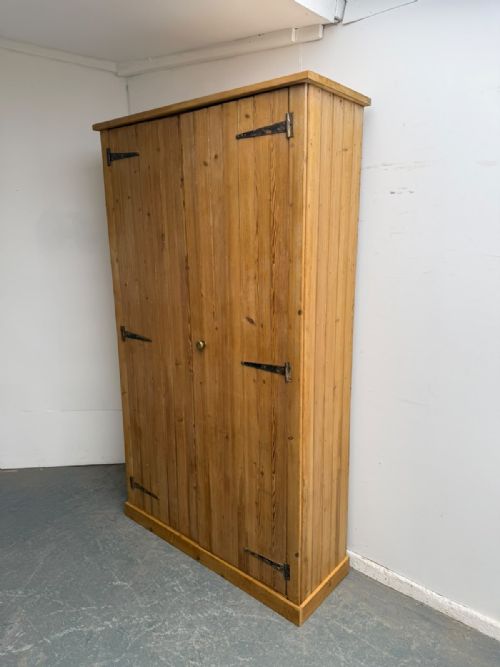
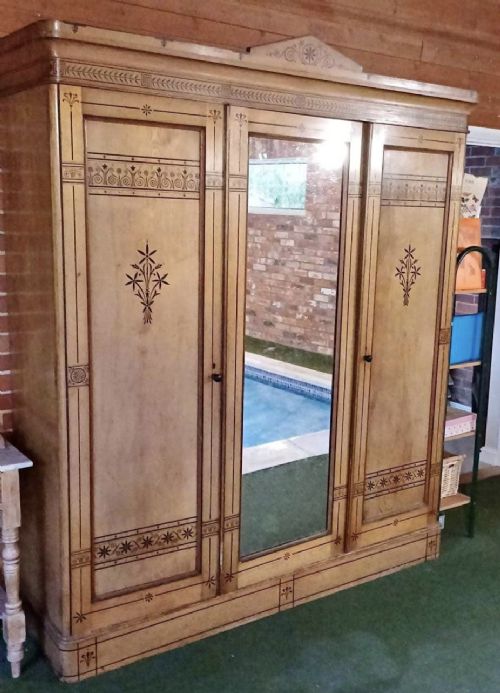
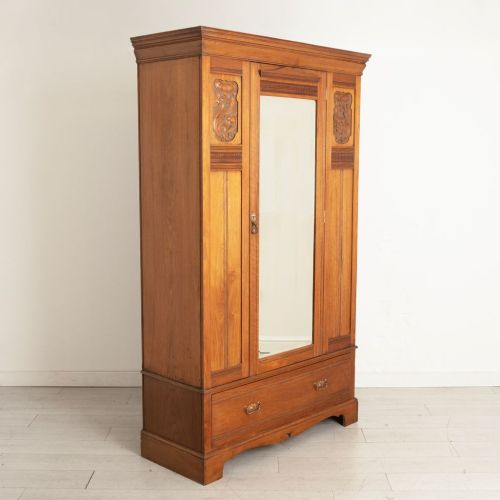
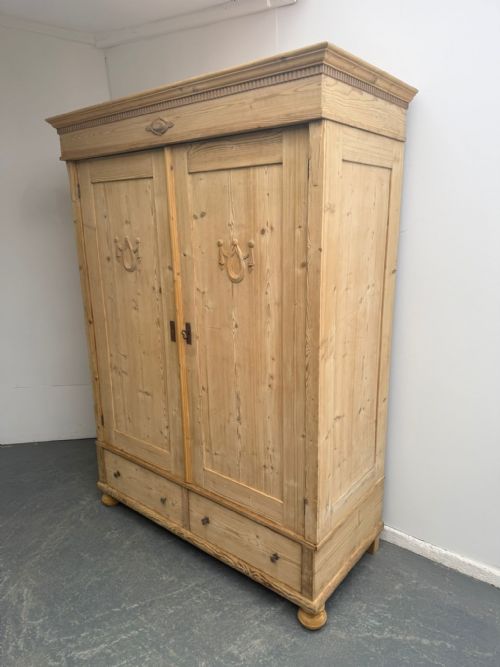
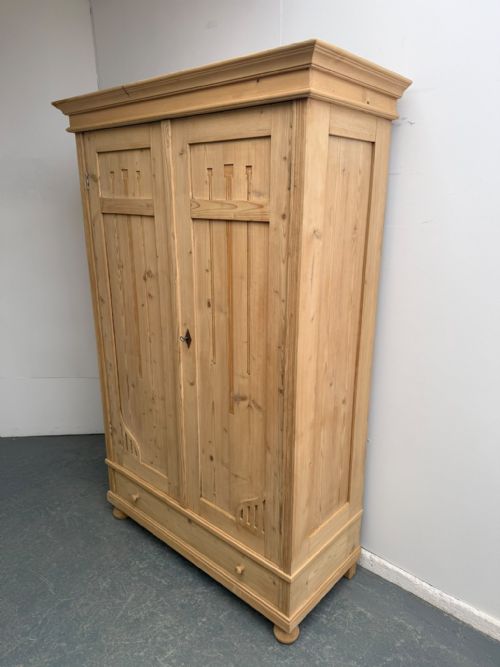


Victorian Arts and Crafts Wardrobe
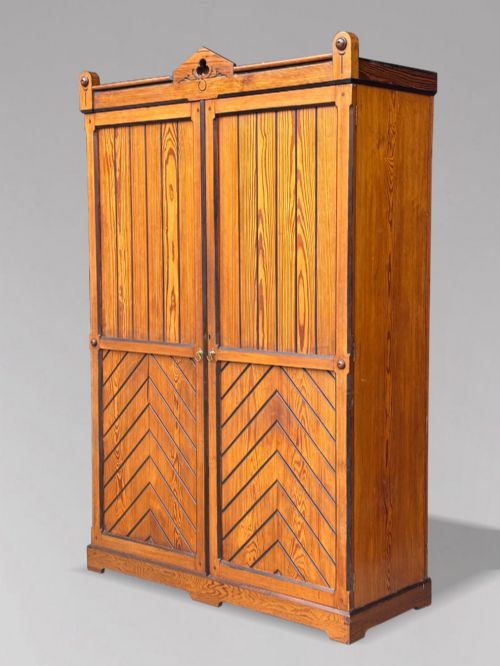
A victorian arts and crafts wardrobe brings honest timber and hand-beaten metal into the bedroom, offering substantial storage with genuine architectural character.
Victorian Arts and Crafts Wardrobe
A victorian arts and crafts wardrobe represents a distinct shift away from heavy, over-ornamented Victorian furniture towards simpler lines and visible construction. Pieces on this page span from the late nineteenth century through to the early twentieth century, capturing the evolution of the movement.
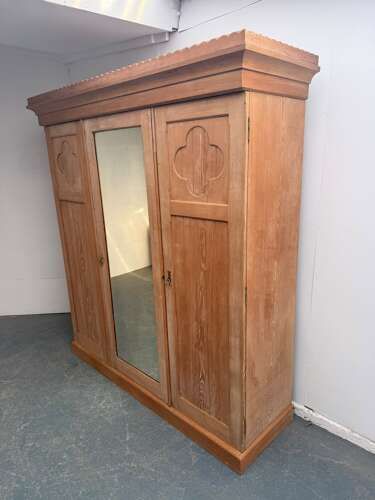
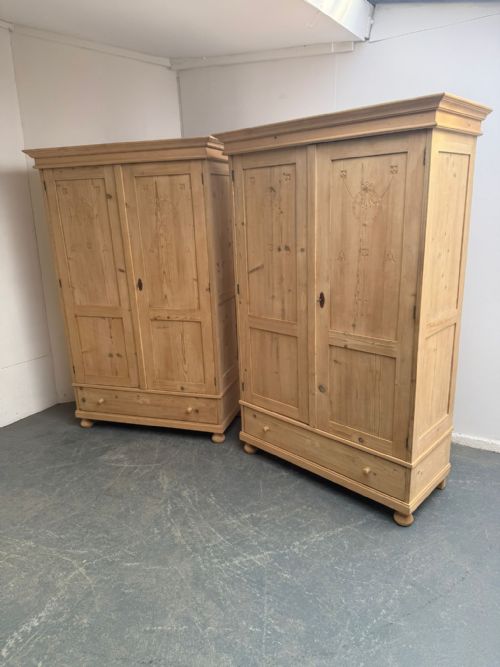
Buyers encounter a variety of formats ranging from single door hall cupboards to large triple wardrobes and compactum configurations. Materials predominantly feature pine, ash, and walnut, reflecting the movement's preference for both humble domestic woods and richer timbers.
Origins include Scottish workshops as well as renowned firms such as Shapland and Petter, showing regional variations in construction and decorative carving. Pieces often appear as part of larger bedroom suites or as standalone knockdown wardrobes designed for practical assembly.
How they were made
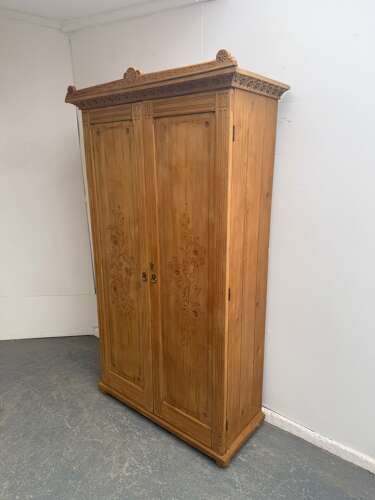
Makers utilised solid timbers like pine, ash, and American walnut, often finished with a simple wax to highlight the natural grain rather than heavy varnish. Construction techniques frequently included knockdown frames to allow large pieces to be transported and assembled in rooms with restricted access.
Hardware played a defining structural and decorative role, featuring brass hinges and handles that were often hand-beaten or patinated. Carved detailing was kept restrained, focusing on geometric panels, stylized plant motifs, or linear mouldings rather than complex classical ornamentation.
Victorian Arts and Crafts Wardrobe Retail Price Guide 2026
Typical asking prices for victorian arts and crafts wardrobe among the pieces listed under this phrase on Sellingantiques today, from the lower quarter to the upper quarter. They describe what is for sale here now, not the wider market.
Many pine wardrobes carry the ghosts of long-gone bedroom scents, holding faint traces of lavender and beeswax after a century of service.
What varies in quality
The distinction between standard domestic pieces and the finest examples rests on timber selection and the ambition of the design. Workshops like Shapland and Petter introduced refined proportions and sophisticated use of walnut, elevating the status of the furniture.
Quality also shows in the retention of original brass hardware and the crispness of any hand-carved panels. Well-executed knockdown mechanisms and sound internal fittings demonstrate superior joinery that ensures the wardrobe remains stable through repeated assembly.
Shapland and Petter
The Victorian Arts and Crafts Wardrobe Glossary
- Compactum
- A multi-functional wardrobe featuring a combination of hanging space, drawers, and linen shelves within a single unit. This layout maximises storage efficiency in smaller Victorian bedrooms.
- Knockdown wardrobe
- A large piece of furniture constructed so that the cornices, sides, and base detach from the main body. This design allowed bulky bedroom furniture to be moved easily between rooms or properties.
- Waxed pine
- A soft timber finish treated with natural wax to protect the wood while maintaining a matte appearance. It allows the grain and knots of the pine to show clearly.
- American walnut
- A rich, durable timber utilised by skilled makers for fine cabinet work. Its deep colour and smooth grain provided a contrast to the lighter domestic woods.
Victorian Arts and Crafts Wardrobe: Frequently Asked Questions
What is a compactum wardrobe?
A compactum is a specialised wardrobe that combines hanging space with internal drawers, shelves, and sometimes shoe racks in one unit. It was designed to provide complete bedroom storage without needing additional chests of drawers.
These pieces offer clever internal configurations that suit modern living where floor space is at a premium.
How do I assemble a knockdown wardrobe?
Knockdown wardrobes use internal bolts, peg joints, or slot-in panels designed to lock the cornice, base, and sides together without permanent glue. You typically assemble the base first, stand the side panels, slot in the backboards, and secure the top cornice last.
Having two people makes the assembly much safer and ensures the frame squares up correctly before tightening.
Are these wardrobes suitable for modern hangers?
Many older wardrobes feature shallow internal depths or wooden hanging pegs rather than modern metal rails. You may need to check the interior depth from front to back to ensure standard coat hangers fit comfortably with the doors closed.
Some pieces allow for the retrofitting of a slim hanging rail if the original wooden peg rail is insufficient.
How do I care for waxed pine furniture?
Waxed pine benefits from occasional re-waxing using a traditional beeswax polish to nourish the timber and maintain its moisture barrier. Avoid placing these wardrobes in direct sunlight or against damp exterior walls to prevent the wood from warping.
Dust regularly with a soft, dry cloth rather than using silicone-based sprays that can build up on the matte surface.