
Victorian Armoire with Drawers
A victorian armoire with drawers offers substantial bedroom storage in timber, combining hanging space with integrated drawer capacity.
Victorian Armoire with Drawers
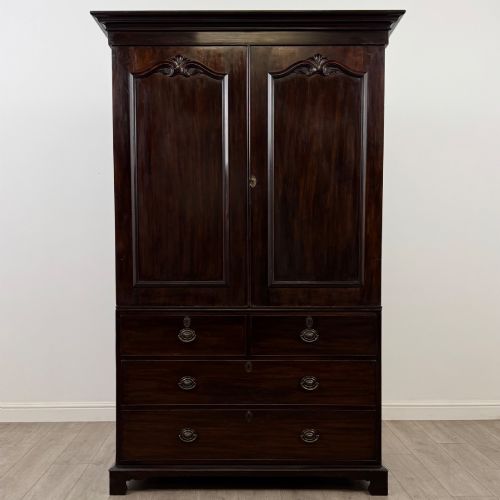
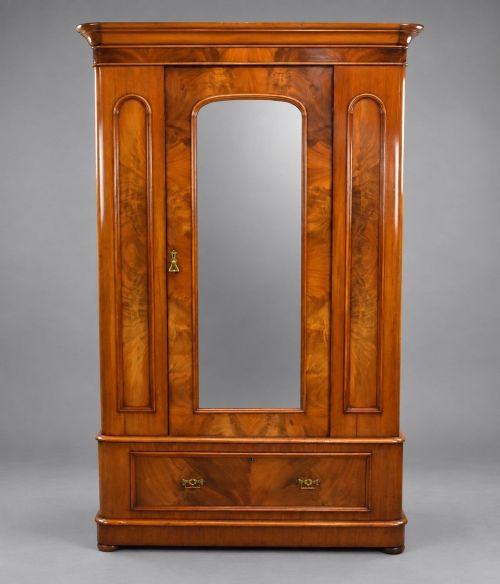
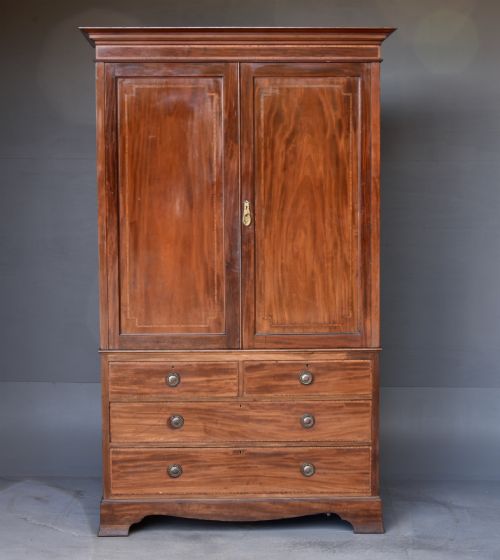
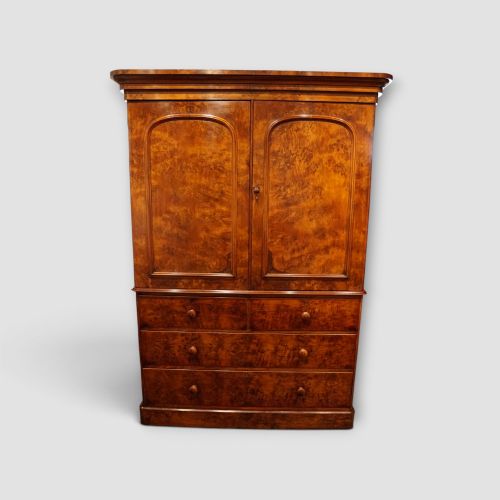
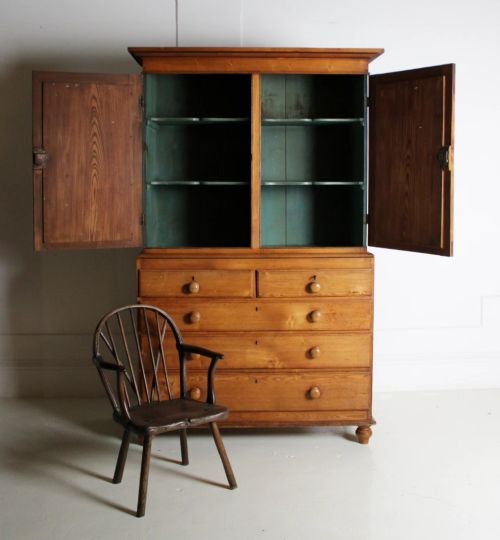
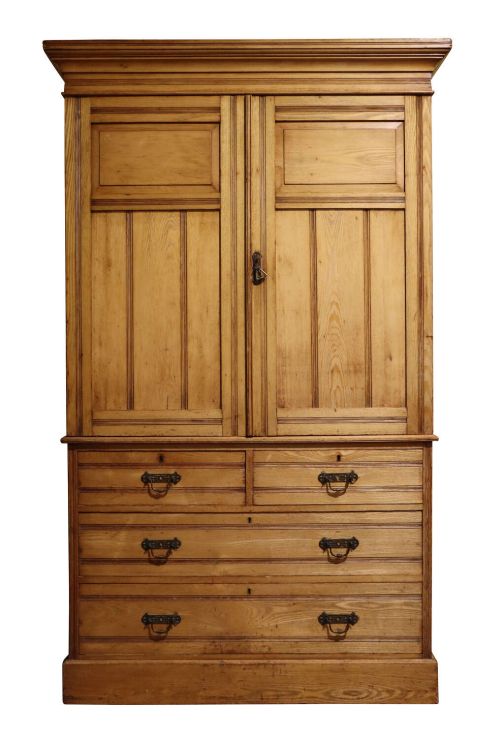
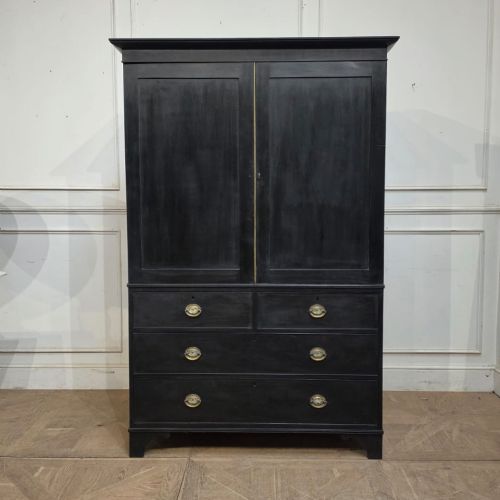
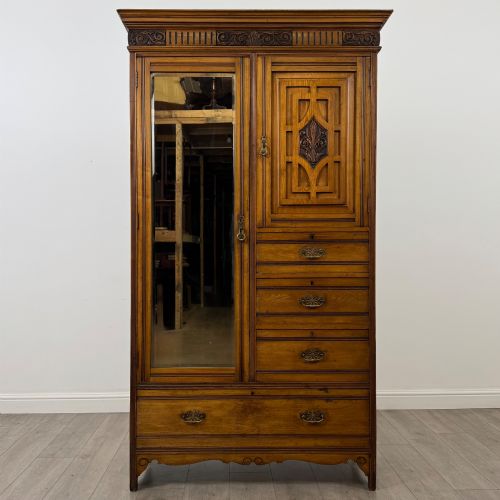
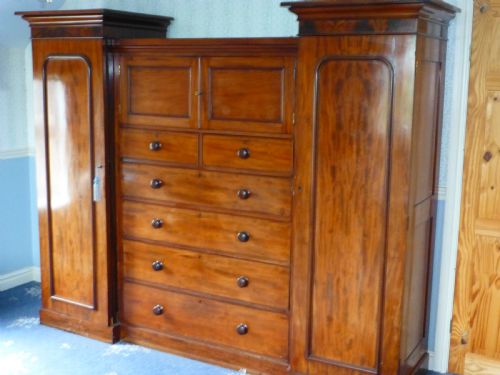
A victorian armoire with drawers combines vertical wardrobe storage with horizontal drawer capacity, appearing in forms such as linen presses, compactums, and combination wardrobes. These items serve as primary bedroom furniture designed for garments and linen.
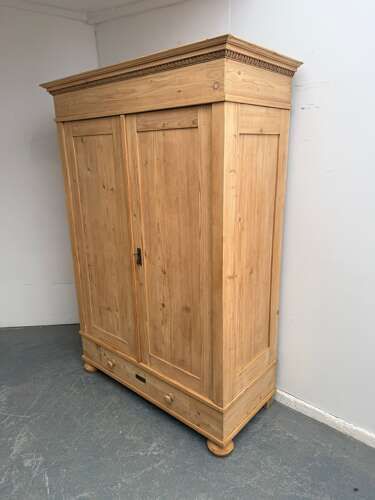
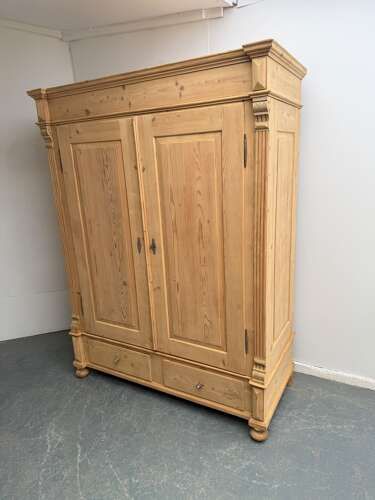
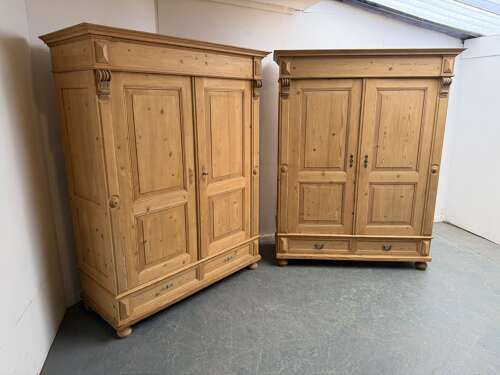
Pine and mahogany dominate the offerings, alongside burr walnut, ash, pitch pine, and satin walnut. Pieces frequently arrive as knockdown structures that dismantle for transport, or as substantial single-piece cabinets.
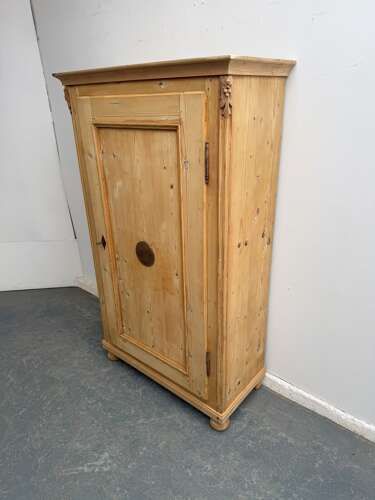
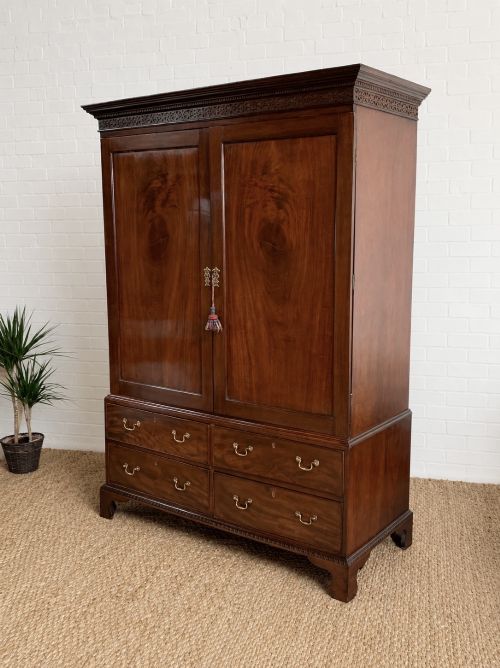
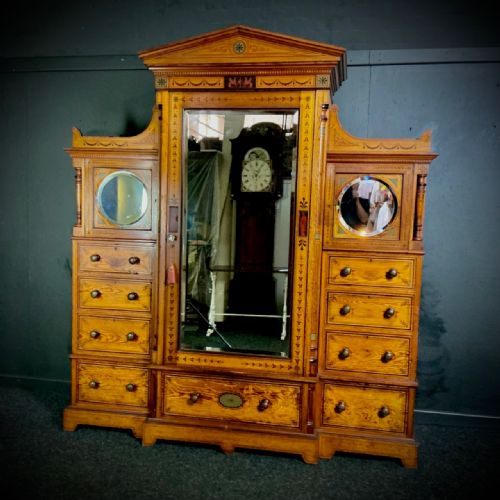
Examples range from utilitarian painted pine cupboards to grand mahogany and burr walnut cabinets featuring architectural cornices and blind fretwork. Buyers encounter rustic farmhouse pine alongside formal 19th-century designs.
Materials and construction methods
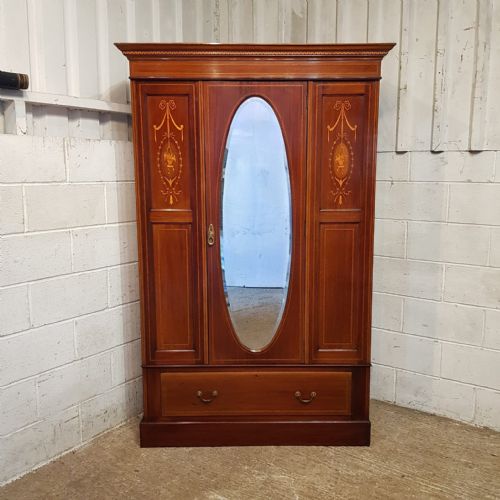
Cabinet makers utilised solid timbers such as mahogany, ash, and pine, often applying figured veneers like burr walnut and flame mahogany to primary surfaces. Brass and iron hardware, including locks and handles, secure the doors and drawers.
Knockdown construction allows large wardrobes to separate into modular sections, utilising pegged joints and screws for assembly in domestic spaces. Glass appears in mirror doors, while iron and brass mountings reinforce internal hanging rails and cornices.
Listings feature woods spanning pine, mahogany, burr walnut, ash, pitch pine, and satin walnut.
Distinctions in build and finish
Finer items display carefully selected wood veneers, such as burr walnut or flame mahogany, matched symmetrically across door panels. Superior examples incorporate detailed craftsmanship like blind fretwork cornices and architectural column details.
Simpler pieces rely on solid pine or ash, intended for waxing or painting, where quality is evident in the timber thickness and the smooth operation of internal drawers.
maples & co·Gillows
The Victorian Armoire with Drawers Glossary
- Compactum
- A multi-compartment wardrobe combining hanging space, drawers, and shelving within a single cabinetry unit. These pieces provide comprehensive bedroom storage.
- Linen Press
- A tall storage cupboard featuring upper sliding trays or shelves above a chest of lower drawers. They evolved for storing folded textiles.
- Knockdown
- A piece of furniture engineered to dismantle into modular sections for ease of transport and installation. This construction method is common in large Victorian pine wardrobes.
- Blind Fretwork
- Carved ornamental woodwork applied to a flat surface in an openwork pattern without piercing through to the background. It frequently decorates the cornices of 19th-century mahogany presses.
- Sentry Box
- A narrow wardrobe style designed for single rooms or compact spaces, offering vertical hanging capacity. These units economise on floor space.
Victorian Armoire with Drawers: Frequently Asked Questions
How do I assemble a knockdown wardrobe?
Knockdown wardrobes dismantle into separate sections, including the cornice, base, sides, and doors, to ease transportation through narrow doorways.
Assembly typically involves interlocking joints, wooden pegs, or internal bolts that secure the frame together before the back panels and doors are fitted.
What is the difference between a linen press and a wardrobe?
A linen press traditionally houses sliding shelves or trays in the upper section for folded textiles, positioned above a chest of drawers at the base.
Wardrobes prioritise vertical hanging space for garments, though many combination pieces integrate both shelving and drawers alongside hanging areas.
Are these wardrobes suitable for modern bedrooms?
These cabinets provide deep storage capacities that easily accommodate modern clothing, combining hanging rails with integrated drawer space.
Buyers should measure ceiling heights and floor space carefully, as many Victorian pieces are taller and wider than standard contemporary wardrobes.
How do I care for waxed pine furniture?
Waxed pine surfaces benefit from occasional applications of beeswax to nourish the timber and maintain a soft, protective sheen against household moisture.
Avoid placing these pieces in direct sunlight or near heat sources to prevent the solid wood from drying out or splitting.