


Victorian Amethyst Pendant
A victorian amethyst pendant carries the deep purple warmth of nineteenth-century design, suspended from gold chains to sit at the collarbone.
Victorian Amethyst Pendant
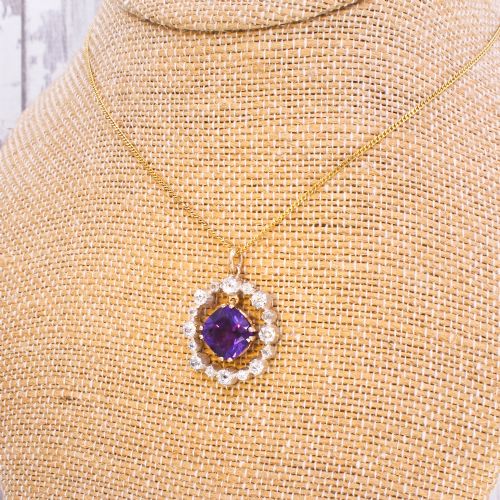
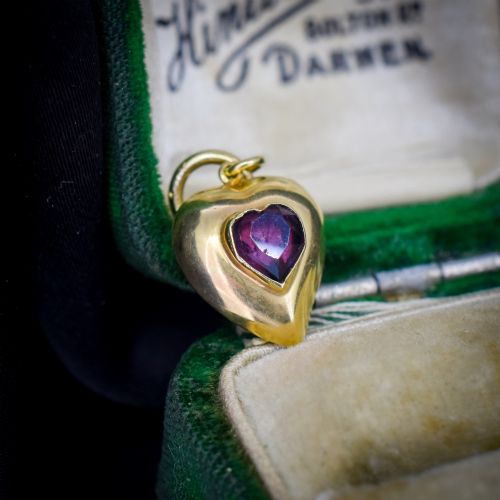
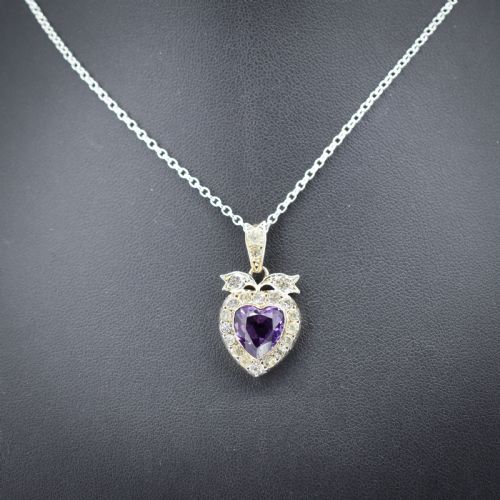
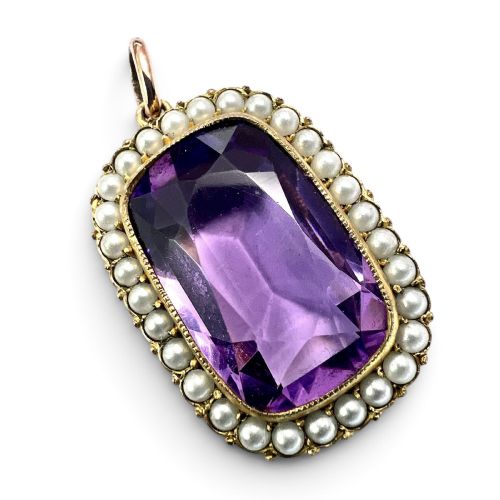
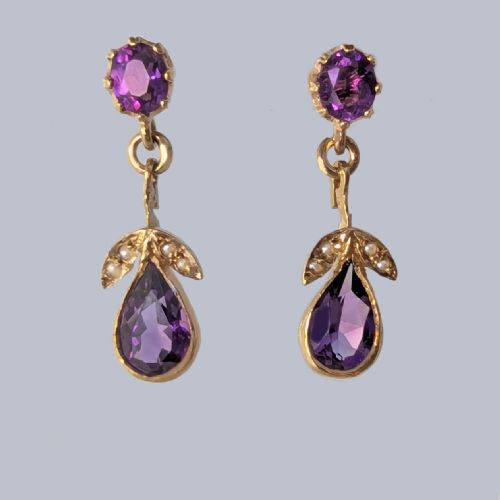
When you search for a victorian amethyst pendant, you enter a field defined by nineteenth-century goldsmithing and rich purple quartz. The examples on this page are dominated by authentic Victorian pieces alongside Edwardian interpretations and later revivals, most often taking the form of clusters, hearts, or foliate drops.
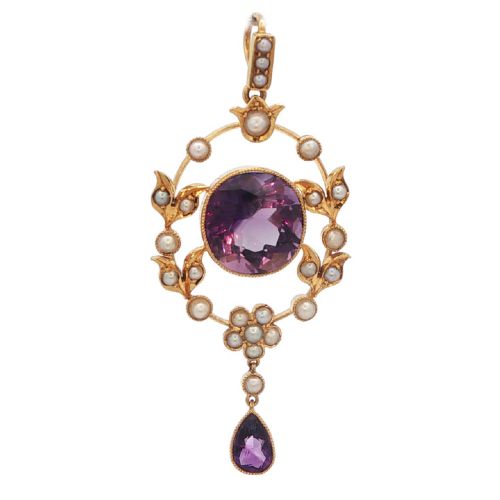
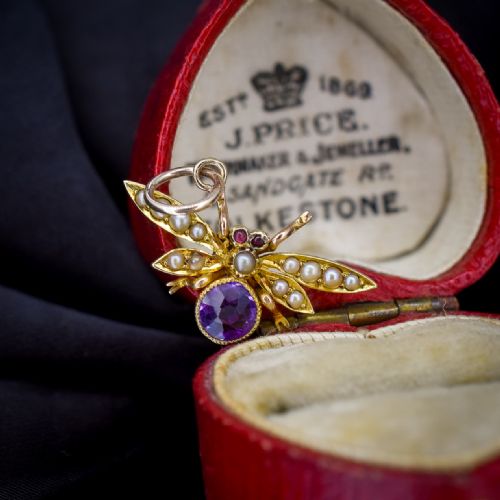
The core of the inventory centres on gold settings holding substantial purple stones, frequently paired with seed pearls in clusters or halo formations. You will find teardrop cuts, heart shapes, and occasional pictorial motifs like insects or crosses alongside standard pendant drops.
Materials and Construction
Goldsmiths of the period relied on nine-carat, fifteen-carat, and eighteen-carat yellow gold to construct the mounts and bezels that encase the quartz. These gold settings are frequently accented with delicate seed pearls held by tiny claw or collet settings, creating textural contrast against the smooth violet stones.
Stones are typically faceted in deep step or oval cuts to catch the light, though cabochon forms also appear in archive records. Silver is occasionally utilised alongside gold, particularly in pieces incorporating old-cut diamonds or paste substitutes designed to mimic higher diamond grades.
Victorian Amethyst Pendant Retail Price Guide 2026
Typical asking prices for victorian amethyst pendant among the pieces listed under this phrase on Sellingantiques today, from the lower quarter to the upper quarter. They describe what is for sale here now, not the wider market.
Listings feature yellow gold ranging from nine to eighteen carats, alongside platinum, silver, and natural pearls.
Judging Quality and Execution
The distinction between ordinary and exceptional pieces lies in the depth of colour in the quartz and the precision of the gold wirework. Superior items exhibit a saturated, even violet hue without brownish zones, paired with intricate foliate motifs or hand-twisted metal filigree.
Proportion and stone weight heavily influence desirability, with larger central amethysts commanding greater presence when securely held in heavy-gauge gold. Original boxes and intact chains further elevate a piece, marking items that were treasured and preserved as complete suites.
Hamilton & Co
The Victorian Amethyst Pendant Glossary
- Seed pearl
- A tiny, naturally occurring pearl, often fractionally drilled and threaded onto fine wire to outline floral or geometric motifs in nineteenth-century clusters.
- Paste
- Hand-cut and polished lead glass utilised as a gemstone substitute in antique jewellery to replicate the brilliance of diamonds or coloured stones.
- Foliate
- Ornamentation modelled on leaves, vines, and plant tendrils, highly characteristic of nineteenth-century organic jewellery design.
- Collet
- A flat band of metal that holds a gemstone in place by being pushed over its girdle, common in early settings before standard claw prongs took over.
- Cabochon
- A gemstone shaped and polished with a smooth, rounded domed surface rather than faceted edges.
Victorian Amethyst Pendant: Frequently Asked Questions
How do I care for antique amethyst?
Amethyst is a durable quartz, but prolonged exposure to direct sunlight can fade its purple colour over time. Clean your pendant gently with warm soapy water and a soft brush, avoiding harsh ultrasonic cleaners that might dislodge delicate seed pearls.
Store the piece away from other hard jewellery to prevent scratching the gold surface or the facets of the stone. If your pendant includes seed pearls, ensure they are kept dry and away from chemical perfumes.
How can I tell Victorian from Edwardian pieces?
Victorian pieces often feature heavier gold weights, deeper rose or yellow hues, and romantic motifs such as hearts, crosses, and mourning compartments. The stones are typically secured in closed-back or heavy collet settings that emphasise warmth and substance.
Edwardian designs shifted towards lighter, more ethereal platinum and yellow gold frameworks, favouring garland styles and airier lace-like filigree. Amethysts in Edwardian work are frequently paired with diamonds or seed pearls in balanced, symmetrical halo arrangements.
What is Rose de France amethyst?
Rose de France is a trade term used to describe a specific pale lilac variety of amethyst. It gained significant popularity during the later nineteenth and early twentieth centuries for its soft, pastel tone.
In jewellery, these lighter stones were often set in yellow gold or paired with seed pearls to create a gentle, understated aesthetic. They offer a distinct visual contrast to the deep, saturated purple amethysts found in earlier Victorian pieces.