



Venice Landscape Canvas
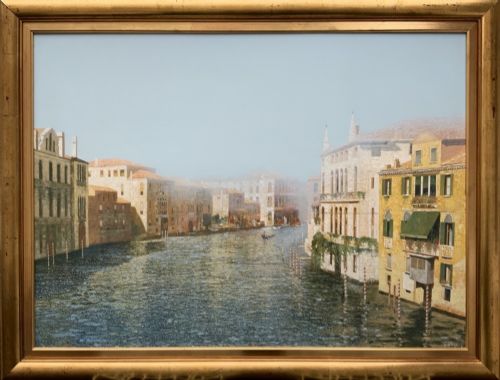
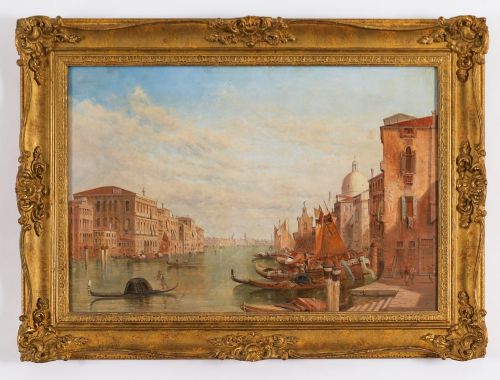
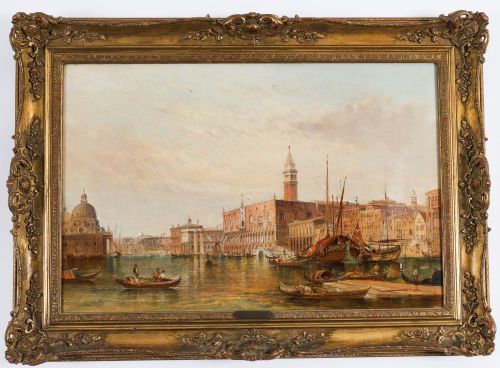
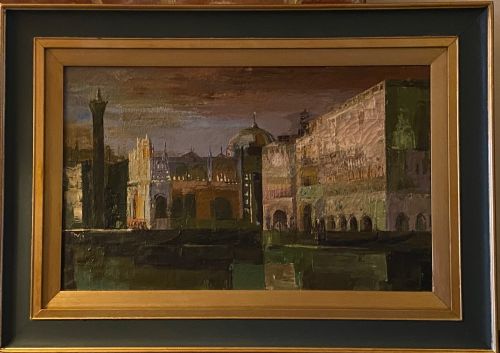
Venice landscape canvas works capture the atmosphere of the canals and lagoons through oil paint applied to woven cloth.
Venice Landscape Canvas
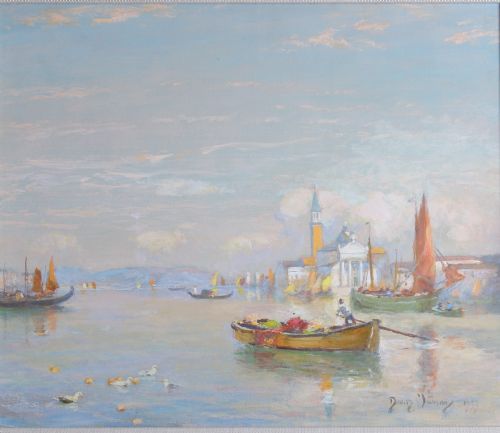
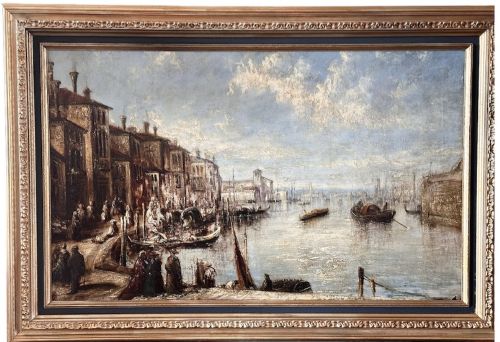
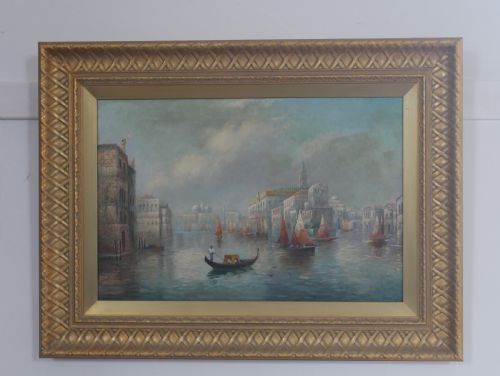
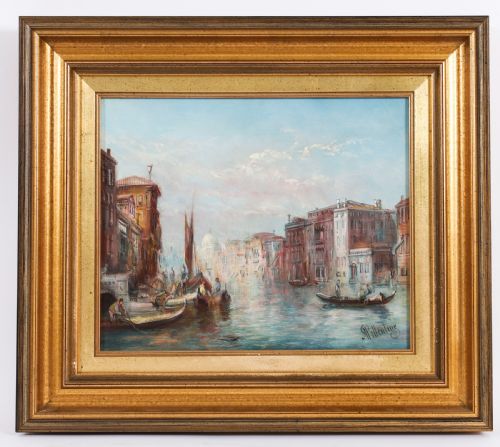
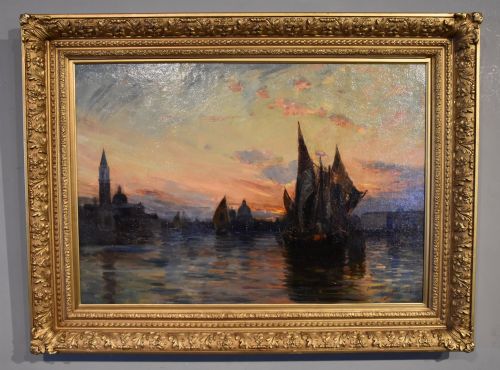
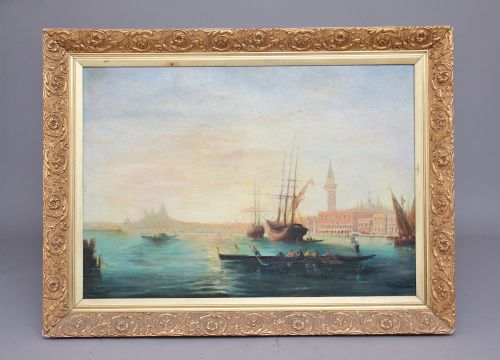
A Venice landscape canvas brings the architecture and waterways of the Italian city into an interior through oil paint on fabric. The works range across the nineteenth and twentieth centuries, recorded in styles from Victorian and Romanticism to Impressionism and Mid-Century Modern.
Most examples meet on this page as framed townscapes or marine views on canvas, depicting landmarks such as the Grand Canal, the Doge's Palace, the Dogana, and the Bridge of Sighs. Painters focus on the play of light over the lagoon, with watercraft and figures animating the historic settings.
Origins vary from British artists travelling to Italy to continental painters recording their own cities and canals. Dates span from the 1870s through the Edwardian era into the mid-twentieth century, showing diverse approaches to Venetian topography.
Evaluating the work
Quality rests in the handling of light and perspective across the Venetian architecture and water, separating direct observation from formulaic studio production. Stronger compositions capture the specific atmosphere of the lagoon rather than merely listing landmarks.
The integration of the painted surface with the wooden frame contributes to the integrity of the piece. Mastery of oil paint on canvas determines how well the surface preserves the depth and colour of the scene.
Venice Landscape Canvas Retail Price Guide 2026
Typical asking prices for venice landscape canvas among the pieces listed under this phrase on Sellingantiques today, from the lower quarter to the upper quarter. They describe what is for sale here now, not the wider market.
British and continental artists are represented, recording Venetian waterways through Victorian, Impressionist, and Romantic styles.
Alfred Pollentine·Jane Vivian·Sushila Singh·Claude Jousset·Francis Moltino
The Venice Landscape Canvas Glossary
- Canvas
- A heavy woven fabric used as a surface for oil painting. It is typically stretched over a wooden frame before the artist applies pigment.
- Giltwood
- Wood that has been treated with a thin layer of gold leaf or gilt powder. Frames of this material frequently enclose nineteenth-century oil paintings.
- Impressionism
- An art style focused on capturing the visual impression of a moment, particularly shifting light and atmosphere. Several works on this page apply this approach to Italian subjects.
- Townscape
- A painting depicting urban architecture, streets, or canals. In these listings, townscapes focus on the palaces and waterways of Venice.
Venice Landscape Canvas: Frequently Asked Questions
What subjects appear on these canvases?
The subjects concentrate on Venetian landmarks, including the Grand Canal, the Doge's Palace, the Dogana, and the Bridge of Sighs. Gondolas and figures along the water frequently animate the views.
Artists also depict the broader Venetian lagoon and evening scenes across the historic city. These compositions range from detailed architectural townscapes to looser atmospheric interpretations.
How do I date a Venice canvas?
Dating relies on stylistic clues, framing methods, and signatures recorded by the artist. Nineteenth-century works often display traditional or Romantic techniques, while later pieces adopt Impressionist or Mid-Century Modern approaches.
Examining the canvas texture, stretcher construction, and wood framing provides further context for the period of creation. Signatures cross-reference with biographical records of painters active in Italy.
How should I hang an oil painting?
Oil paintings on canvas require stable interior environments away from direct sunlight and excessive humidity. Proper wall fixings must support the weight of both the canvas and its wooden or giltwood frame.
Positioning the work at eye level in a room with regulated temperature prevents warping of the stretcher and protects the oil paint surface over time.
Are these works painted on location?
Many nineteenth and twentieth-century artists travelled to Venice to produce initial sketches and studies on the spot. Finished canvases were frequently completed in the studio using these preparatory observations.
Some painters worked primarily plein air to capture transient effects of light on the water, while others composed larger exhibition pieces indoors.