
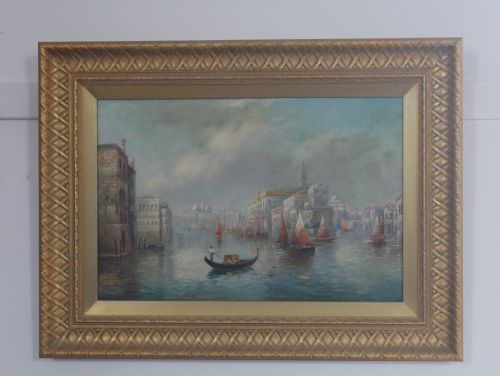


Venice Canal Art
Venice canal art captures the enduring beauty of historic waterways, grand palaces, and gondolas through the hands of skilled painters.
Venice Canal Art
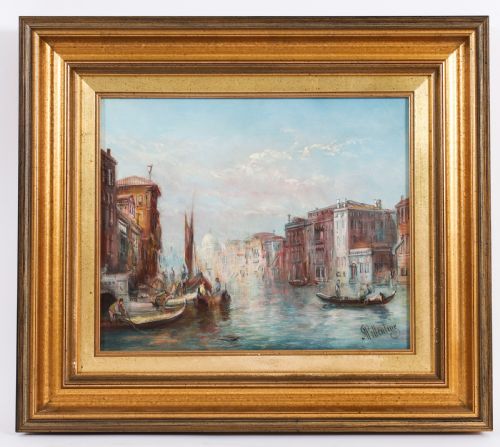
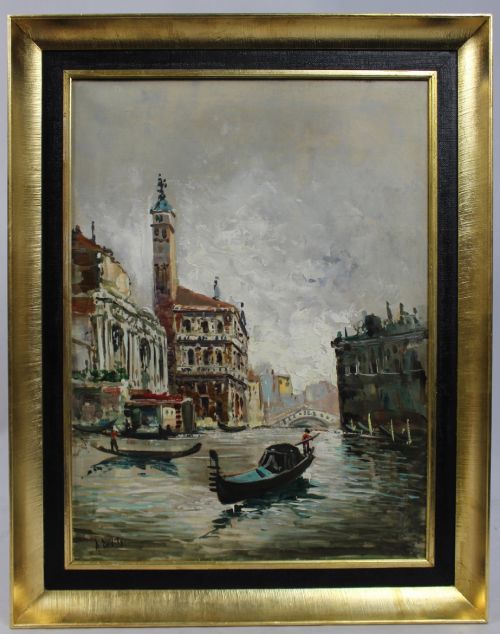
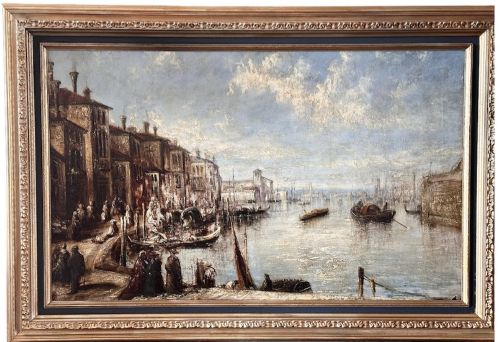
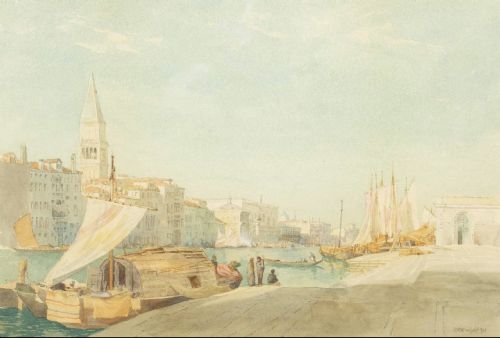
Venice canal art comprises framed paintings and works on paper depicting iconic Italian cityscapes, the Grand Canal, and historic palazzos.
Buyers will most frequently find 19th-century and early 20th-century creations ranging from detailed Victorian scenes to mid-century impressionistic interpretations.
These works capture specific architectural landmarks such as the Santa Maria della Salute, the Doge's Palace, and the Bridge of Sighs.
Materials and Techniques
Artists utilised oil paint on canvas or board to build rich textures and deep tones for grand townscapes and moonlight harbour views.
Watercolour paint on paper was widely employed to achieve luminous, translucent washes of light across the lagoon and historic buildings.
Finished works were frequently housed in decorative giltwood and wood frames that complemented the visual depth of the paintings.
Several artists clearly found the Grand Canal so charming they painted it from every possible step.
Factors Determining Quality
The precision and atmosphere of the brushwork differentiate hurried decorative pieces from masterly depictions of light upon the water.
Works by documented artists possessing exhibition records command greater attention for their skilled handling of perspective and local architecture.
Alfred Pollentine·Antonio DeVity·Francis Moltino·Richard Henry Wright·Antonietta Brandeis·Antoine Bouvard Senior·Hercules Brabazon Brabazon
The Venice Canal Art Glossary
- Oil on Canvas
- A traditional painting medium where pigments suspended in drying oils are applied to stretched fabric. This technique allows for rich colour blending and textured brushwork.
- Watercolour
- A painting method where water-soluble pigments are applied to paper. It produces transparent layers of colour suited to capturing fleeting atmospheric light.
- Giltwood
- Wood that has been coated with a thin layer of gold leaf or gilt powder. It is commonly found on antique picture frames.
- Impressionism
- An art style characterised by relatively small, thin yet visible brush strokes and an emphasis on accurate depiction of light. It focuses on ordinary subject matter captured dynamically.
Venice Canal Art: Frequently Asked Questions
What periods do these paintings cover?
The available selection spans from the Victorian era and 19th-century romanticism through to mid-century impressionism. Many pieces originate from the late 19th and early 20th centuries.
Artists during these periods continually returned to the lagoon and canals for inspiration, resulting in varied stylistic interpretations of the same iconic architecture.
Which materials were standard for these works?
Painters primarily worked with oil paint on canvas or board, and watercolours on paper. Pastels and gouache also appear occasionally in depictions of gondolas and canals.
Frames are typically constructed from wood, frequently featuring giltwood finishes that enhance the overall presentation of the artwork.
How do I identify different artistic styles?
Victorian and 19th-century pieces often emphasise precise architectural detail and naturalistic light. Later works lean towards impressionism with looser brushwork and atmospheric colour palettes.
Examining the handling of the water and sky usually reveals the specific period approach of the painter.
How should I display framed canal paintings?
These works suit traditional living spaces, libraries, or studies where their historical subject matter can be appreciated up close. Direct sunlight should be avoided to protect both watercolours and oil pigments over time.
Ensuring stable room humidity will preserve the integrity of both the canvas and the original wooden frames.