

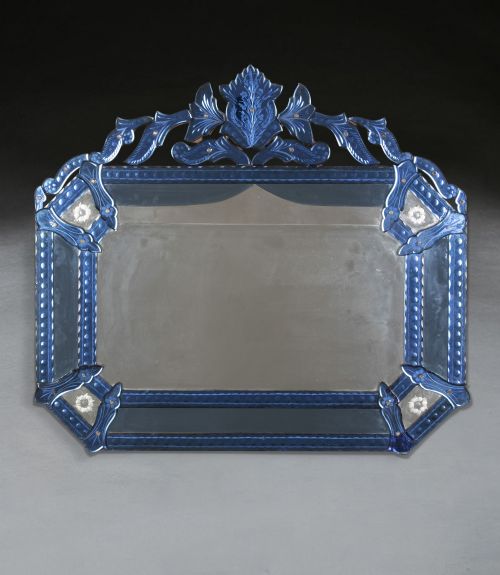


Venetian Carved Wall Mirror
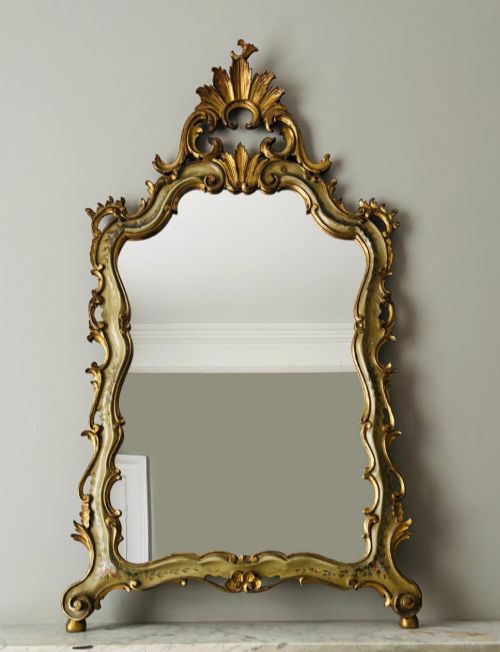
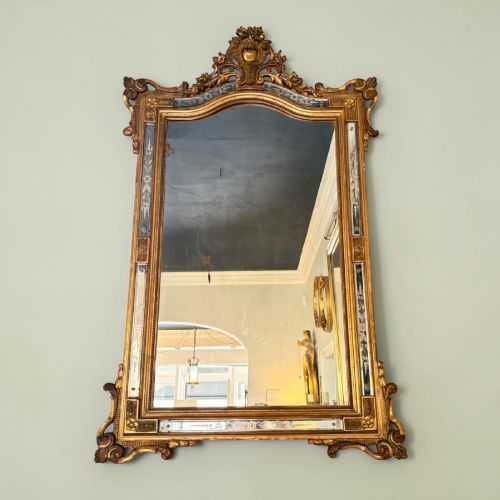
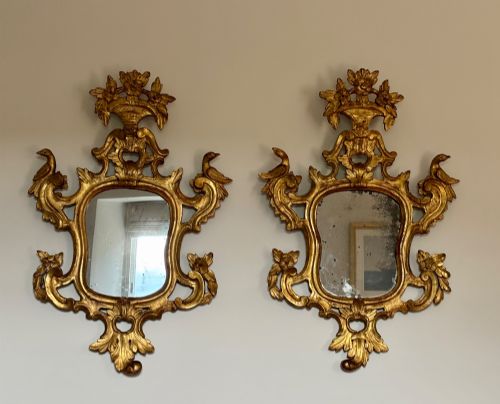
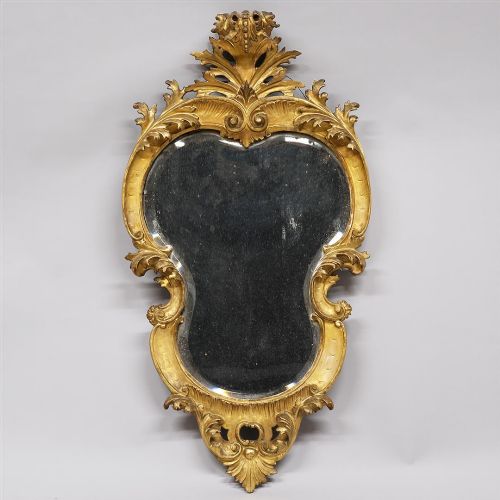
These venetian carved wall mirror examples bring grand Italian light and scrolling ornament into a room.
Venetian Carved Wall Mirror
A venetian carved wall mirror represents a tradition of ornate Italian glass-making and decorative woodwork stretching from the eighteenth century into the twentieth century. These pieces combine reflective plates with elaborate wooden frames shaped in rococo or neo-classical tastes.
The most common versions met on this page date from the nineteenth century, often taking the form of giltwood or painted pier mirrors and girandoles. Many examples use carved wood, gesso, and gold or silver leaf to build up high relief scrolls and floral motifs.
Beyond standard wall mirrors, the selection includes matched pairs and wall sconces featuring polychrome decoration alongside traditional gilding. Collectors encounter both grand marginal plates and smaller decorative pier glasses designed to reflect light across a drawing room.
Materials and construction
Carved wood provides the structural foundation for these frames, usually coated in layers of gesso before receiving application of gold leaf, silver leaf, or paint. Artisans shaped intricate asymmetrical scrolls and floral details by hand into the soft plaster layers over timber.
Mirror glass plates sit within these frames, occasionally featuring hand-engraved surface details or marginal glass borders that frame the main reflection. Polychrome finishes and lacquer work appear alongside traditional gilding on pieces from the eighteenth and nineteenth centuries.
Listings feature Italian pieces spanning from the eighteenth century through to nineteen-thirty, incorporating both giltwood and painted finishes.
Distinctions in quality
Quality rests upon the crispness of the hand-carving and the depth of the gesso relief beneath the leaf or paint. Finer examples display fluid asymmetry in their rococo scrolls without the mechanical uniformity found in later decorative copies.
The integrity of the original mirror plate and the richness of the gilding or polychrome decoration dictate the standing of a piece. Older silver-leaf and gold-leaf surfaces acquire a soft patina that machine-applied finishes cannot replicate.
The Venetian Carved Wall Mirror Glossary
- Giltwood
- Wood carved and coated with gold leaf over a prepared gesso ground. This technique creates a bright reflective surface that warms under candlelight.
- Gesso
- A plaster mixture applied to wood frames as a base for carving and gilding. Artisans model fine decorative details directly into this ground before applying leaf.
- Girandole
- A wall mirror fitted with candle sconces attached to the frame. The glass plate multiplies the flickering light of the candles.
- Pier glass
- A tall, narrow mirror traditionally hung on the pier or wall space between two windows. These pieces were designed to maximise natural light in formal rooms.
- Polychrome
- Painted in several colours. This finish appears on Italian frames alongside or in place of traditional gold leaf.
Venetian Carved Wall Mirror: Frequently Asked Questions
Are these mirrors made of original glass?
Many eighteenth and nineteenth-century pieces retain their original mirror plates, which often display light foxing, minor grey spots, and gentle distortion. These optical imperfections come from historical silvering methods.
Replacement glass appears in some pieces where the original plate degraded beyond preservation. Examining the edge bevel and the backing helps determine the age of the plate.
How do I clean an antique giltwood frame?
Dust giltwood surfaces gently with a soft, dry brush to remove particles without disturbing the delicate gold or silver leaf. Avoid all commercial cleaning sprays, moisture, and chemical solvents.
Moisture quickly softens the gesso ground beneath the leaf. Professional conservators should handle any structural repairs or flaking areas on the carved ornament.
What is the difference between rococo and neo-classical styles?
Rococo frames feature asymmetrical C-scrolls, shell motifs, and exuberant floral carvings that twist dynamically across the wood. The overall effect feels organic, fluid, and theatrical.
Neo-classical frames introduce symmetry, straight architectural lines, classical urns, and restrained swags. This later style reflects a turn towards ancient Greek and Roman proportion.