



Venetian Carved Blackamoor Figures
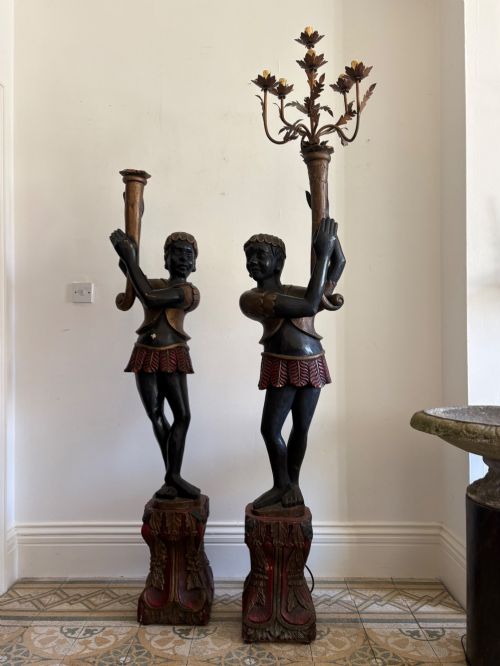
Venetian carved blackamoor figures bring theatrical drama and grand decorative presence to a room, functioning as striking stands, torchieres, and lamps.
Venetian Carved Blackamoor Figures
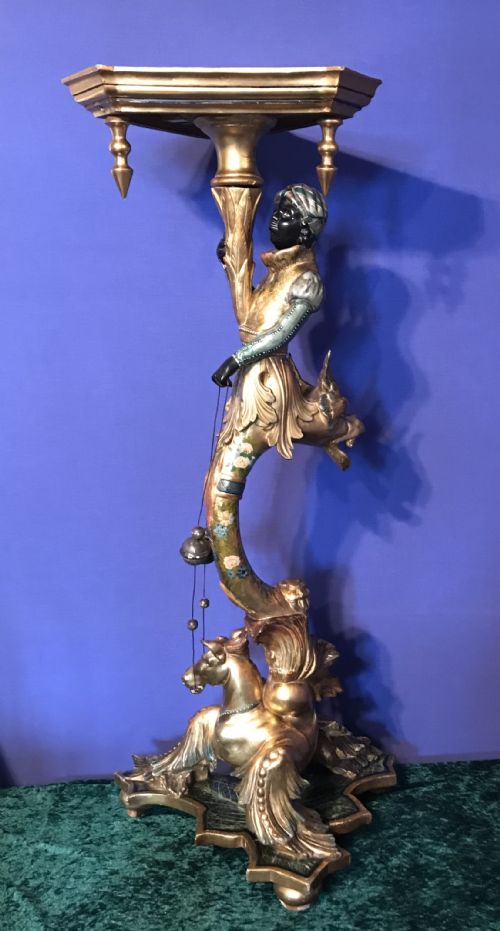
Venetian carved blackamoor figures take many sculptural forms, most frequently appearing as torchieres, pedestals, plant stands, and occasional tables designed to support light fittings or decorative objects. A buyer searching this phrase is examining sculptural furnishings that combine ornate woodwork with elaborate painted and gilded finishes.
The versions most commonly met on this page date from the nineteenth century, ranging from mid Victorian examples to late nineteenth century revivals. These pieces often depict figures in exotic attire, rendered in dynamic poses that reflect nineteenth century European fascination with Venetian baroque and rococo decorative traditions.
Objects on this page span several functional categories, including floor lamps, candelabras, and waiters. Their primary purpose historically was to provide atmospheric illumination and hold objects of utility or display within grand interiors.
How they were made
Makers shaped these pieces from carved wood, frequently utilising walnut for structural strength and detailed sculpting. Woodworkers applied gesso over the carved timber to create a smooth, responsive ground for subsequent decoration.
Venetian Carved Blackamoor Figures Retail Price Guide 2026
Typical asking prices for venetian carved blackamoor figures among the pieces listed under this phrase on Sellingantiques today, from the lower quarter to the upper quarter. They describe what is for sale here now, not the wider market.
Some nineteenth century artisans carved gondoliers complete with traditional striped jerseys, bringing Venetian canals directly into the Victorian parlour.
What varies in quality
The refinement of the carving separates exceptional examples from standard production, visible in the articulation of the drapery, the naturalism of the hands and face, and the overall anatomical proportion. Superior pieces display deep, crisp carving that retains sharp contours beneath layers of historic finish.
The preservation and quality of the original polychrome paint and giltwork dictate the visual impact of the piece. Authentic, undisturbed historic surfaces with harmonious ageing outrank later repainting or heavy restoration.
The Venetian Carved Blackamoor Figures Glossary
- Torchere
- A tall ornamental stand designed to carry a light or a candelabrum. These pieces frequently take the form of figures holding aloft platforms or candle arms.
- Gesso
- A plaster mixture applied to wood surfaces as a base for painting and gilding. It provides a smooth ground that accepts fine detail work.
- Parcel-gilt
- Partially gilded with gold leaf, leaving areas of the underlying wood or paint exposed. This creates contrast against painted surfaces.
- Giltwood
- Wood that has been treated with gold leaf or gold paint. It forms the shimmering surfaces seen on many nineteenth century frames and stands.
Venetian Carved Blackamoor Figures: Frequently Asked Questions
How do I use a blackamoor figure at home?
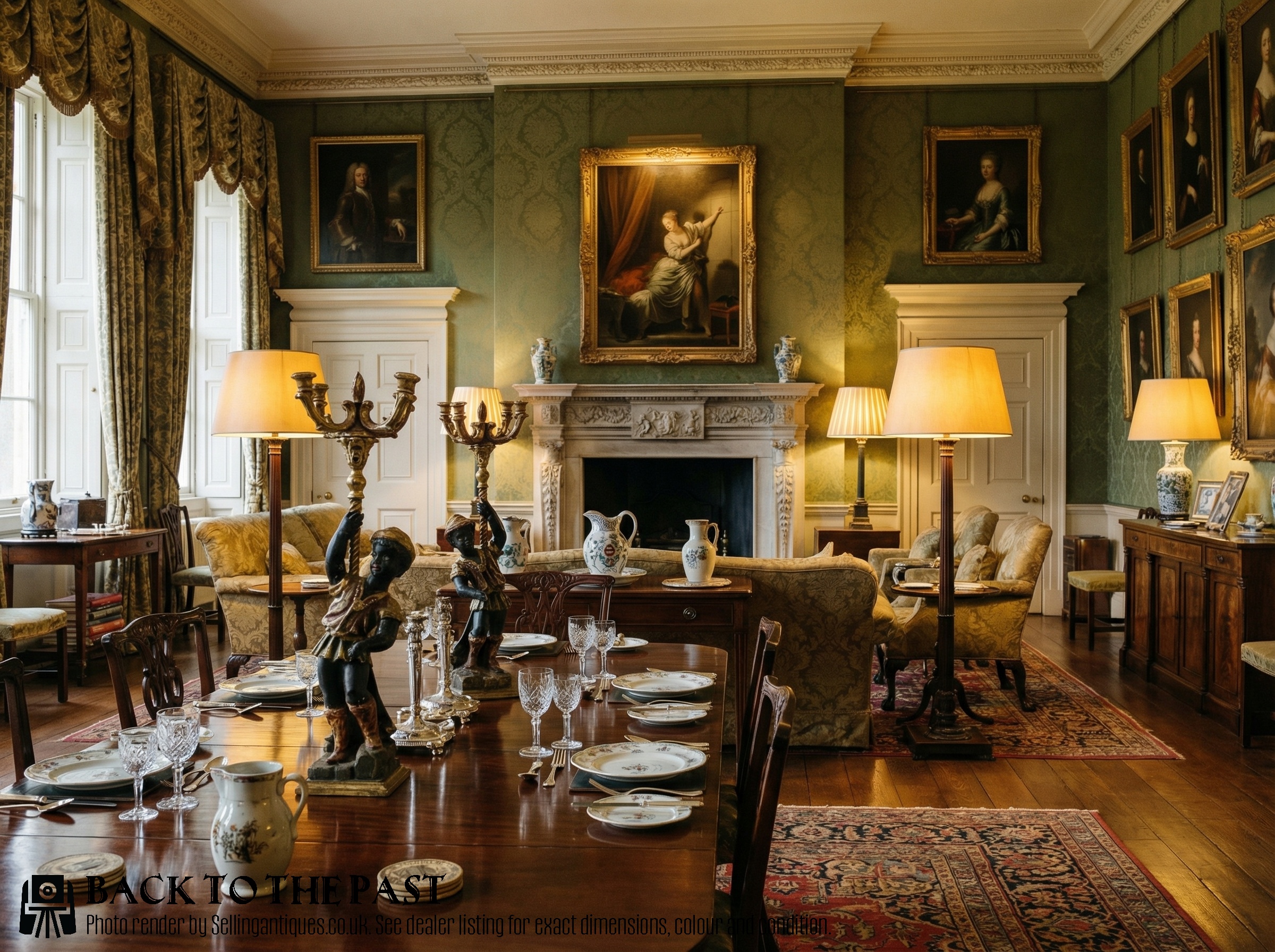
These pieces function well as freestanding torchieres, plant stands, or side tables in principal rooms. They anchor corners or frame doorways when paired with appropriate lighting.
Ensure the piece rests on a stable surface and keep them away from direct heat sources to protect the historic paint and gesso.
How do I date a nineteenth century figure?
Dating relies on examining the timber species, the preparation layers beneath the paint, and the style of the carving. Nineteenth century makers drew heavily on baroque revival motifs.
Compare the tool marks and surface crackle with documented examples from the same period to establish a likely decade of manufacture.
What is the difference between a torchere and a pedestal?
A torchere specifically incorporates a provision for holding a light source, such as a candle or an integrated lamp fitting. A pedestal serves primarily to elevate a sculpture, vase, or planter.
Many Venetian figures blur this distinction by holding platforms that accommodate both lighting and display.
Are these figures solid wood?
Most examples utilise carved timber carcasses, such as walnut, built up with gesso layers to achieve fine sculptural detail. Construction often involves multiple joined sections to form complex poses.
Internal bracing and traditional joinery support the weight of the platforms these figures carry.