

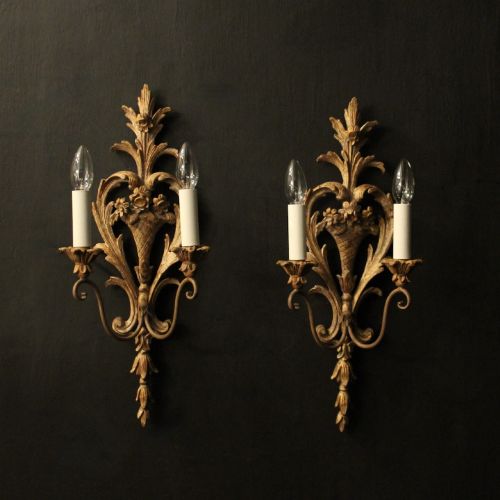
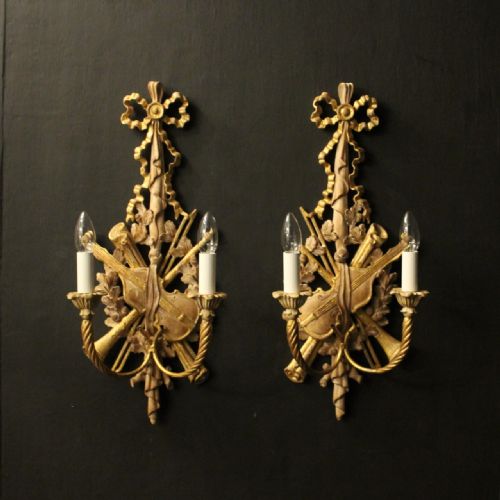


Carved Wooden Twin Sconces
These carved wooden twin sconces bring warmth and layered candlelight to a wall, spanning Italian and French provincial styles from the nineteenth century up to nineteen thirty.
Carved Wooden Twin Sconces
When you search for carved wooden twin sconces, you encounter paired wall lights designed to hold two candles or bulbs on each bracket. The selections on this page are predominantly Italian and French in origin, dating from the nineteenth century up to nineteen thirty.
The forms encompass Florentine and Venetian baroque styles alongside neoclassical and provincial expressions. You will frequently find pieces designated as wall lights, candelabras, or wall sconces featuring dual arms projecting from a carved backplate.
How they were made
The construction relies on carved wood shaped into elaborate brackets, figures, and foliage. Artisans applied gesso layers to smooth the timber before finishing the surfaces with gold leaf, giltwood, or polychrome paint.
Many items combine wood with metal components to support the twin arms securely. Hand-painted polychrome details and rich gilding complete the decoration across these historical workshops.
Carved Wooden Twin Sconces Retail Price Guide 2026
Typical asking prices for carved wooden twin sconces among the pieces listed under this phrase on Sellingantiques today, from the lower quarter to the upper quarter. They describe what is for sale here now, not the wider market.
Origin designations across the available items are split primarily between French and Italian workshops.
What varies in quality
The standard of carving distinguishes one piece from another, separating brisk decorative production from deeply detailed sculptural work. Look at the crispness of the foliage, the definition of figures, and the fluid movement of the twin arms.
Surface application also dictates worth, as the richness of genuine gold leaf or the subtlety of polychrome paint degrades or survives over time. The harmony between the original carved wood body and the decorative finish determines the integrity of the object.
The Carved Wooden Twin Sconces Glossary
- Giltwood
- Wood that has been coated with a thin layer of gold leaf. This technique creates a luminous surface that catches candlelight effectively.
- Polychrome
- Painted in several colours. This finish appears frequently on provincial and baroque pieces from France and Italy.
- Gesso
- A plaster mix applied to wood as a smooth base for gilding or painting. It allows intricate relief details to be modelled before finishing.
- Blackamoor
- A decorative sculptural figure often depicted in historic European art and furnishings. In this context, carved figures serve structural roles as candelabras.
Carved Wooden Twin Sconces: Frequently Asked Questions
Where should I hang twin sconces?
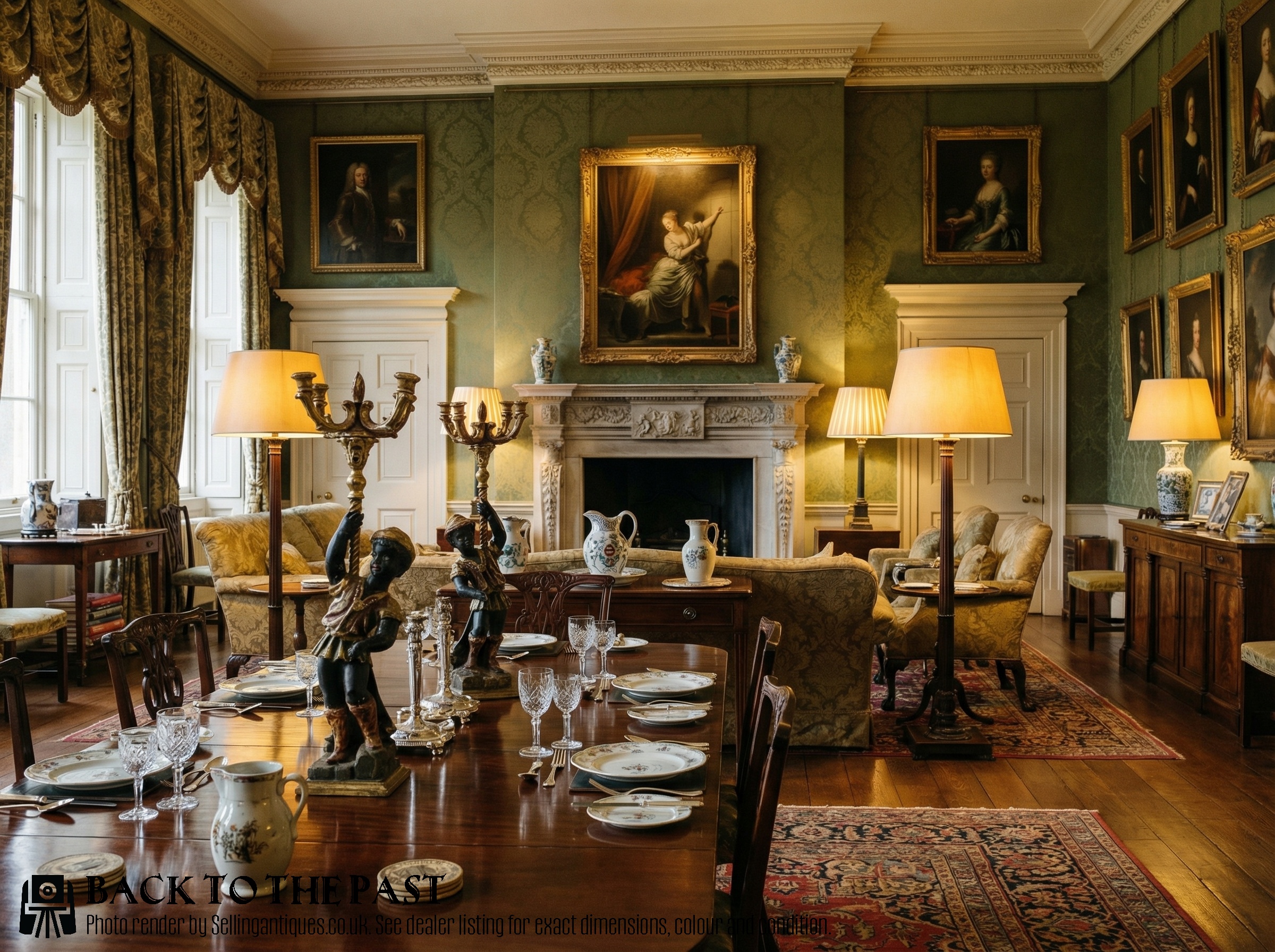
These wall lights suit flanking positions beside large mirrors, fireplaces, or architectural doorways. Their dual arms project enough light to frame focal points in a dining room or hallway.
Ensure they are mounted at a height that keeps the candle cups at or slightly above eye level. This prevents glare and highlights the carved details of the backplates.
How do I clean carved wooden sconces?
Dust the carved surfaces regularly using a soft, dry brush to prevent dirt settling into the recesses of the gesso and paint. Avoid liquid cleaners or chemical polishes which can damage fragile giltwood and polychrome finishes.
Take care around the protruding arms and delicate carved elements. Professional conservation is advised if the surface layers begin to flake.
Are these sconces wired for electricity?
Many antique wall lights retain their original candle-holders but can be adapted by a qualified electrician for modern wiring. Some examples arrive ready for electrical conversion while others maintain purely decorative or candle-burning formats.
Consult a professional restorer to discuss discreet wiring options that preserve the historic wooden structure.
How do I identify Italian baroque styles?
Italian baroque pieces feature dramatic, exuberant carving with dynamic movement and rich ornamentation. You will notice sweeping scrolls, bold foliage, and theatrical forms designed to impress.
These contrast with the lighter, more restrained lines found in French provincial or neoclassical pieces from later decades.