



Venetian Canal Art
Venetian canal art captures the enduring beauty of historic waterways, palaces, and gondolas, offering buyers a romantic window into the Italian lagoon.
Venetian Canal Art
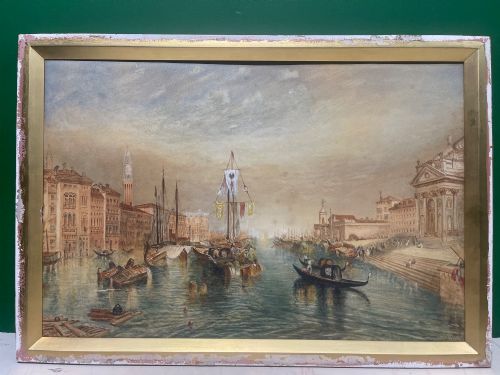
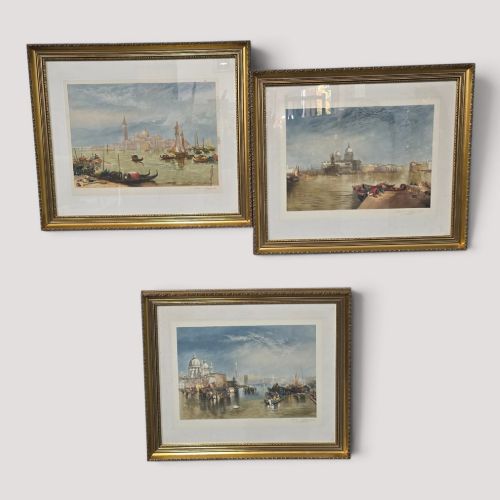
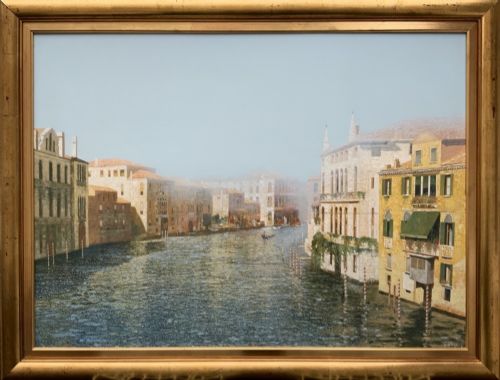
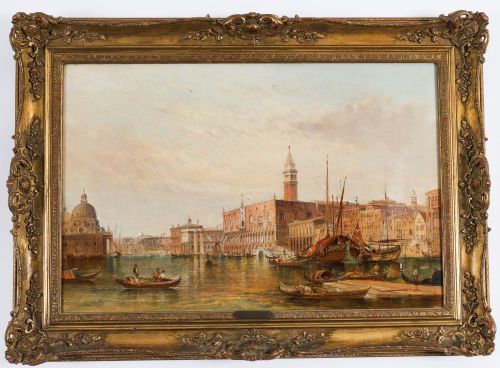
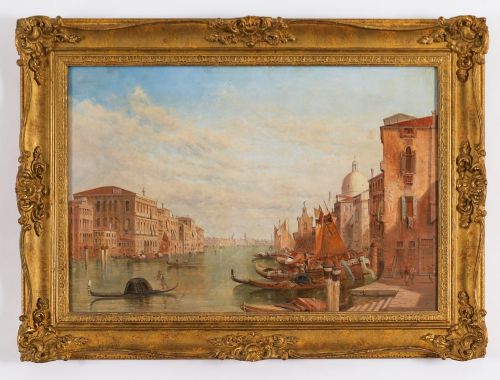
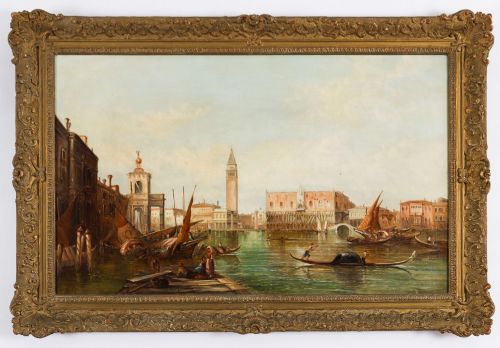
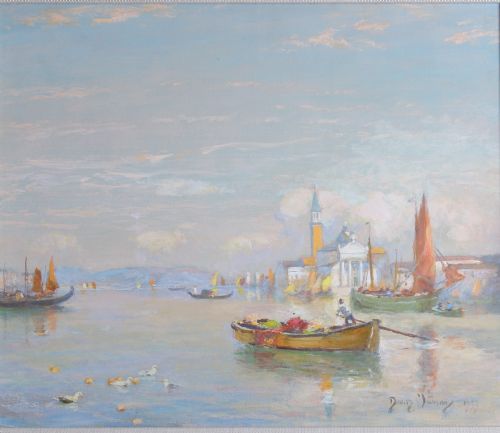
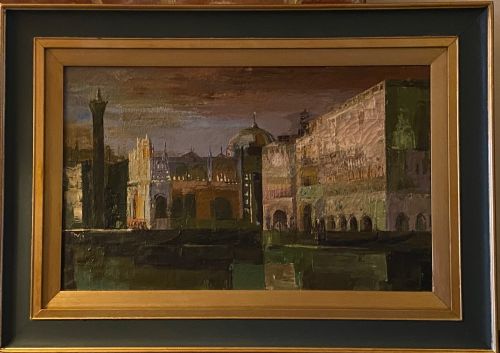
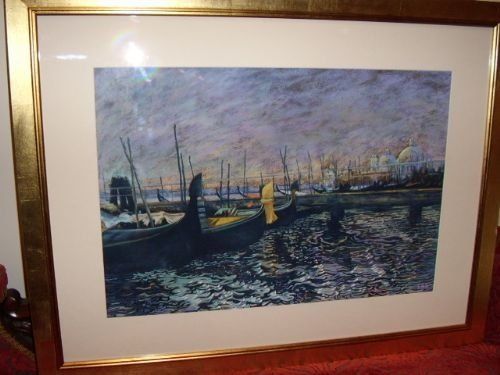
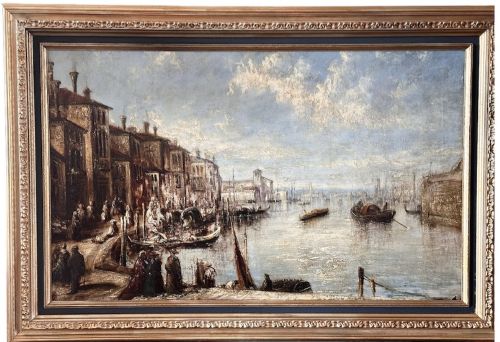
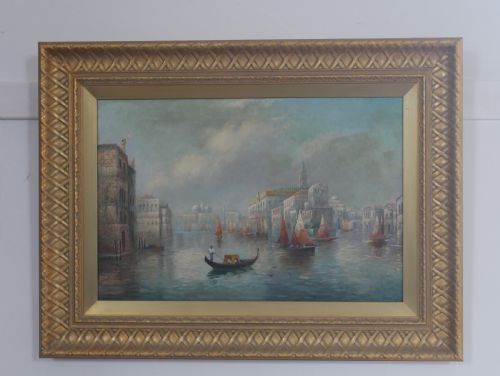
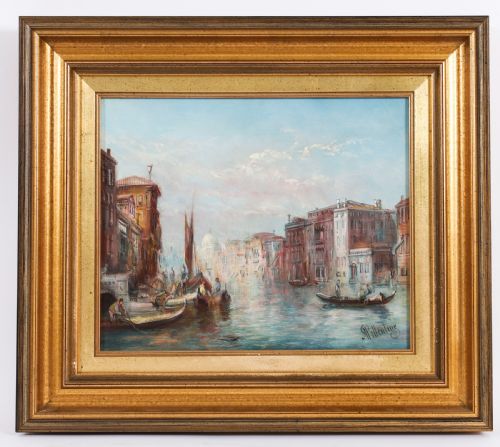
Venetian canal art encompasses townscapes, lagoon views, and architectural studies centred on iconic sites such as the Grand Canal, the Doge's Palace, and the Santa Maria della Salute. These works range from intimate watercolours to large oil paintings executed on canvas or board.
The selections span the nineteenth century through the mid-twentieth century, capturing changing interpretations of Italian urban topography. Buyers frequently encounter nineteenth-century canvases alongside early twentieth-century watercolours and pastel compositions depicting gondoliers and historic mansions.
Represented styles vary from Victorian fine art and romanticism to impressionism and mid-century modern interpretations. Each piece records the distinctive light, water reflections, and decaying grandeur characteristic of the Venetian lagoon across different decades.
Materials and Techniques
Artists utilised oil on canvas and oil on board to build rich textures and deep tones for grand architectural townscapes. Watercolours on paper enabled painters to capture luminous, transparent effects on the open lagoon and narrow waterways.
Framing materials commonly incorporate giltwood and gilded wood, complementing the traditional subjects and enhancing the visual weight of the paintings. Pastel and gouache appear alongside ink pen drawings for more illustrative or rapid compositional studies.
Venetian Canal Art Retail Price Guide 2026
Typical asking prices for venetian canal art among the pieces listed under this phrase on Sellingantiques today, from the lower quarter to the upper quarter. They describe what is for sale here now, not the wider market.
Several canvases record pigeons lingering persistently near the Doge's Palace.
Quality Variations
Quality rests upon the artist's ability to render the distinctive atmospheric light and perspective of the Venetian waterways convincingly. Master painters handle water reflections and architectural detail with precision, whereas lesser works rely on formulaic repetition.
The handling of the medium distinguishes superior examples, such as confident brushwork in oils or controlled washes in watercolour. Original framing in appropriate giltwood also contributes to the integrity and aesthetic coherence of the piece.
Alfred Pollentine·Jane Vivian·Wilfred Knox·Hercules Brabazon Brabazon·Antonietta Brandeis
The Venetian Canal Art Glossary
- Grand Canal
- The principal water-traffic corridor in Venice, lined with historic palaces that frequently form the subject of townscape paintings.
- Giltwood
- Wood treated with gold leaf or gold paint, commonly used to finish the ornate frames housing nineteenth-century oil paintings.
- Gouache
- An opaque water-based paint that provides solid areas of colour and matte finishes in works on paper.
- Dogana
- The historic customs house of Venice, situated at the confluence of the Grand Canal and the Giudecca Canal.
Venetian Canal Art: Frequently Asked Questions
How do I date a Venetian painting?
Dating relies on stylistic clues, framing methods, and recorded dates associated with specific artists or exhibition periods. Nineteenth-century works often favour romantic architectural accuracy, while later twentieth-century pieces lean towards impressionistic abstraction.
Material analysis of the canvas, stretcher frames, and paper backing further assists in placing the work within a specific decade or artistic movement.
What is the difference between oil and watercolour?
Oil paintings utilise pigments suspended in drying oils applied to canvas or board, allowing for rich texture, deep layering, and reworking. Watercolours employ water-soluble pigments on paper, creating luminous, transparent effects suited to capturing light on water.
Oils generally require robust giltwood frames for protection, whereas watercolours need glazing to prevent moisture and light damage over time.
Where should I hang Venetian art?
These works suit dining rooms, drawing rooms, or studies where traditional lighting enhances the gilt frames and rich tones of the canvas. Placing them away from direct sunlight preserves the pigments of watercolours and oils alike.
Pairing a townscape with period interior furnishings creates a cohesive aesthetic that reflects nineteenth or early twentieth-century domestic display.
Who were the key painters?
Numerous British and European artists travelled to Italy to record the lagoon, contributing to a rich tradition of topographical painting. Figures like Alfred Pollentine and Jane Vivian specialised in detailed architectural townscapes of major Venetian landmarks.
Watercolourists such as Hercules Brabazon Brabazon and Wilfred Knox captured the fleeting light and atmospheric conditions of the canals using rapid, expressive brushwork.