



Veneered Wardrobe
A veneered wardrobe brings rich timber grain and architectural presence into a bedroom, offering substantial storage with a refined surface.
Veneered Wardrobe
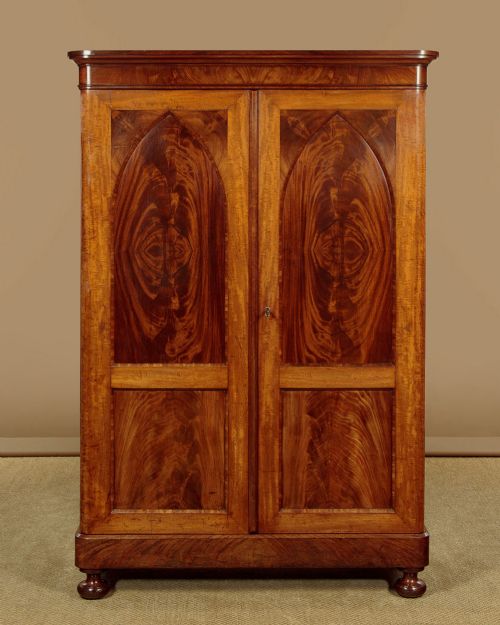
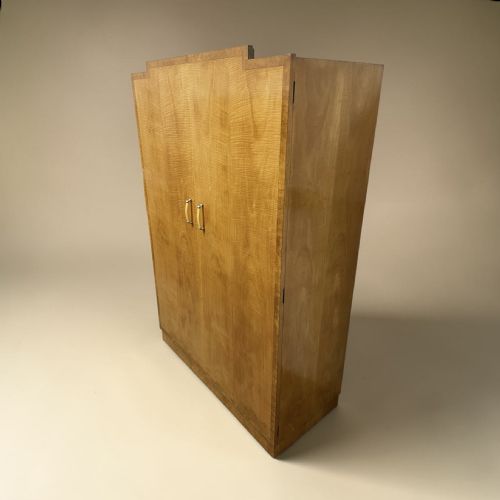
A veneered wardrobe represents a major storage piece built around a wooden carcass and covered with decorative timber slices. When searching for a veneered wardrobe, buyers encounter forms ranging from Georgian breakfronts and Victorian single-door cupboards to streamlined Art Deco double wardrobes.
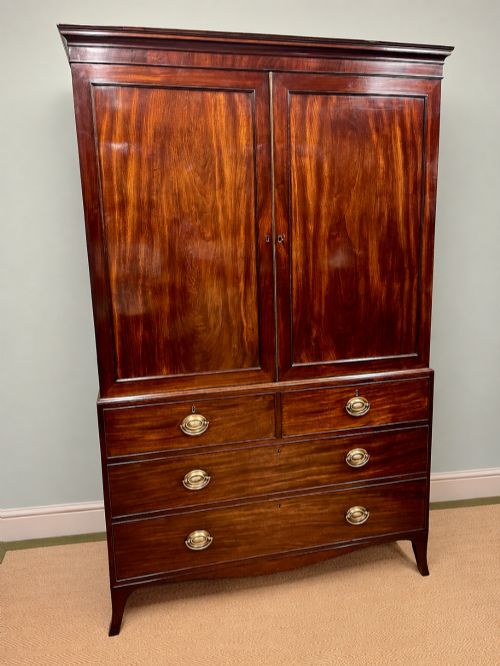
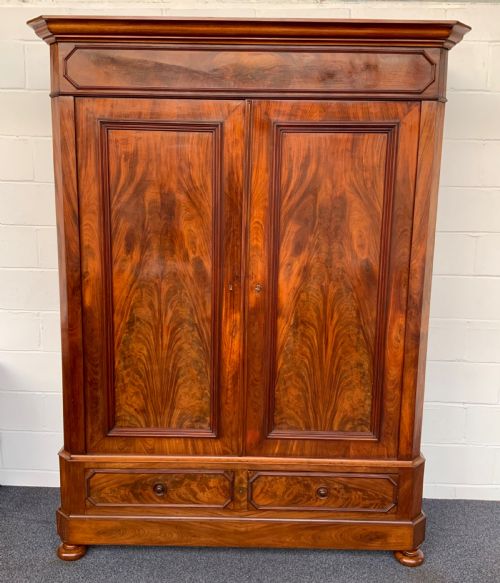
The selection on this page spans several centuries, including Regency and Victorian examples alongside 1930s Art Deco pieces. Regional variations also appear, such as Dutch press cupboards, Scottish mahogany linen press cupboards, and continental Biedermeier and Grunderzeit cabinets.
Alongside traditional wardrobes, the material and form overlap with related storage furniture like linen presses, armoires, tallboys, and compactum chests. These pieces utilise substantial timber construction to house hanging space, linen slides, and drawers behind panelled or glazed doors.
Materials and construction
Makers constructed these wardrobes using solid timber carcases overlaid with decorative hardwood veneers, allowing them to display striking grain patterns across large door panels. Mahogany and walnut serve as the primary woods, often selected for figure and depth.
Veneered Wardrobe Retail Price Guide 2026
Typical asking prices for veneered wardrobe among the pieces listed under this phrase on Sellingantiques today, from the lower quarter to the upper quarter. They describe what is for sale here now, not the wider market.
Jean Faure signed this Art Deco wardrobe in 1920, proving that even heavy bedroom storage occasionally likes to leave an autograph.
Judging quality and character
Quality in a veneered wardrobe rests upon the selection and matching of the timber grain across the front panels. Superior examples display symmetrical book-matching or carefully chosen flame and burr figures that wrap harmoniously around the doors and cornice.
The underlying cabinetwork and structural joinery dictate how well the piece stands up to daily use over the centuries. Refined proportion, crisp mouldings, and original brass fittings separate standard utility cupboards from exceptional cabinetmaker pieces.
Jean Faure
The Veneered Wardrobe Glossary
- Veneer
- A thin slice of decorative hardwood applied to a stable secondary wood carcase. This technique allows cabinetmakers to utilise striking grain patterns that would be unstable or too costly to build entirely from solid timber.
- Breakfront
- A large cabinet design where the central section projects forward from the flanking wings. This architectural form creates depth and shadow across the front elevation of the furniture.
- Biedermeier
- A Central European style dating from the nineteenth century prioritising clean lines and polished timber surfaces over excessive ornamentation. It lets the natural figure of the wood take visual precedence.
- Compactum
- A fitted wardrobe designed to provide multiple types of storage within a single unit, often combining hanging space, shelves, and internal drawers.
Veneered Wardrobe: Frequently Asked Questions
What is a veneered wardrobe?
A veneered wardrobe is a large storage piece constructed with a wooden frame and covered in thin layers of decorative timber. These pieces utilise woods like mahogany and walnut to create patterned surfaces on the doors and panels.
They range from eighteenth-century Georgian breakfronts to streamlined 1930s Art Deco double wardrobes, offering both hanging space and architectural presence.
How do I date an antique wardrobe?
Dating relies upon observing the architectural style, construction methods, and timber types. Georgian and Regency pieces show classical proportions and fine mouldings, while Victorian examples often feature darker mahogany and heavier cornices.
Art Deco wardrobes from the 1930s introduce streamlined geometry, cloud walnut finishes, and simplified hardware. Secondary woods and internal drawer construction also help determine the period.
Where should I place a large wardrobe?
These substantial pieces require adequate wall space and clearance for opening large doors and internal drawers. Bedrooms provide the natural home, though deep hallways or dressing rooms also accommodate them.
Keep wooden wardrobes away from direct heat sources and strong sunlight to protect the polished timber surfaces and delicate veneers from drying out.
What is the difference between a wardrobe and an armoire?
While both terms describe large cupboards for clothing, armoire traditionally refers to continental European designs with heavy architectural mouldings. French and German examples often feature distinct regional carving and proportions.
Wardrobes in British tradition frequently follow prevailing domestic cabinet styles like Georgian mahogany or Victorian panelled designs.