

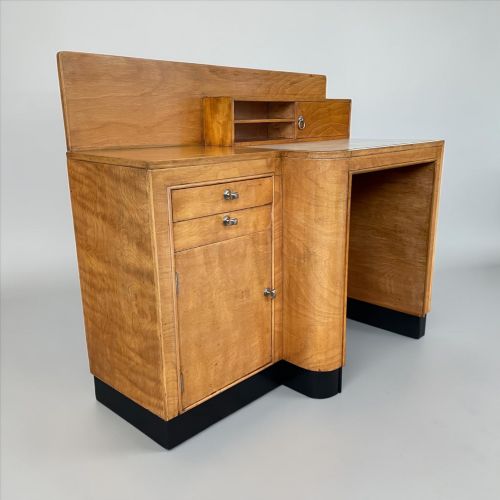
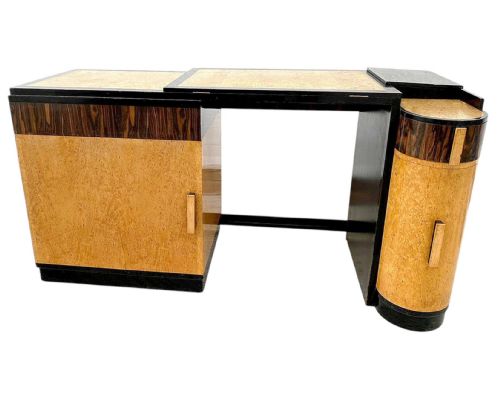
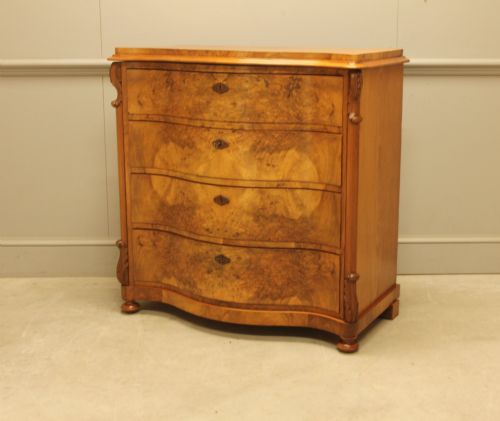
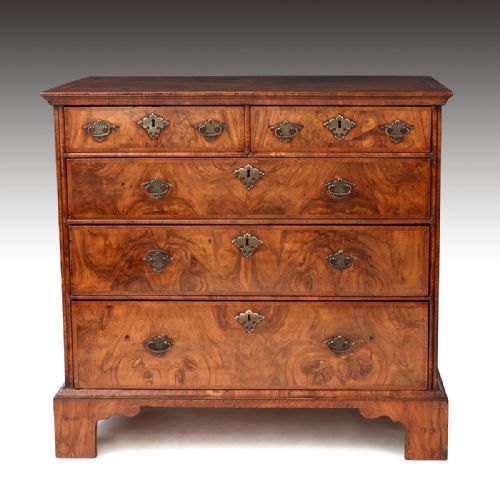
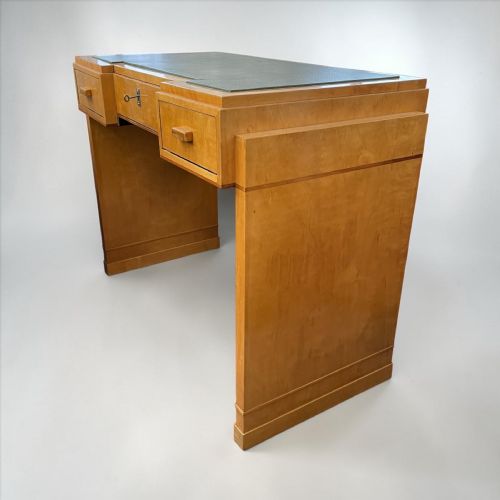
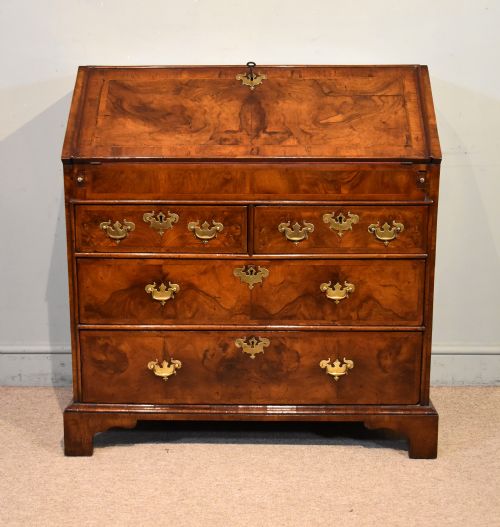
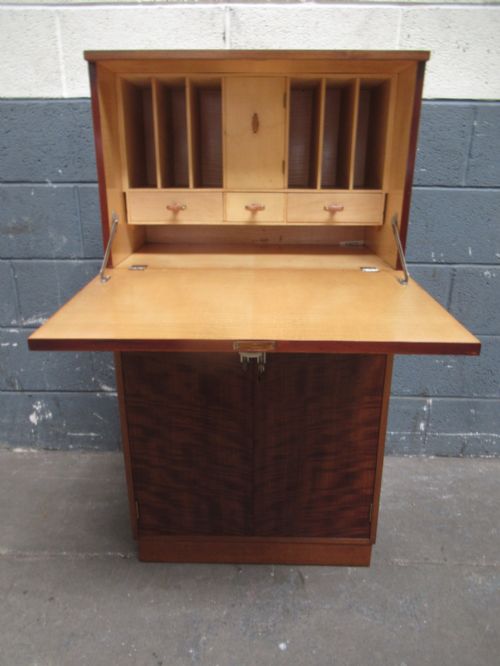

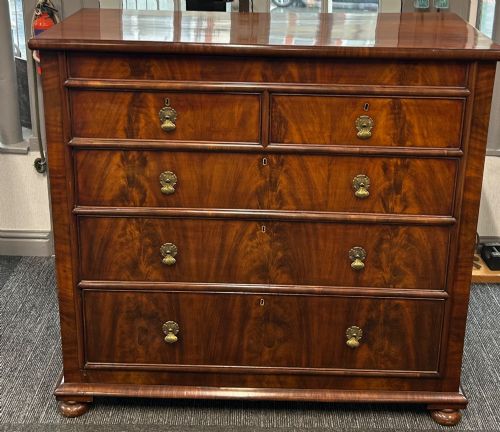


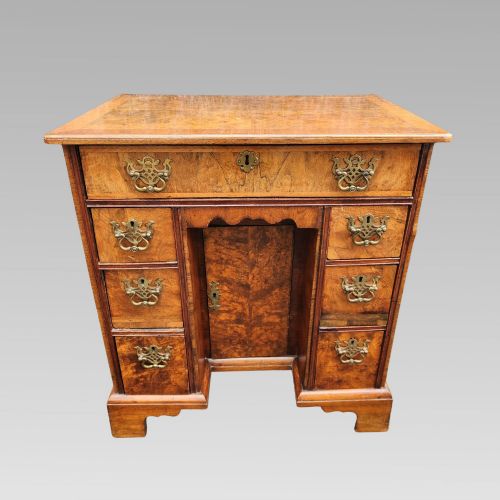


Veneered Bureau
A veneered bureau brings figured timbers and fitted writing compartments together, offering a practical workspace wrapped in historical cabinet-making craft.
Veneered Bureau
A veneered bureau provides a dedicated writing surface that conceals pigeonholes and small drawers when closed, resting on a base of drawers or a cabinet. These pieces appear across periods spanning the late seventeenth century through the Art Deco era of nineteen thirty, taking forms that include fall-front desks and bureau bookcases.
The most common examples on this page balance utility with decorative wood figuring, drawing on styles from Queen Anne and George II to Edwardian and Art Deco designs. Makers utilised walnut, oak, and flame mahogany veneers to create striking grain patterns across the primary surfaces.
How they were made
Cabinet-makers applied thin sheets of decorative wood veneer, such as walnut, flame mahogany, kingwood, and amboyna, over sturdy secondary timbers like oak. This technique allowed workshops to display dramatic grain patterns and figure work that solid boards could not achieve.
Details such as brass hardware, featherbanding, and ormolu mounts complete the construction, securing the functional compartments and enhancing the outer borders of the writing slopes and drawer fronts.
Veneered Bureau Retail Price Guide 2026
Typical asking prices for veneered bureau among the pieces listed under this phrase on Sellingantiques today, from the lower quarter to the upper quarter. They describe what is for sale here now, not the wider market.
Some bureaus conceal hidden spring-loaded drawers behind pigeonholes, designed for keeping family secrets safe from curious eyes.
What varies in quality
The sophistication of the timber selection dictates the visual impact, ranging from straight-grained surfaces to highly figured burr walnut, mulberry, and macassar veneers. Master workshops aligned grain patterns symmetrically across drawer fronts and fall-front flaps.
Internal execution separates standard examples from exceptional pieces, visible in the complexity of the internal pigeonholes, secret compartments, and the precision of the dovetail joinery within the drawer construction.
E Gomme·Coxed & Woster
The Veneered Bureau Glossary
- Fall-front
- A hinged writing flap that drops down to form a horizontal desk surface. It conceals internal drawers and pigeonholes when closed.
- Featherbanding
- Inlaid decorative banding made by cutting veneers at an angle to form a herringbone pattern. It frames drawer edges and writing flaps.
- Escritoire
- A writing cabinet or desk featuring a drop-front panel. The term often describes tall case pieces from the seventeenth and eighteenth centuries.
- Secretaire abattant
- A tall wall-mounted or freestanding cabinet with a vertical drop-front writing surface. It originates from continental European furniture traditions.
Veneered Bureau: Frequently Asked Questions
What is a veneered bureau?
A veneered bureau is a writing desk featuring a hinged flap that opens to reveal internal compartments, finished with decorative wood veneers on the exterior surfaces.
These pieces range from compact Edwardian and Art Deco designs to eighteenth-century walnut examples built for domestic correspondence.
How do I date a bureau?
Dating relies on observing the combination of timber choices, construction methods, and stylistic details like bracket feet, handles, and internal drawer configuration.
Early pieces often feature walnut or oak with featherbanding, while nineteenth and twentieth-century versions introduce mahogany, amboyna, and distinct Art Deco geometric lines.
Where should I place a bureau?
A bureau fits well in studies, living rooms, or hallways where its compact footprint provides both surface display and concealed storage.
Keep the piece away from direct sunlight and heat sources to protect the delicate wood veneers from drying out or fading.
How do I clean wood veneer?
Dust the exterior surfaces regularly with a soft, dry cloth to prevent dirt accumulation on the delicate grain.
Avoid liquid polishes containing silicone, relying instead on traditional beeswax applied sparingly to maintain the natural sheen of the timber.