





Velvet Upholstered Ottoman
A velvet upholstered ottoman brings tactile depth and rich texture to a room, offering practical seating or footrest utility in compact forms.
Velvet Upholstered Ottoman
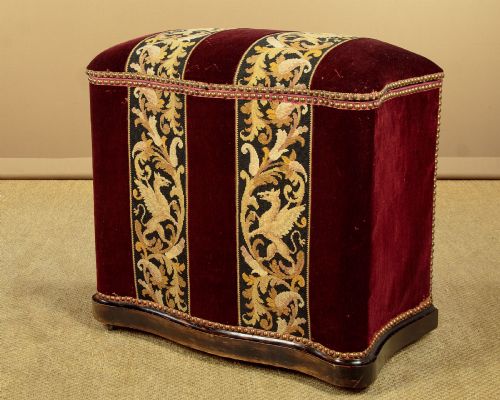
When searching for a velvet upholstered ottoman, buyers encounter low seating forms ranging from small footstools to large storage pieces. The selection spans the nineteenth century through the twentieth century, taking shapes like Victorian salon seats, Regency designs, and French styles.
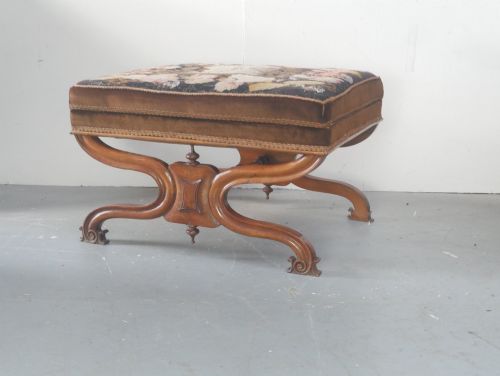
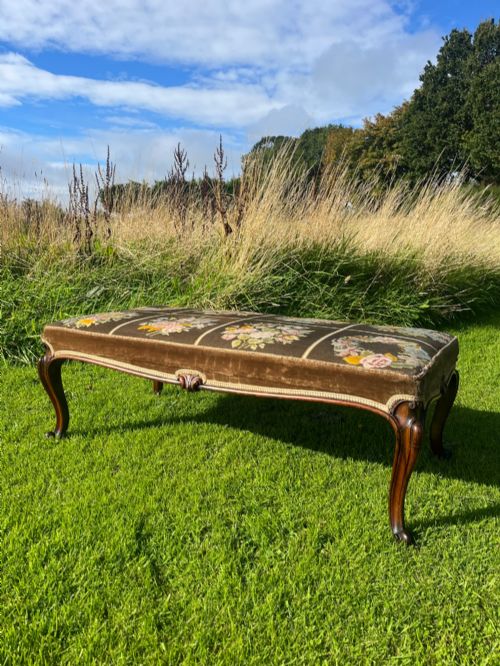
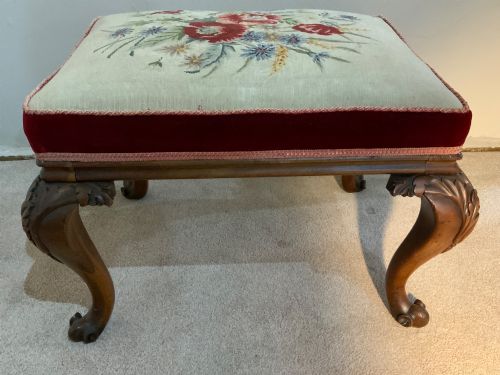
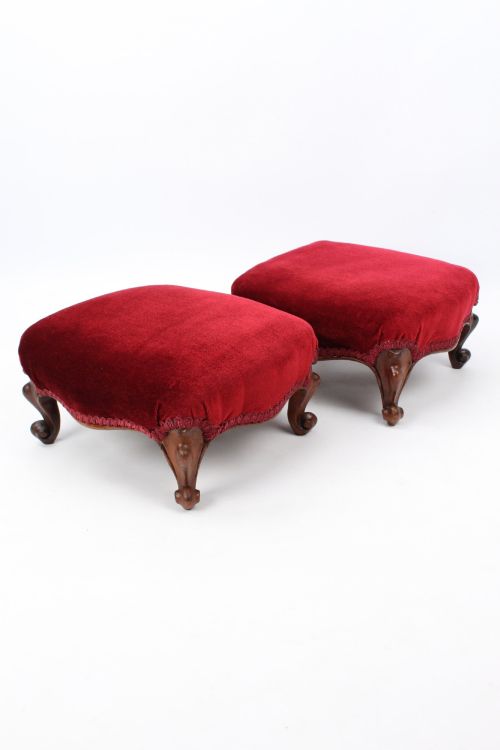
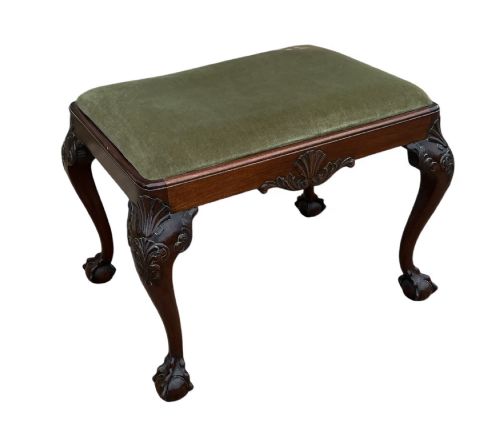
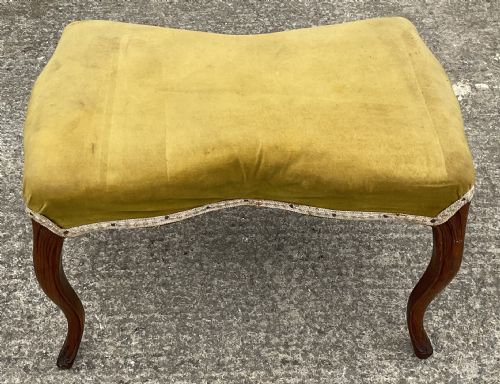
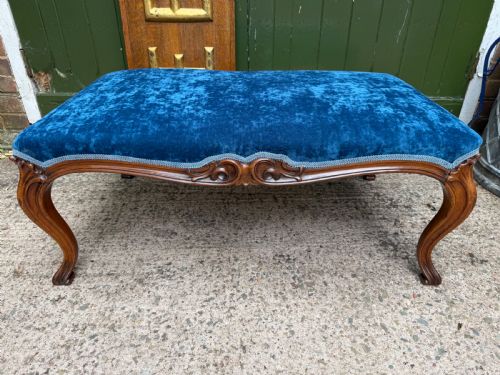
The most frequent examples on this page are Victorian and nineteenth-century stools framed in mahogany, walnut, or rosewood, often paired with velvet, tapestry, or fabric upholstery. These range from simple footstools to substantial centre stools and storage ottomans designed for domestic comfort.
How they were made
Upholstery techniques combined traditional stuffing with textiles including velvet, needlepoint, and tapestry, sometimes finished with deep buttoning or brass elements. Adjustability and storage mechanisms appeared in specialist pieces such as gout stools and box ottomans.
Velvet Upholstered Ottoman Retail Price Guide 2026
Typical asking prices for velvet upholstered ottoman among the pieces listed under this phrase on Sellingantiques today, from the lower quarter to the upper quarter. They describe what is for sale here now, not the wider market.
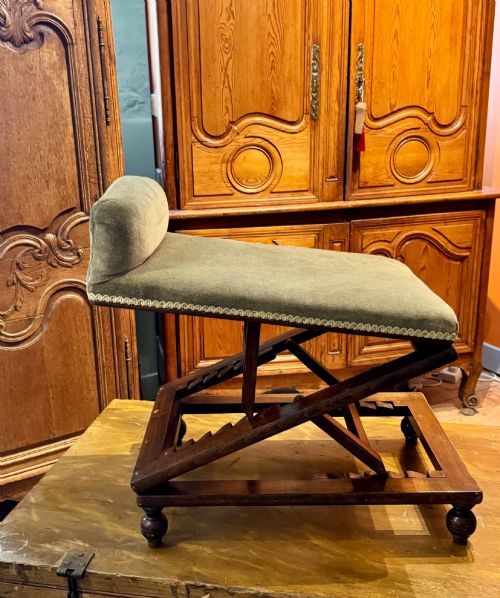
A few ingenious nineteenth-century designers fitted their footstools with clever mechanical hinges to soothe weary gout sufferers.
What varies in quality
Quality rests in the precision of the timber framing and the depth of the carving, distinguishing robust architectural work from simpler production. Well-executed joinery and substantial timber selection set finer nineteenth-century examples apart.
The integrity of the frame construction and the choice of textile upholstery dictate the long-term character of each piece. Original timber patination and thoughtful proportions separate distinguished examples from standard utilitarian seating.
Hallett & Sons·A.M.E. Fournier·Awn Pugin
The Velvet Upholstered Ottoman Glossary
- Ottoman
- A low upholstered seat or footstool without a back or arms, often featuring internal storage or deep buttoning.
- Centre stool
- A freestanding seating piece designed to be viewed from all sides, frequently placed in the middle of a large room during the nineteenth century.
- Gout stool
- An adjustable footstool engineered to elevate and support the foot or leg at a comfortable angle.
- Cabriole leg
- A furniture leg that curves outward and then tapers inward, common in revival and period seating designs.
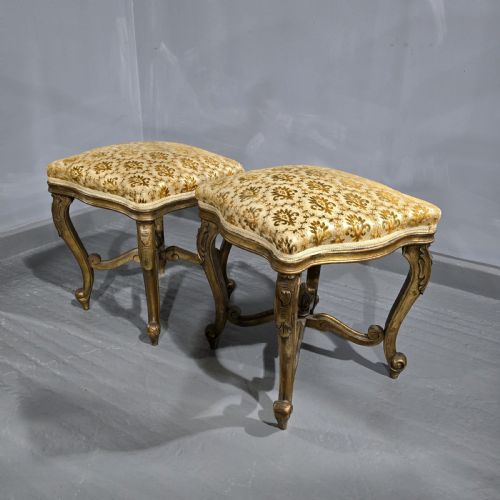
- X-framed stool
- A seating form supported by intersecting diagonal stretchers forming an X shape, often seen in Regency and nineteenth-century pieces.
Velvet Upholstered Ottoman: Frequently Asked Questions
What is a velvet upholstered ottoman?
A low seat or footrest covered in plush textile, built primarily in timber frames during the nineteenth and early twentieth centuries.
These pieces served various domestic functions, from small dressing stools to large centre furniture and storage boxes.
How do I style an ottoman?
Place a salon stool or centre piece in the middle of a room, or position a smaller footstool beside an armchair for texture and utility.
Their rich fabric finishes and timber frames complement both traditional and eclectic modern interiors.
How can I tell the period?
Examine the timber species, leg geometry, and upholstery style, such as Victorian buttoning or Regency sabre legs.
Nineteenth-century pieces often display denser hardwoods like rosewood and walnut combined with hand-carved details.
Were these used for storage?
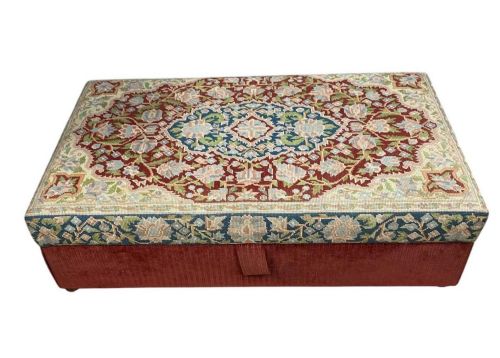
Certain larger examples, particularly nineteenth-century box ottomans, incorporated internal compartments for household items.
Most domestic pieces, however, functioned strictly as footstools, window seats, or low salon seating.