
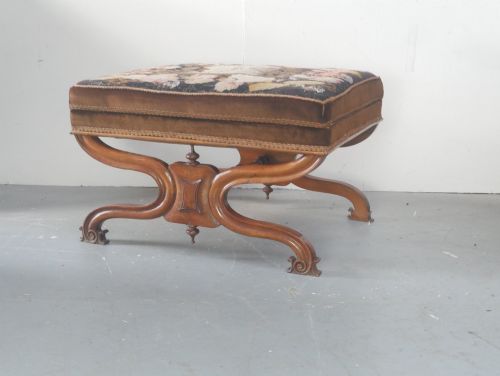
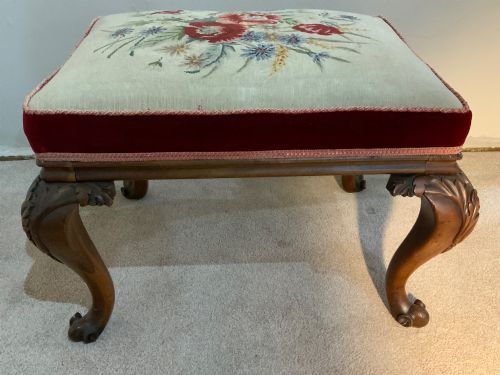
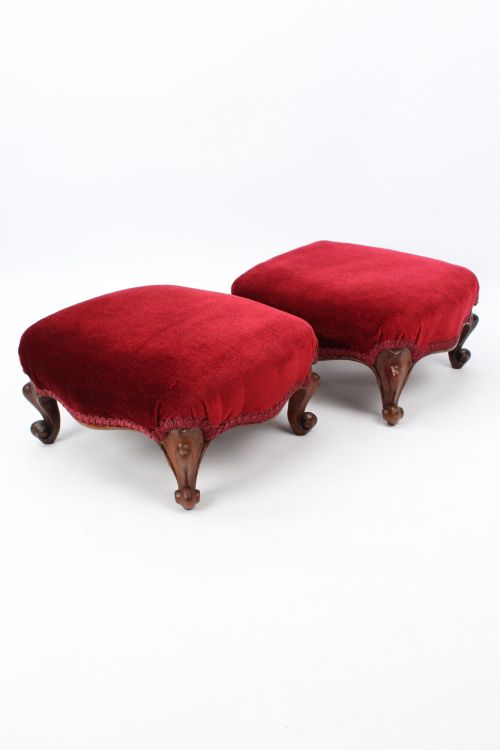
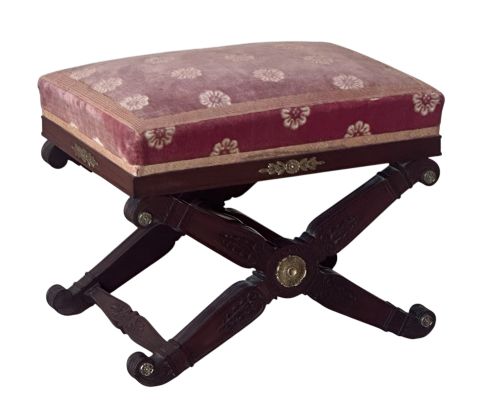




Velvet Upholstered Footstool
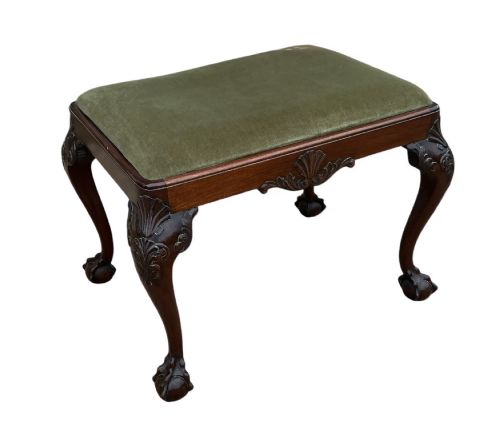
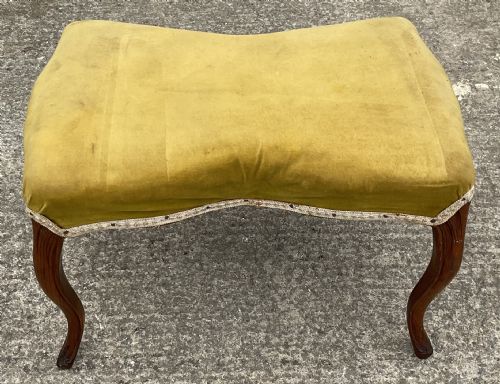
These velvet upholstered footstool pieces range from compact Victorian walnut examples to large Regency ottomans, offering both utility and traditional comfort for any room.
Velvet Upholstered Footstool
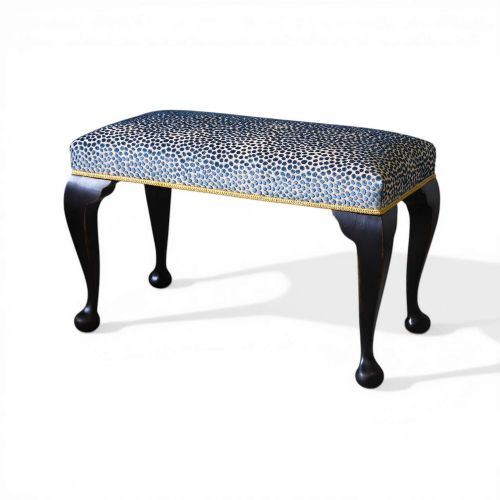
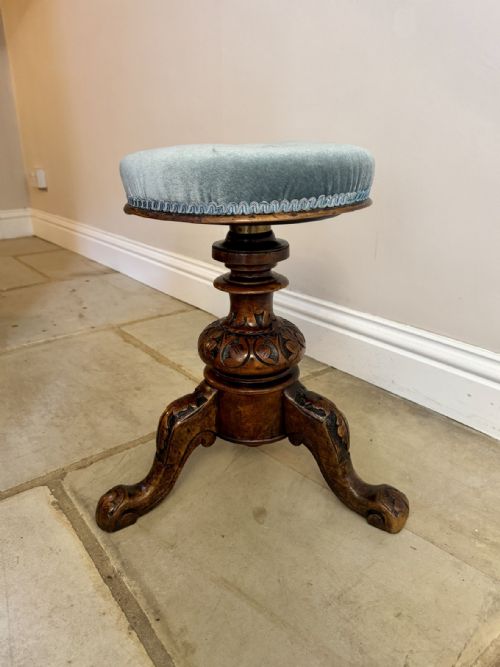
A velvet upholstered footstool provides a low seat or rest, appearing in forms such as dressing table stools, piano stools, gout stools, and large ottomans. These pieces serve functional roles while introducing texture through their textile coverings.
The selection on this page centres heavily on Victorian and nineteenth-century examples alongside Regency, Edwardian, and Georgian pieces. Buyers frequently encounter mahogany, walnut, and rosewood frames paired with diverse textile upholstery, ranging from buttoned finishes to patterned velvet.
Makers and workshops of the period produced varying scales, from small pairs of walnut footstools to large country house storage ottomans and X-frame designs. This variety allows collectors to find items suited for intimate spaces or substantial reception rooms.
How they were made
Frames are constructed from timbers including mahogany, walnut, rosewood, oak, beech, and giltwood, often shaped into cabriole legs, turned supports, or carved details. Joinery reflects the period of origin, supporting upholstered seats finished in velvet, fabric, and needlepoint.
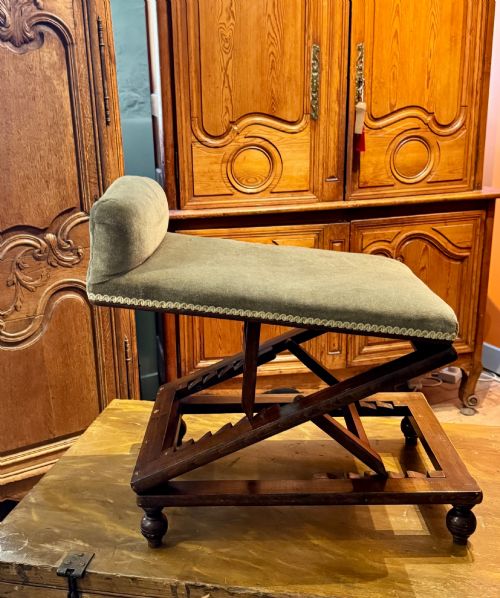
Metal elements such as brass appear in structural fittings or decorative accents, while specific forms incorporate mechanical adjustments for gout stools or rotating mechanisms for piano stools. Upholstery techniques include deep buttoning and traditional stuffing secured beneath textile coverings.
A Scottish Baronial stool from eighteen-fifty offers a touch of dramatic Highland heritage for your floor.
What varies in quality
Quality rests in the timber selection, the crispness of carving on frames, and the structural integrity of the joinery. Finer pieces demonstrate well-drawn proportions, balanced frames, and substantial secondary woods.
The execution of the upholstery work, the stability of adjustable mechanisms, and the preservation of original or period-appropriate textile coverings further distinguish standard utility items from superior examples.
Hallett & Sons·James Shoolbred
The Velvet Upholstered Footstool Glossary
- Ottoman
- A low upholstered seat or bench without a back or arms, often built with interior storage or on a larger scale than a standard footstool. These pieces frequently serve as central furniture items in larger reception rooms.
- Gout stool
- An adjustable footrest designed to elevate the legs at various angles, typically fitted with a mechanical ratchet. Nineteenth-century examples often utilise beechwood frames.
- Cabriole leg
- A furniture leg that curves out and then in, resembling the leg of an animal. This form appears frequently on eighteenth- and nineteenth-century seating.
- Buttoned stool
- A style of upholstery where depressions are created across the surface by sewing through the padding to anchor buttons in a geometric pattern. This technique provides tension and structure to velvet and fabric coverings.
- X-frame stool
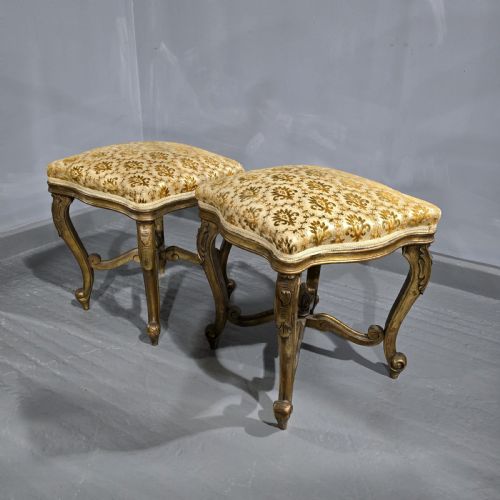
- A seating form supported by intersecting diagonal legs forming an X shape, seen in French Empire and revival designs. These pieces often feature gilded or carved wooden frames.
Velvet Upholstered Footstool: Frequently Asked Questions
What is a velvet upholstered footstool used for?
These pieces function primarily as low seats, dressing table supports, or footrests, while larger ottomans provide additional surface area or interior storage space.
They integrate easily into traditional and eclectic interiors, offering both decorative textile accents and practical utility in living rooms and bedrooms.
How do I identify a Victorian footstool?
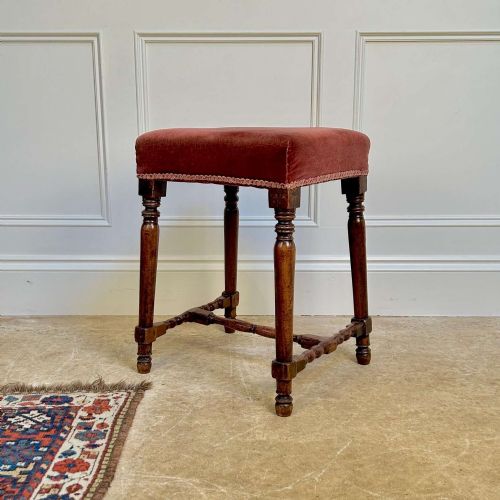
Victorian examples frequently utilise walnut, mahogany, or rosewood, often featuring turned legs, carved details, or deep buttoned upholstery.
Looking at the construction methods and secondary timbers helps confirm the nineteenth-century origin of the frame.
What is a gout stool?
A gout stool is a specialised nineteenth-century footrest equipped with an adjustable mechanism to elevate and angle the legs for comfort.
These pieces often feature beechwood frames and padded velvet or fabric surfaces designed to support the user.
Are piano stools adjustable?
Many period piano stools feature rotating mechanisms that allow the seat height to be adjusted for the player.
They combine robust wooden frames with compact proportions suited for musical instruments.