




Velvet Tub Armchair
A velvet tub armchair wraps you in a deep, curved embrace that has defined quiet corners and studies since the nineteenth century.
Velvet Tub Armchair
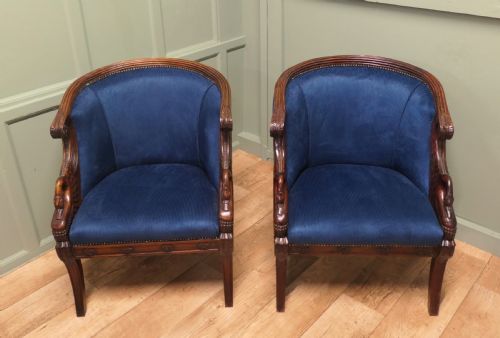
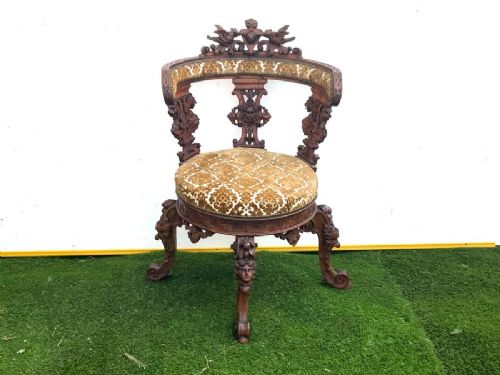
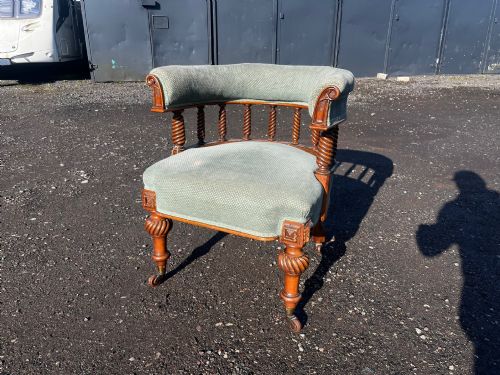
A velvet tub armchair combines a continuous, semicircular back and armrest with a low, upholstered seat designed for comfort. The velvet covering softens the rigid lines of the frame while adding rich texture to the silhouette.
Most examples found here span the Victorian and Edwardian eras, alongside earlier walnut library pieces and later Art Deco interpretations. These chairs appear as single reading seats, desk chairs, or paired alongside matching settees in lounge suites.
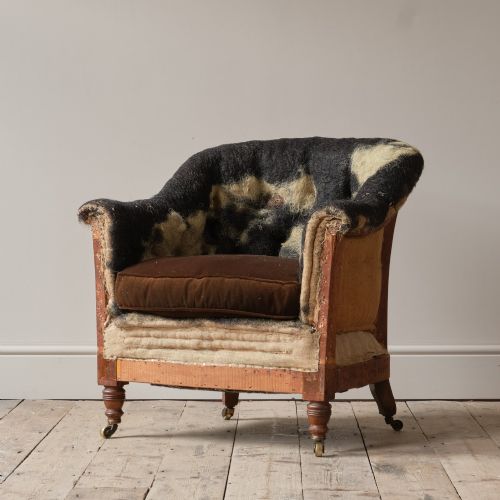
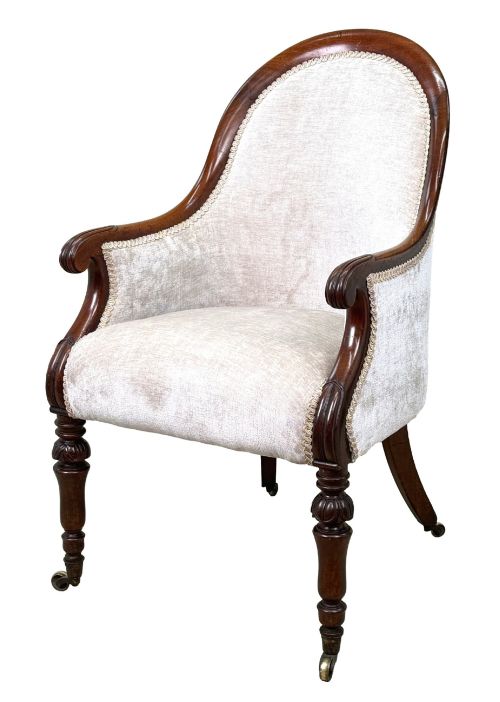
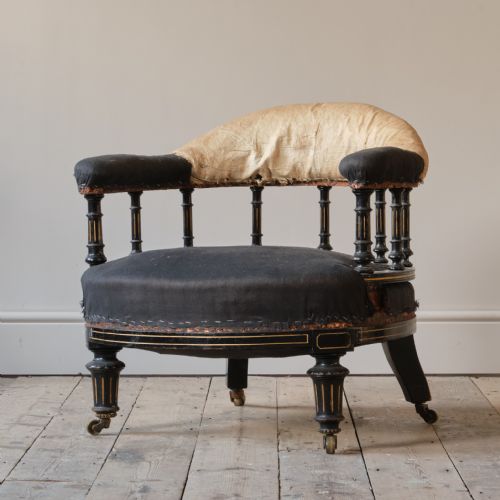
Makers often shaped the exposed timber frame from mahogany, walnut, or satinwood, resting upon brass castors or turned wooden legs. The enveloping barrel or tub shape remains the defining characteristic across all periods.
Materials and construction
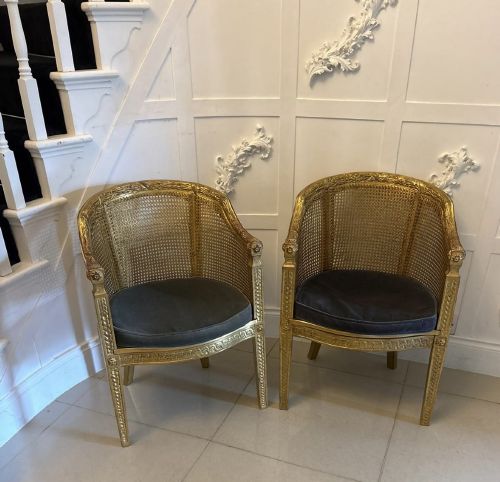
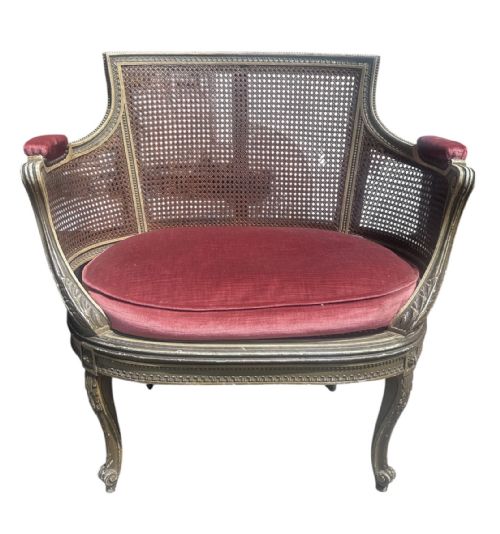
Traditional frames rely on hardwoods such as mahogany, walnut, and oak, carved or turned to support the curved backrest. Caning and cane panels occasionally feature alongside solid timber components in lighter bergere variations.
Upholsterers built the curved interior walls using traditional stuffing and tensioned springs before securing the outer velvet layer. Button-backed variants required deep tufting to hold the dense internal padding firmly in place.
Decorative details include brass hardware, inlaid satinwood, ebonised finishes, and gilt highlights applied to the exposed wooden framework.
Current listings feature velvet tub armchairs spanning the nineteenth century through the 1930s, utilising materials such as mahogany, walnut, brass, and cane.
Assessing quality and craftsmanship
The integrity of the internal wooden frame and the precision of the joinery dictate the longevity of any chair. Heavier hardwoods and robust foundational carpentry separate standard production seating from exceptional cabinet work.
The handling of the velvet upholstery, particularly around the tight curves of the tub back, reveals the skill of the upholsterer. Clean lines, even tension, and well-executed buttoning or piping indicate superior execution.
The quality of carved or inlaid details on the exposed mahogany, walnut, or satinwood elements elevates the piece from basic utility to fine furniture.
Gillows·Miles & Edward's·Hindley & Sons·Jenks & Wood
The Velvet Tub Armchair Glossary
- Tub chair
- An armchair featuring a continuous, curved back and arms that form a protective, enclosed shell. This form provides substantial side support.
- Bergere
- A French-style enclosed armchair with a wooden frame and cane or upholstered sides. These often include a loose seat cushion.
- Aesthetic Movement
- A late nineteenth-century design style focusing on art for art's sake, often incorporating simpler lines and rich surface decoration. Pieces from this movement reject heavy Victorian ornamentation in favour of refined form.
- Button-back
- An upholstery technique where buttons are pulled deep into the padding to create a padded, diamond-patterned surface. This method secures the internal filling while adding texture.
- Satinwood
- A pale, hard wood with a natural golden sheen used for fine cabinet making and inlay work. It appears frequently on late nineteenth-century and Edwardian pieces.
Velvet Tub Armchair: Frequently Asked Questions
What is a velvet tub armchair?
A velvet tub armchair is an enclosed seating option featuring a rounded, continuous backrest upholstered in plush fabric. The curved shell offers a snug, supportive sit.
These chairs have been produced in various styles since the nineteenth century, ranging from heavy Victorian library seats to lighter Edwardian boudoir designs.
How do I date a tub armchair?
Dating relies on examining the timber species, leg style, and construction methods used in the frame. Heavier rosewood and mahogany frames typically point to the nineteenth century, while lighter oak and satinwood often suggest Edwardian production.
Upholstery style, such as button-backing or the presence of cane panels, also helps narrow down the period of manufacture.
Where should I place a tub armchair?
The compact footprint of a tub chair makes it well suited for corners, studies, and bedrooms where space is limited. Their rounded backs look particularly striking when viewed from behind in an open room.
Pairing one with a matching sofa or placing a single chair beside a bookshelf creates a functional reading nook.
How do I care for antique velvet?
Antique velvet requires gentle handling to preserve the pile and prevent crushing. Regular light brushing with a soft-bristled brush helps maintain the texture and direction of the fabric.
Keep these chairs away from direct sunlight and excessive moisture to protect both the delicate textile and the underlying wooden frame.