




Uzbekistan Textile Art
Uzbekistan textile art brings bold Central Asian colour and rich tribal tradition into a room through historic wall hangings and embroidered panels.
Uzbekistan Textile Art
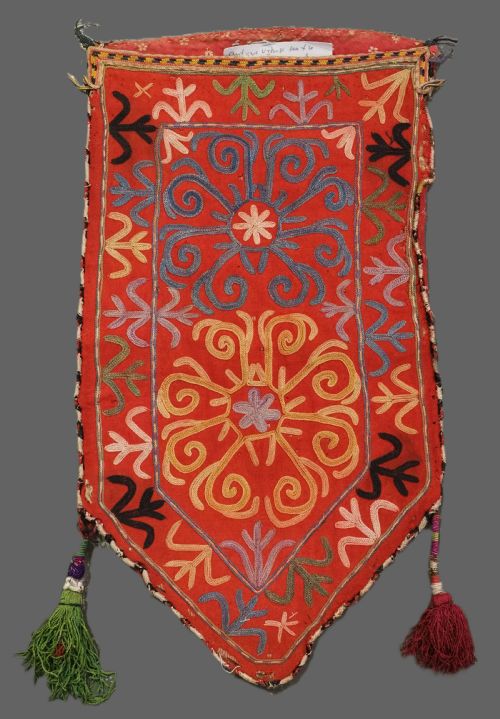
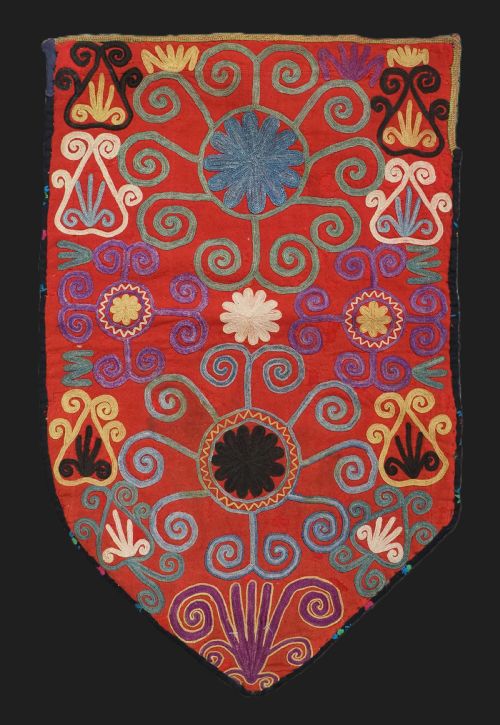
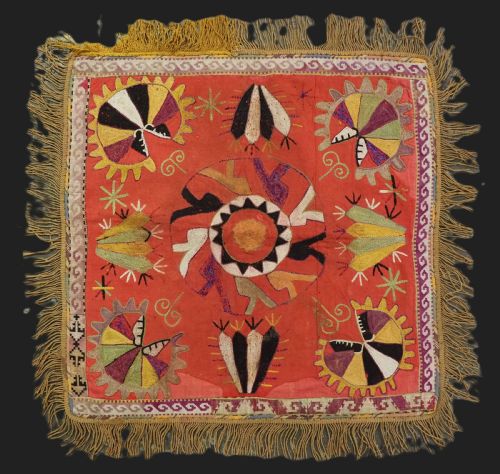
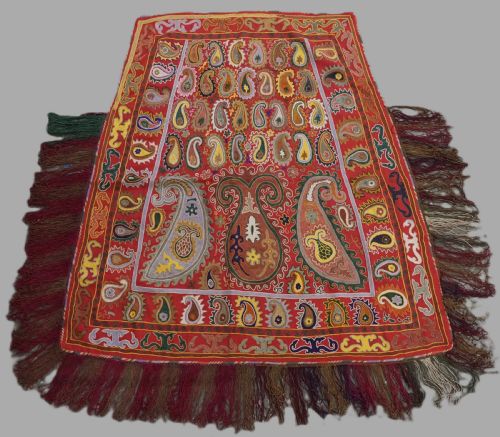
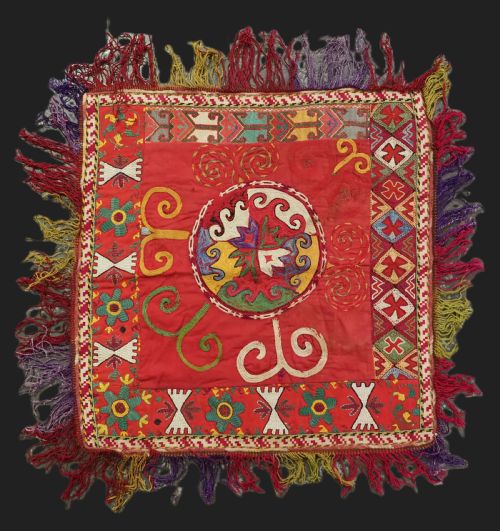
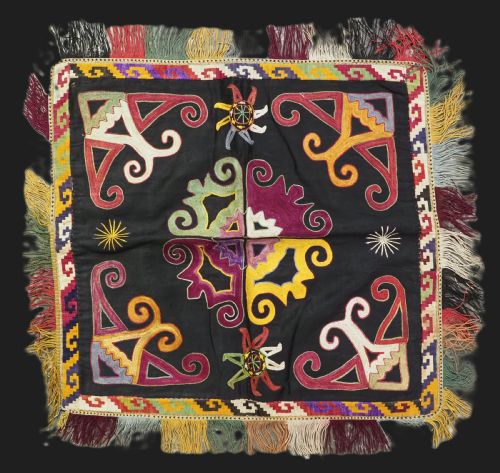
When you search for uzbekistan textile art, you encounter striking wall hangings, ceremonial horse and saddle covers, and embroidered panels originating from Central Asian tribal traditions. The items on this page span from the mid-nineteenth century through the early twentieth century, showing periods like 1850, 1890, 1900, and 1920. You are most likely to meet intricately embroidered dowry pieces such as ilgich wall hangings and suzani panels.
The objects stem from specific regional traditions including the Lakai tribe and Tashkent or Shakrisabz centres. Many pieces function primarily as textile wall art, transforming domestic spaces with graphic patterns and traditional motifs. Their forms range from large silk ikat panels to double-faced uut kap ilgich hangings.
How they were made
Makers utilised natural materials including silk, cotton, and wool, combining them to build rich surface textures. Embroidered works typically employ dense needlework on cotton or linen foundations using vibrant silk threads.
Ikat panels rely on resist-dyeing techniques applied to warp threads before weaving, creating characteristic blurred edges along the pattern lines. Tribal embroideries like those from the Lakai tribe incorporate geometric motifs and couched stitching.
Uzbekistan Textile Art Retail Price Guide 2026
Typical asking prices for uzbekistan textile art among the pieces listed under this phrase on Sellingantiques today, from the lower quarter to the upper quarter. They describe what is for sale here now, not the wider market.
Materials documented across these pieces are strictly limited to silk, cotton, and wool.
What varies in quality
The distinction between standard examples and exceptional pieces lies in the density of the needlework and the complexity of the design layout. Full work suzanis and finely executed dowry embroideries demonstrate superior craftsmanship through disciplined execution and balanced compositions.
Material preservation and the vibrancy of natural dyes also dictate the standing of an individual textile. Works displaying rich colour saturation and intact, detailed stitching command greater visual presence.
The Uzbekistan Textile Art Glossary
- Suzani
- An embroidered tribal textile from Central Asia, traditionally made as part of a bride's dowry. These large wall hangings feature botanical and geometric motifs worked in silk.
- Ikat
- A dyeing and weaving technique where threads are resist-dyed before being set on the loom. This process produces patterns with characteristic feathered outlines.
- Ilgich
- A specific form of hanging embroidery used in Central Asian households, often created by tribal groups for domestic decoration. They frequently incorporate dense geometric patterning.
- Torba
- A traditional bag or hanging piece used within nomadic and tribal tents for storage or ceremonial display. Examples often exhibit precise regional embroidery styles.
Uzbekistan Textile Art: Frequently Asked Questions
How do I hang a textile securely?
Mounting heavy embroidered panels requires distributing the weight evenly across a supportive fabric sleeve or backing.
Professional framers often attach a cotton sleeve to the back of the textile so a padded wooden slat can slide through without piercing the historic fibres.
How do I date an antique suzani?
Dating relies on examining the types of dyes used, the weave of the foundation cotton, and the stylistic evolution of regional motifs.
Earlier nineteenth-century pieces often display specific natural dye palettes and hand-spun backing cloths that differ from twentieth-century productions.
Are these textiles suitable for direct sunlight?
Historic dyed silks and cottons remain sensitive to ultraviolet light, which causes natural and early chemical colours to fade over time.
Placing these works away from direct south-facing windows preserves the intensity of the embroidery threads and protects the base fabric.