
Uzbek Embroidered Textile
Uzbek embroidered textile examples bring vibrant Central Asian folk art traditions into modern interiors through intricate needlework panels and wall hangings.
Uzbek Embroidered Textile
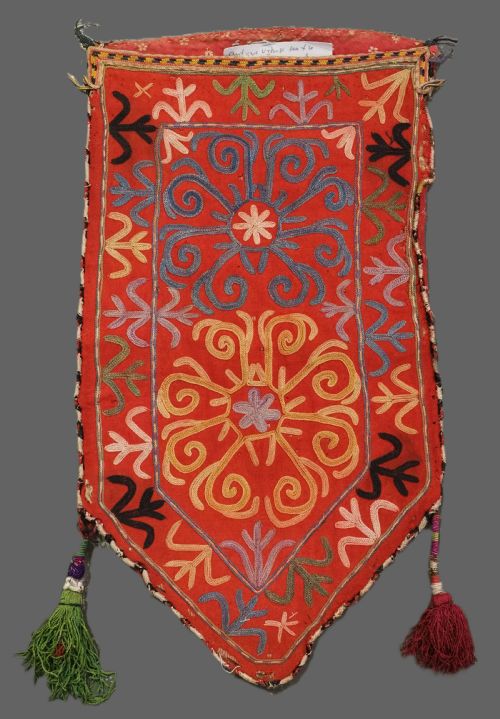
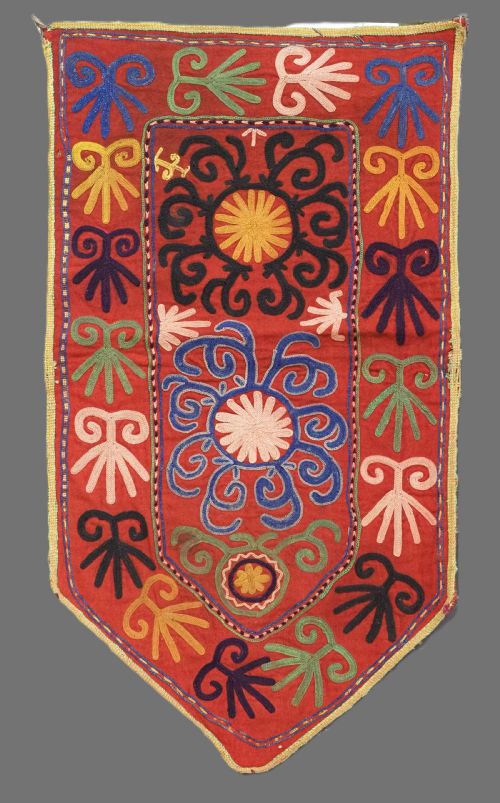
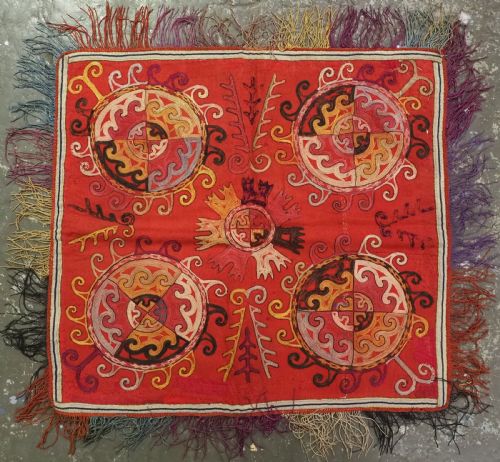
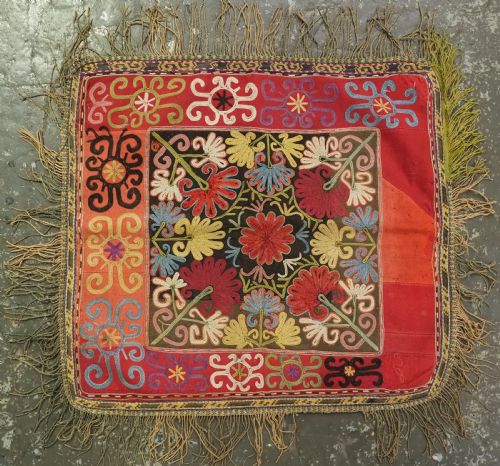
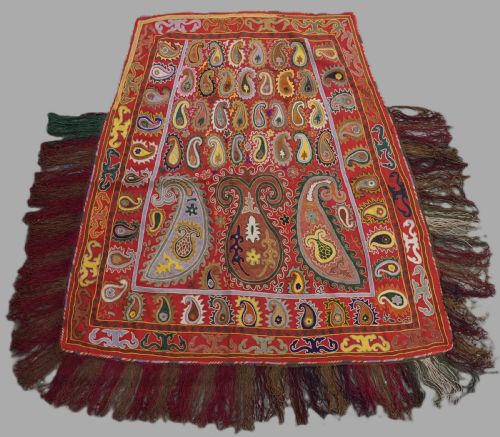
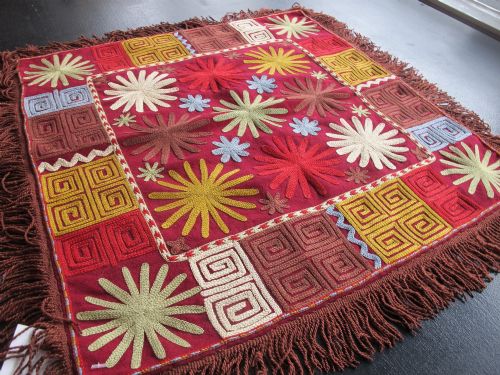
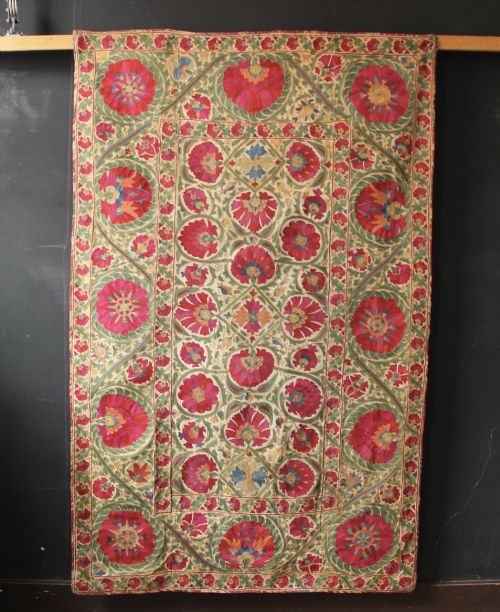
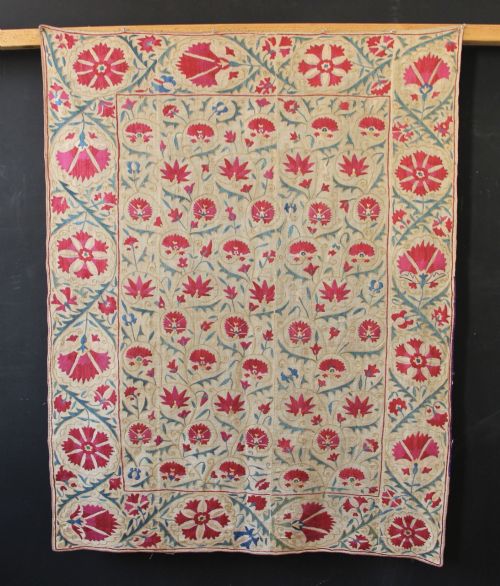
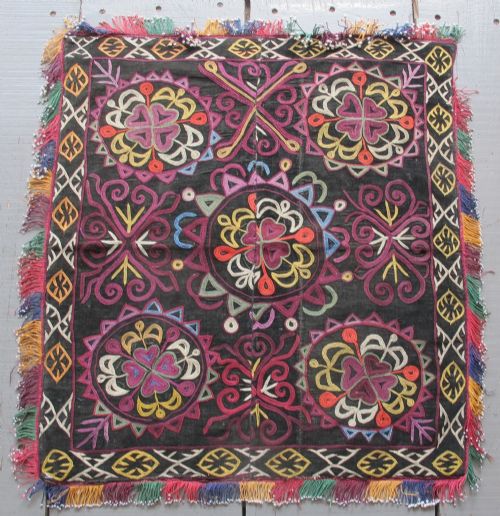
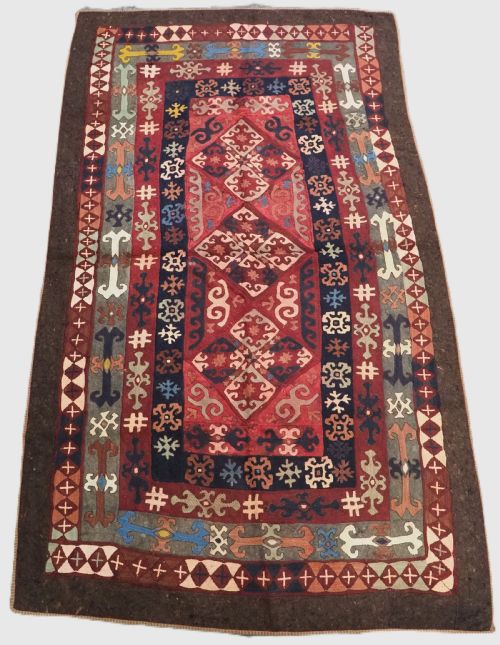
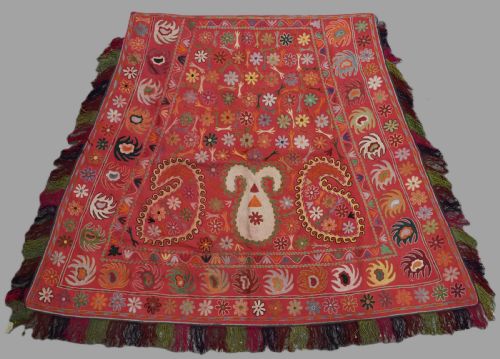
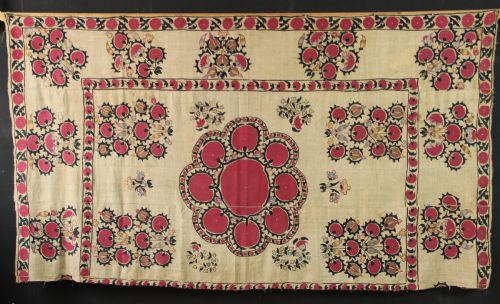
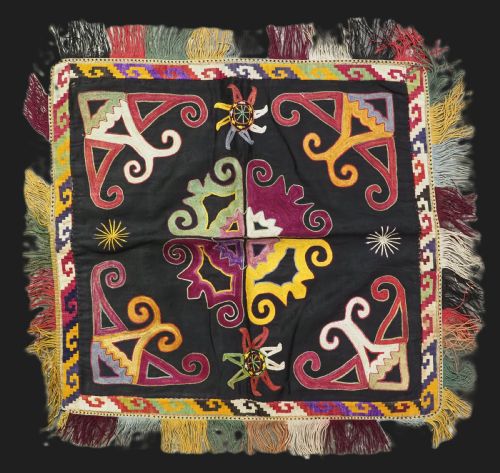
An uzbek embroidered textile encompasses traditional wall hangings, ceremonial horse covers, and domestic furnishings originating from Central Asia. Collectors frequently encounter pieces created by the Lakai tribe, alongside regional variations such as Bokhara suzanis, Ura Tube suzanis, and Nurata panels.
The inventory on this page spans periods from the early nineteenth century through to the early twentieth century, reflecting Central Asian tribal and folk art traditions. Common functional forms include ilgich wall hangings, bed covers, mirror covers, and saddle rugs utilised in nomadic and settled communities.
How they were made
Artisans constructed these textiles using silk thread, cotton, wool, and velvet, frequently applying embroidery onto woven grounds of linen, cotton, or wool. Specific examples incorporate glass beads, felted elements, and metallic thread brocade work to add texture and definition to the surface.
The inventory includes specialised forms such as Uut kap ilgich hangings, At Torba bags, ceremonial horse covers, and bed covers from regions like Bokhara and Shakrisabz.
What varies in quality
The fineness of the needlework and the complexity of the design layout distinguish standard panels from superior examples. Density of the silk thread coverage and the precision of the execution across the textile ground play a primary role in defining the standard.
Preservation of the original materials, including delicate silk threads, velvet grounds, and felt elements, influences the character of each piece. The coherence of regional motifs, such as architectural elements or medallion variants, reflects the skill of the original maker.
The Uzbek Embroidered Textile Glossary
- Suzani
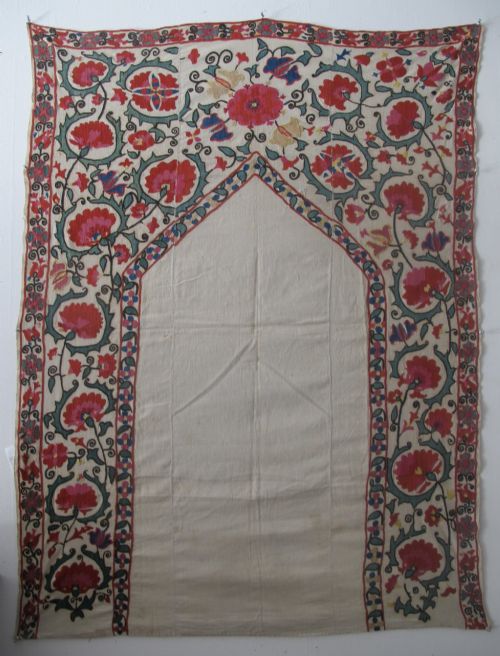
- An embroidered tribal wall hanging or domestic textile originating from Central Asia, traditionally worked in silk on a cotton or linen ground. These large panels were often created as part of a bride's dowry.
- Ilgich
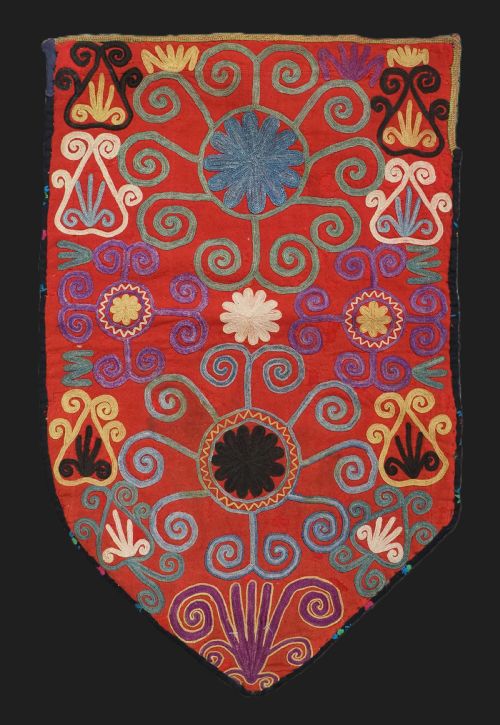
- A specific form of wall hanging or dowry embroidery associated with the Lakai tribe, often displaying geometric motifs and bold contrasts. They were made to decorate the interior of nomadic dwellings.
- Nim suzani
- A smaller version of the traditional suzani embroidery, measuring compactly compared to full-scale bed covers or wall panels. These pieces offer versatility for domestic display.
- Torba
- A utilitarian bag or hanging associated with Central Asian tribal groups, utilised for storage within yurt interiors. Examples often feature dense embroidery matching the regional textile traditions.
- Uut kap
- A specialised hanging or bag used in nomadic tent structures to cover the lattice wall junctions. They share decorative embroidery styles with contemporary ilgich pieces.
Uzbek Embroidered Textile: Frequently Asked Questions
How were uzbek embroidered textile pieces used traditionally?
Communities utilised these textiles as wall hangings, ceremonial horse covers, bed covers, and dowry items within nomadic and settled households. Many were created as part of a bride's trousseau to decorate the interior of the home.
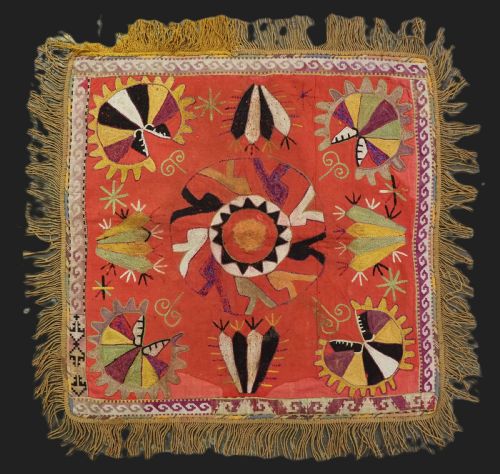
Smaller panels functioned as mirror covers or storage bags, combining practical durability with intricate decorative needlework that marked family status and tribal identity.
How do I care for an antique suzani?
Protect delicate silk embroidery and natural fabric grounds by mounting textiles safely away from direct sunlight and excessive humidity. Professional conservation framing using breathable materials preserves the integrity of the threads and ground.
Avoid folding older wool, cotton, or velvet textiles for long periods to prevent creasing and stress on the historical stitching.
What is the difference between a suzani and an ilgich?
Suzanis are typically large, floral or medallion-patterned embroidered panels originating from urban and regional centres like Bokhara, Nurata, and Ura Tube. They frequently employ silk on cotton grounds for domestic display.
Ilgiches are specific to nomadic groups such as the Lakai tribe, featuring dense geometric embroidery and distinct tribal motifs intended for interior tent decoration or dowry display.
How can I identify Lakai tribal embroidery?
Lakai embroidery is characterised by energetic geometric compositions, hooked motifs, and dynamic use of colour on wool or cotton grounds. These pieces often lack the symmetrical floral sprays found in urban suzanis.
The needlework frequently incorporates bold contrasts and compact forms suited to smaller items like saddle covers, mirror covers, and uut kap hangings.