






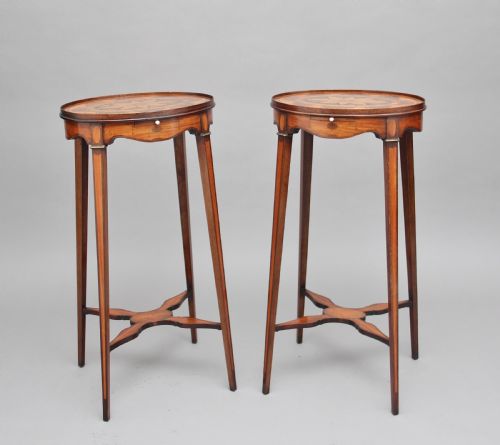


Urn Inlay Side Table
When you search for an urn inlay side table, you are looking at graceful occasional furniture designed to hold decorative vessels.
Urn Inlay Side Table
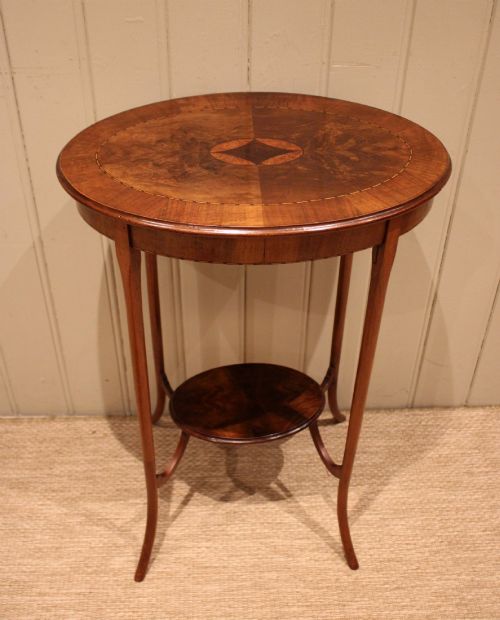
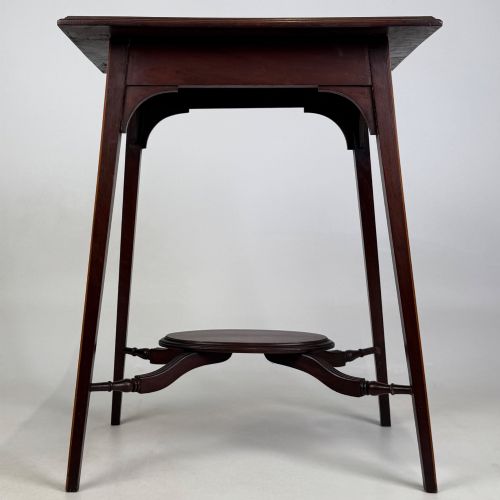
An urn inlay side table is a compact surface intended for display, drawing on Georgian, Regency, and Edwardian periods. The selection here spans occasional tables, urn stands, kettle stands, and lamp tables, often showing classic proportions and refined timber work.
Makers across the eighteenth, nineteenth, and early twentieth centuries produced these pieces in forms such as octagonal tables, demi-lune cabinets, and slender stands. Edwardian Sheraton Revival pieces sit alongside earlier George III examples, demonstrating a long tradition of decorative small tables.
How they were made
Makers utilised solid timbers and veneers, predominantly mahogany and satinwood, accented with boxwood and brass. Construction often involved precise turning and joinery to create stable frames for delicate tops.
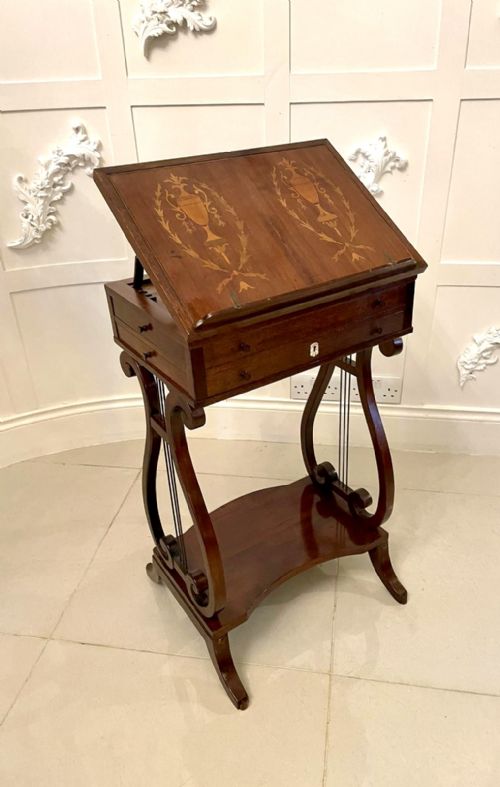
Inlay work forms a central decorative technique, combining contrasting woods to delineate urn motifs, borders, and geometric panels. Artisans also incorporated mother of pearl on specific Chinese export pieces to achieve surface pattern.
Urn Inlay Side Table Retail Price Guide 2026
Typical asking prices for urn inlay side table among the pieces listed under this phrase on Sellingantiques today, from the lower quarter to the upper quarter. They describe what is for sale here now, not the wider market.
Several tables double as kettle stands, proving that past generations took their tea ceremony very seriously indeed.
What varies in quality
Quality rests in the precision of the timber selection and the crispness of the inlay work. Finer examples display tightly figured mahogany or satinwood paired with sharply rendered boxwood stringing.
Proportion and structural integrity separate standard production from superior pieces. Well-balanced stands with clean joinery and intact decorative elements command greater visual presence.
The Urn Inlay Side Table Glossary
- Urn stand
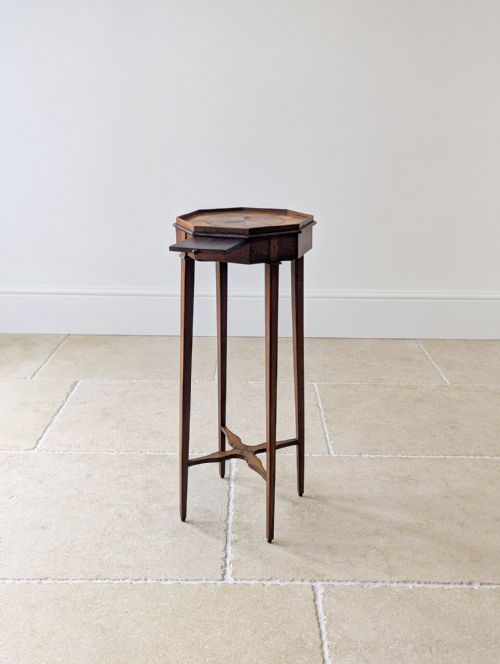
- A small, tall table specifically designed to support a decorative urn or kettle. These pieces often feature octagonal or square tops with raised edges.
- Satinwood
- A pale, lustrous hardwood prized by cabinetmakers for its golden sheen. It frequently appears as a primary veneer or in contrasting inlay panels.
- Boxwood
- A dense, pale wood utilised for fine stringing and inlay details. Its neutral colour provides sharp contrast against darker timbers like mahogany.
- Sheraton Revival
- A late nineteenth and early twentieth century design movement that reinterpreted the light, classical forms of the eighteenth-century designer Thomas Sheraton. Pieces from this period often incorporate delicate satinwood inlay and classical motifs.
- Demi-lune
- Half-moon shaped furniture designed to sit flush against a wall. These tables and cabinets offer compact surfaces for display.
Urn Inlay Side Table: Frequently Asked Questions
What is an urn inlay side table used for?
These tables function primarily as decorative display surfaces within a room. Historically, they held vessels such as tea urns or decorative stands.
Today, they suit modern interiors as lamp tables, plant stands, or occasional tables for small spaces.
How do I date an inlaid side table?
Dating relies on examining the timber species, construction methods, and overall stylistic vocabulary. Georgian pieces tend to show heavier construction and simpler native hardwoods.
Edwardian Sheraton Revival pieces often exhibit brighter satinwood veneers and machine-assisted precision in their inlay work.
Are these tables sturdy enough for daily use?
Most pieces in this category are built for light display rather than heavy weight. Their slender legs and delicate proportions require careful placement.
Placing lamps, small plants, or decorative items on them poses no issue if the joints remain tight and stable.
What is the difference between an urn stand and an occasional table?
Urn stands generally feature smaller, often octagonal or square tops designed for a single specific vessel. Their proportions tend to be taller and narrower.
Occasional tables provide broader surfaces intended for general placement beside seating or in hallways.