




Upholstery Frame Armchair
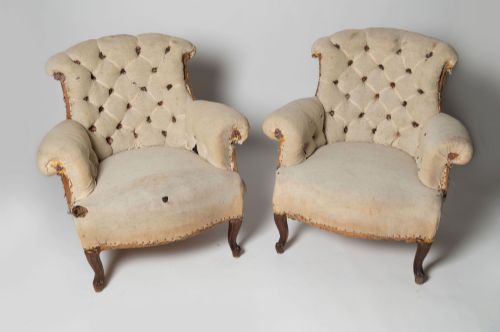
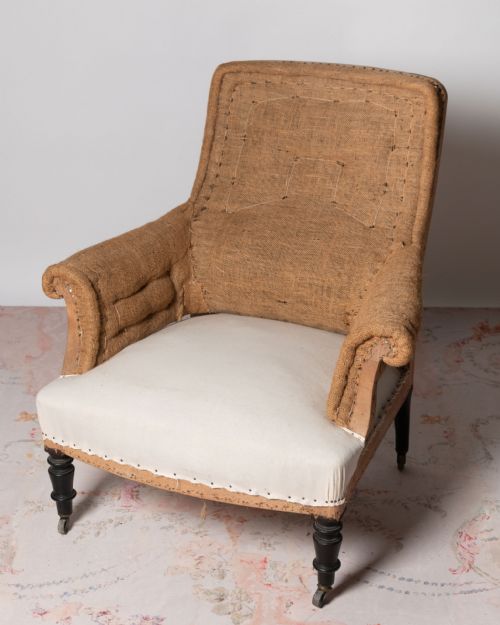
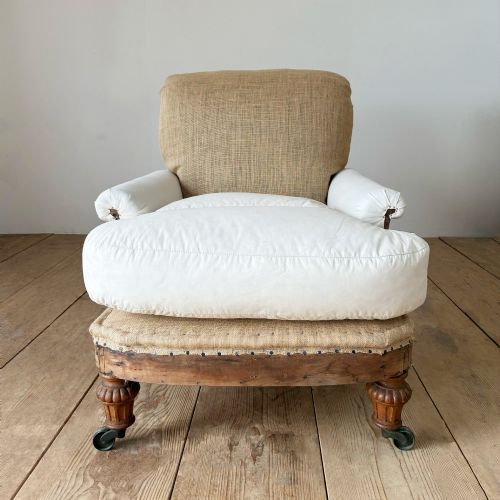
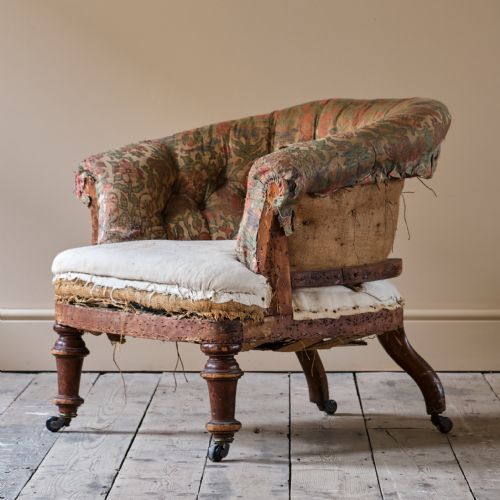
An upholstery frame armchair offers a solid foundation waiting for fresh cloth, giving you complete freedom to choose your own textile.
Upholstery Frame Armchair
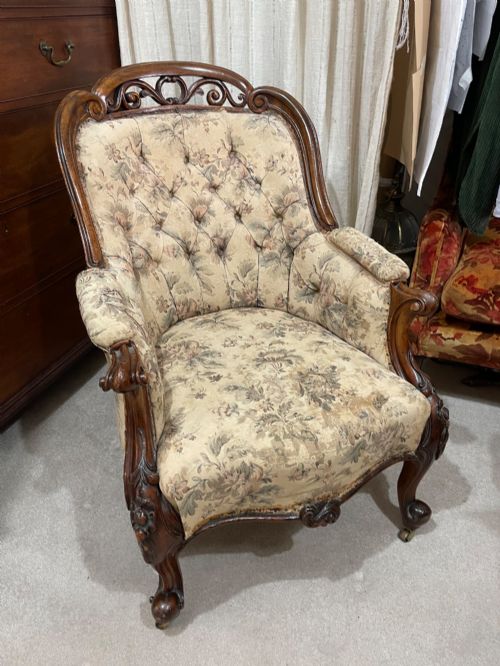
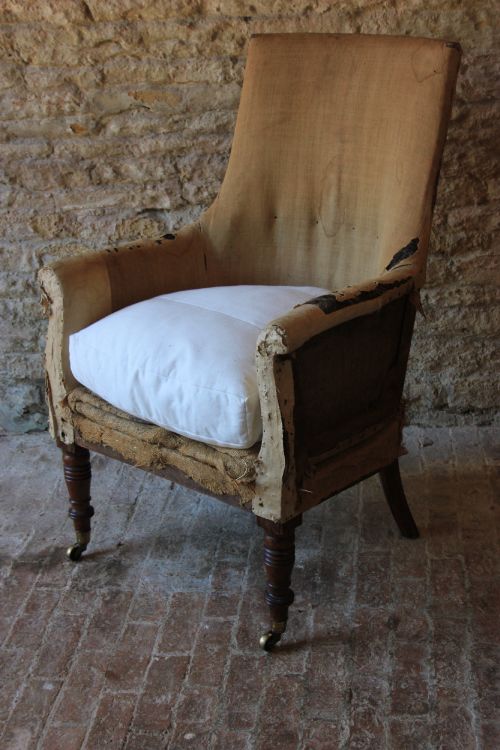
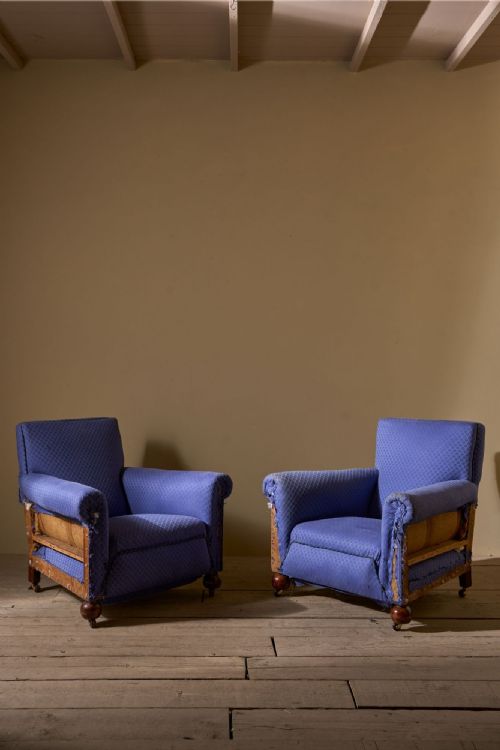
An upholstery frame armchair provides the structural skeleton of a seat, designed to be stripped, sprung, and covered in fabric according to taste. When you search for an upholstery frame armchair, you encounter robust carcases shaped for comfort, ranging from low fireside seats to deep club chairs.
The selections span the nineteenth century through the Edwardian era and into the nineteen-thirties, taking forms such as library chairs, wingbacks, tub backs, and open elbow designs. Walnut, mahogany, and beech timbers form the visible woodwork, often carved or turned with barley twists.
Makers such as Gillows and Howard and Sons appear among the records alongside French Napoleon III pieces and Louis XV style frames. Many pieces arrive ready for complete re-upholstery, while others retain calico, hessian, or older fabric layers.
How they were made
Makers built these frames using dense hardwoods like mahogany, walnut, and beech to ensure the structural integrity needed to support heavy springs and stuffing. Joinery involved traditional methods to withstand the constant tension of tight webbing and pulled fabric.
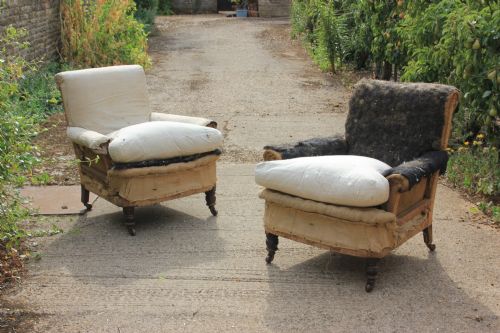
Internal construction relied on hessian cloth, horsehair, and coil springs, which were then covered in calico before the final decorative textile. Exposed wooden elements received hand-carved details, polished finishes, or painted surfaces depending on the prevailing style of the period.
Upholstery Frame Armchair Retail Price Guide 2026
Typical asking prices for upholstery frame armchair among the pieces listed under this phrase on Sellingantiques today, from the lower quarter to the upper quarter. They describe what is for sale here now, not the wider market.
Several armchairs wait patiently in bare timber, looking like intricate wooden skeletons dreaming of their future velvet coats.
What varies in quality
The distinction between ordinary workshop production and master craftsmanship lies in the weight of the timber and the crispness of the carved details. Superior frames utilise finely figured walnut or solid mahogany with deeply carved mouldings rather than simple turned beech.
Proportion and stance dictate the comfort and elegance of the finished seat, with better examples offering balanced arm heights and supportive rake to the back. The integrity of the underlying joints determines whether a frame remains rigid through decades of daily use.
Gillows·Howard And Sons
The Upholstery Frame Armchair Glossary
- Upholstery frame
- The exposed or hidden wooden skeleton of a chair before webbing, springs, and fabric are applied. This forms the base structure for all soft furnishing work.
- Wingback
- An armchair featuring protective side panels designed to shield the sitter from draughts near a fireplace. These projections extend upward from the arms to the backrest.
- Library chair
- A sturdy, comfortable seat traditionally kept in a study or reading room for long periods of sitting. These often feature low arms to facilitate easy movement.
- Open elbow
- An armchair design with unpadded, visible wooden armrests supported by upright pillars. The timber is polished and left bare of fabric.
- Barley twist
- A carved wooden furniture leg or stretcher resembling a rope twisted in a spiral. This decorative turning technique appears frequently on nineteenth-century frames.
- Hessian
- A coarse woven fabric made from jute fibres, used internally to contain stuffing and support padding. It provides a durable foundation layer beneath the outer cloth.
Upholstery Frame Armchair: Frequently Asked Questions
Can I sit in an upholstery frame armchair immediately?
Most frames sold specifically for upholstery require webbing, springs, and top fabric before regular daily use. Sitting directly on bare timber or exposed internal coils risks damaging the vintage structure.
Some pieces arrive with older calico or restored padding that permits immediate seating, but checking the condition of the internal webbing remains essential.
How do I choose the right fabric for my frame?
Consider the weight and style of the woodwork when selecting textiles, pairing heavy velvet with robust walnut or lighter cotton with painted surfaces. Traditional designs often suit patterned damasks or wool, while nineteen-thirties club shapes accommodate plain leather or thick weave.
Ensure the chosen material meets modern fire safety regulations if the chair is destined for a primary living space.
What is the difference between a wing chair and a fireside chair?
A wing chair incorporates side panels on the upper backrest designed originally to trap heat and block cold air currents. These frames tend to be deeper and taller, offering a more enclosed seating position.
Fireside chairs usually feature lower profiles and open sides, making them compact enough to sit comfortably near a hearth without dominating the room.
How do I date an antique armchair frame?
Examine the visible timber species, joinery techniques, and carved motifs to determine the likely period of manufacture. Mahogany and walnut predominated in earlier Victorian and Regency pieces, while beech became common for painted or simpler frames.
Maker stamps on the wood or webbing can provide definitive clues to the workshop origin and exact decade.