

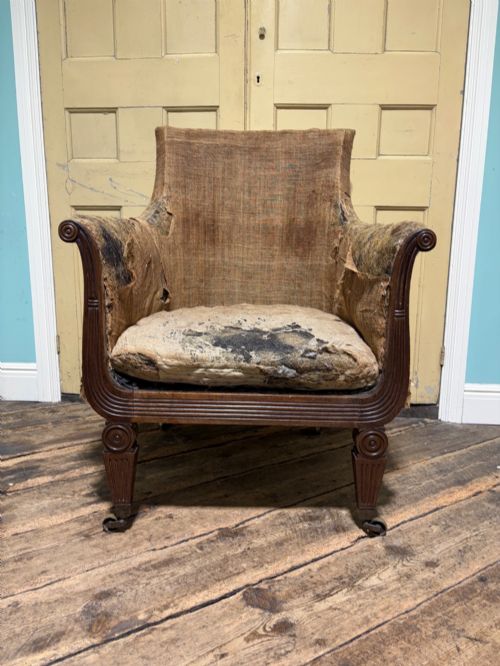
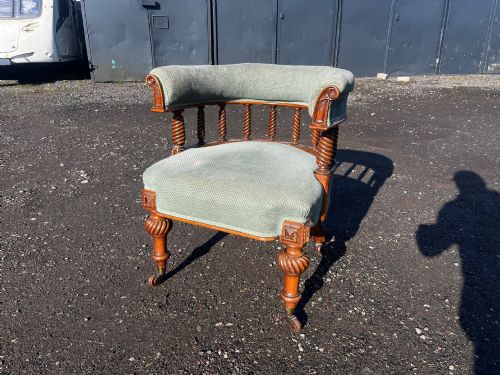
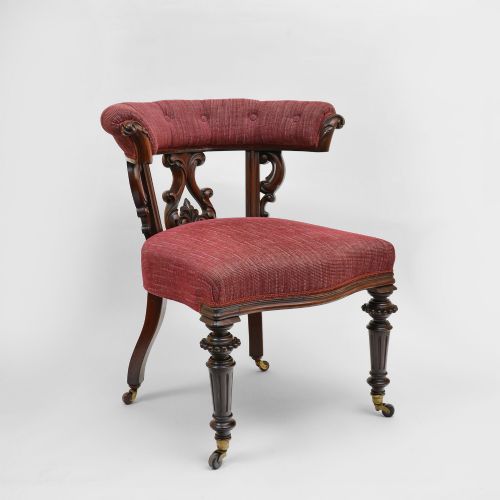
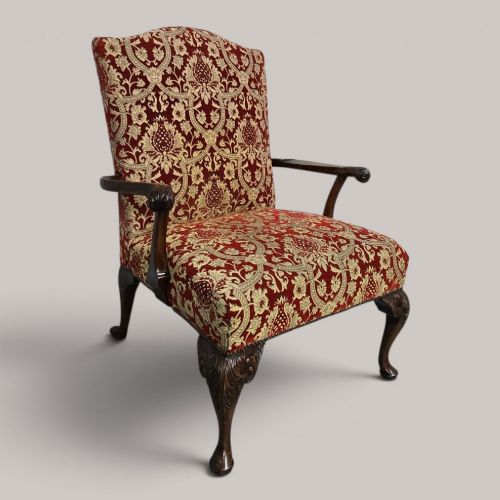

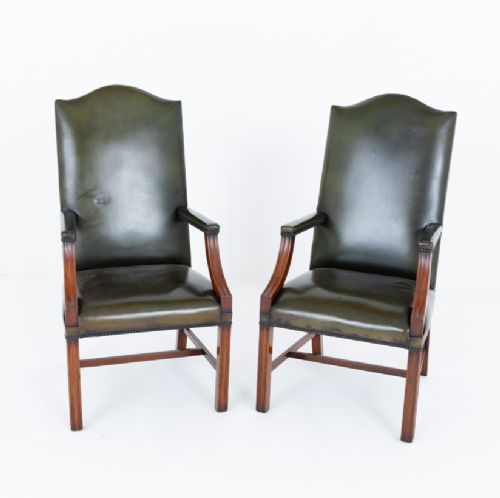


Upholstered Study Chair
An upholstered study chair brings working comfort to a room, offering robust support through long hours at a desk.
Upholstered Study Chair
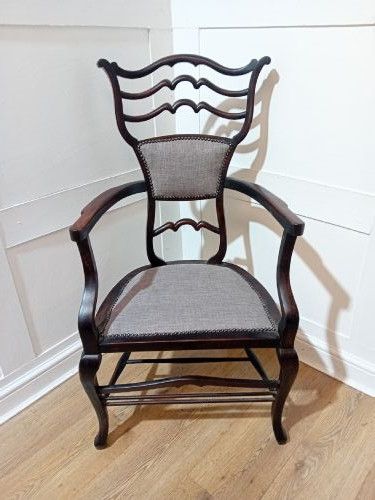
An upholstered study chair serves as a practical seat for reading and writing, appearing across periods from the eighteenth century through the Edwardian era. These pieces combine supportive armrests with padded seats and backs designed for prolonged sitting at a library table or partners desk.
The selections available here span diverse forms including mahogany library armchairs, oak club elbow chairs, and walnut desk seats. Regency and Victorian examples feature prominently, alongside earlier Georgian designs and later revivals from the nineteen twenties.
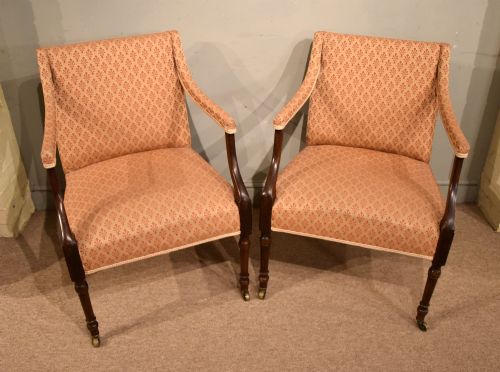
Most frequent among these listings are nineteenth century mahogany and oak models upholstered in leather or woven fabric. Buyers encounter both single armchairs and matched pairs suited for placement beside a twin pedestal desk.
Materials and construction
Timbers such as mahogany, oak, walnut, and rosewood form the structural frames of these seats, chosen for their density and grain. Carpenters shaped these hardwoods into curved arm supports, cabriole legs, and raked backs capable of withstanding daily movement.
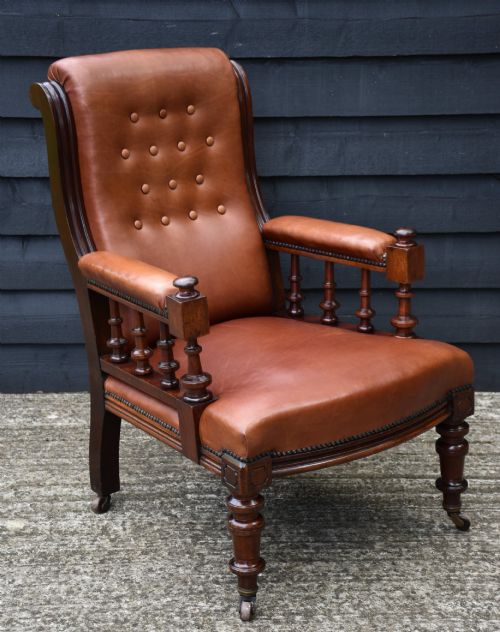
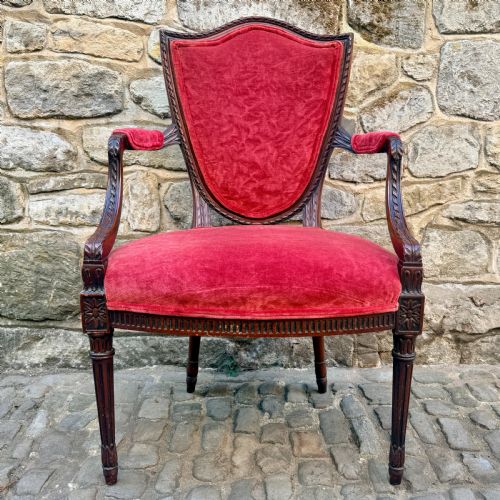
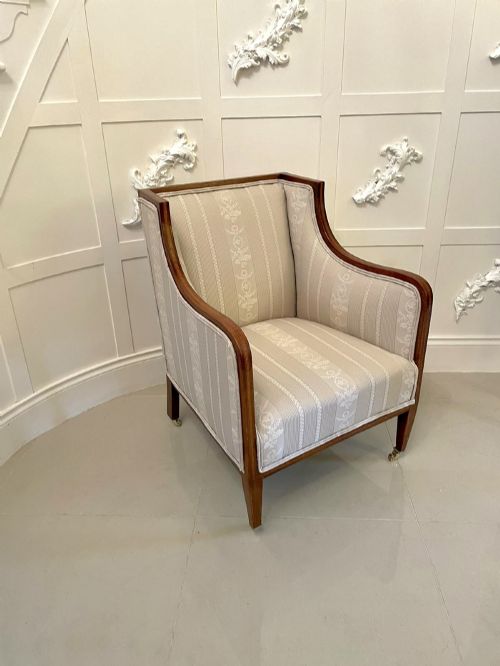
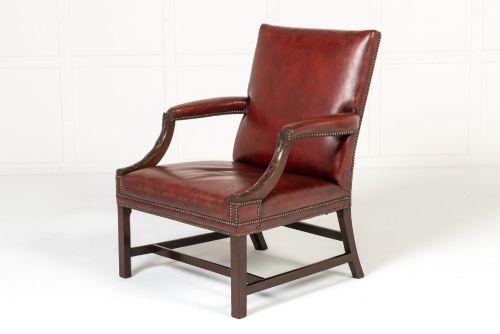
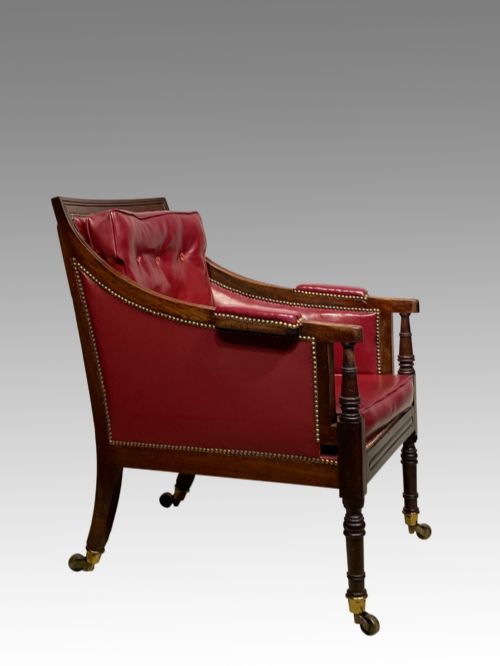
Coverings utilise traditional materials including cattle hide leather, velvet, tapestry fabric, and heavy wool upholstery. Brass studding often secures the leather edges directly to the wooden frame, combining structural fastening with a neat decorative border.
Upholstered Study Chair Retail Price Guide 2026
Typical asking prices for upholstered study chair among the pieces listed under this phrase on Sellingantiques today, from the lower quarter to the upper quarter. They describe what is for sale here now, not the wider market.
Listings span eight distinct decades and centuries, ranging from eighteenth-century Georgian forms to nineteen-twenties walnut designs.
Judging the standard
The calibre of a study chair rests upon the crispness of its timber carving and the architectural proportions of its frame. Superior examples demonstrate thoughtful joinery where legs meet the seat rails, ensuring long-term stability under regular use.
The grade of the secondary materials also dictates the standing of the piece, from the thickness of the selected mahogany or walnut to the quality of the hide or woven fabric. Original leather patination and untouched frame surfaces elevate an example above those with heavily replaced elements.
The Upholstered Study Chair Glossary
- Gainsborough chair
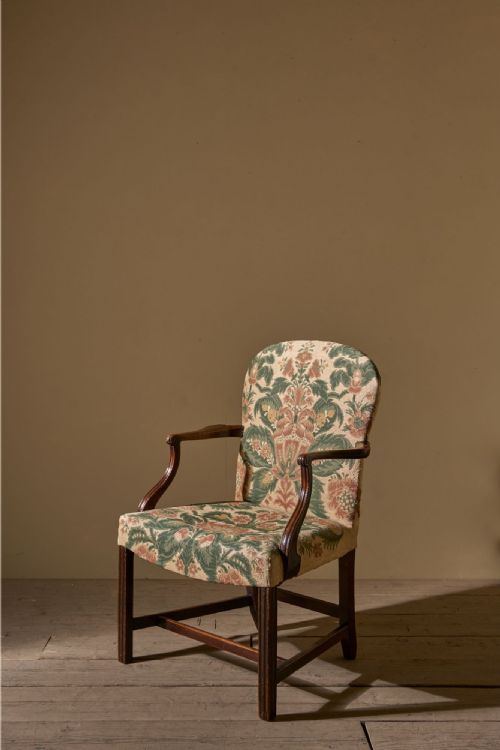
- A wide eighteenth-century armchair featuring an upholstered back and seat with open padded arms, designed specifically for writing tables.
- Tub chair
- A seating form characterised by a continuous curved back and armrest rail that wraps completely around the sitter.
- Elbow chair
- A traditional designation for an armchair with open wooden or padded arms, frequently utilised at a desk or writing table.
- Tapestry fabric
- A heavy woven textile featuring pictorial or geometric patterns, often employed for period upholstery on seventeenth and eighteenth-century style seats.
Upholstered Study Chair: Frequently Asked Questions
How do I choose the right height?
Check the clearance beneath your desk surface against the seat height of the chair to ensure proper legroom.
Traditional desk seats vary slightly by period, so measuring both pieces before purchase avoids awkward seating positions.
How should I care for leather upholstery?
Maintain leather surfaces by applying a specialist wax or conditioner periodically to prevent the hide from drying out.
Keep these chairs away from direct heat sources and strong sunlight to preserve the original tone of the material.
Can I mix different wood tones?
Pairing a mahogany or walnut desk chair with a table in a contrasting timber creates a layered, collected interior.
Period pieces share a natural warmth in their timber finishes that allows them to sit comfortably alongside one another.