





Upholstered Salon Suite
An upholstered salon suite brings matched elegance to a formal room, offering cohesive seating from settee to armchairs.
Upholstered Salon Suite
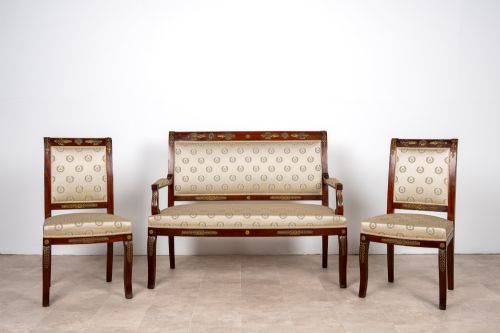
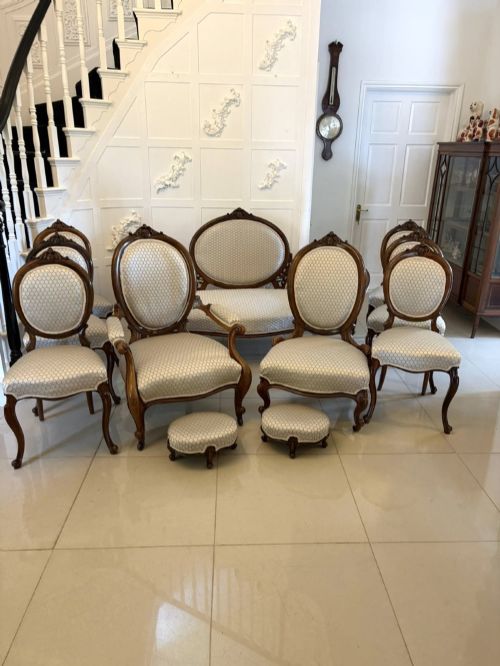
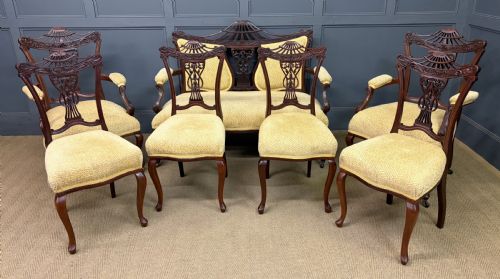
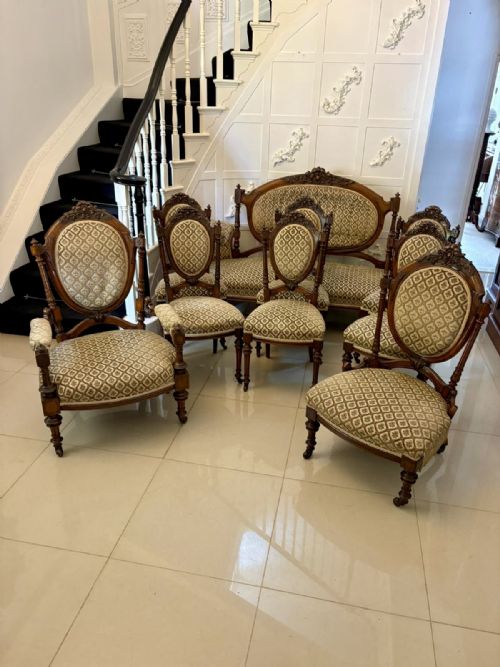
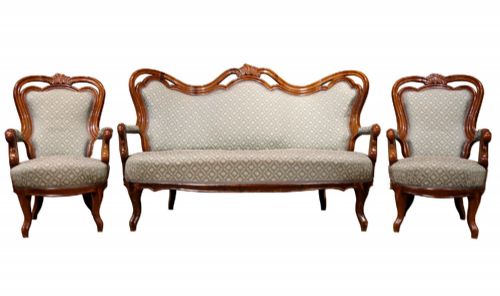
An upholstered salon suite comprises matched seating designed for formal drawing rooms and parlours, typically pairing a settee with a corresponding pair of armchairs or side chairs. These groupings range from compact three-piece sets to extensive eleven-piece arrangements including sofas, armchairs, side chairs, and footstools.
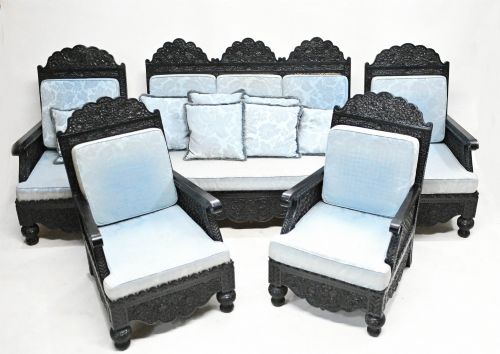
The selection on this page spans the eighteenth, nineteenth, and early twentieth centuries, reflecting shifting tastes in formal entertaining. Pieces originate from diverse European and colonial traditions, encompassing English domestic workshops, continental centres, and Anglo-Indian production.
Forms include traditional parlour suites, French revival seating, and bentwood variations. Buyers encounter various configurations, from small three-piece groupings to large multi-piece drawing room suites.
Materials and technique
Carpenters constructed the supportive frames of each upholstered salon suite primarily using dense hardwoods such as mahogany, walnut, and satinwood, occasionally incorporating padauk or rosewood for specific regional variants. Artisans shaped these structures through traditional joinery, frequently enhancing surfaces with marquetry inlay, carved details, or bright giltwood finishes.
Textiles defined the visual impact of the seating, utilising sumptuous fabrics like velvet, damask, and patterned silk textiles stretched over internal padding. Metal elements such as brass or ormolu mounts occasionally accent the woodwork, while structural stability depended on careful hand-carving and joinery.
Upholstered Salon Suite Retail Price Guide 2026
Typical asking prices for upholstered salon suite among the pieces listed under this phrase on Sellingantiques today, from the lower quarter to the upper quarter. They describe what is for sale here now, not the wider market.
Some nineteenth-century parlour suites include matching footstools designed so callers could keep their feet off cold drawing room floors.
Quality variations
The distinction between standard domestic seating and the finest examples rests on the depth and crispness of the hand-carved woodwork, the precision of any marquetry inlay, and the integration of decorative mounts like ormolu. Superior suites display harmonious proportions across every component piece, ensuring that settees and armchairs share consistent decorative motifs.
Makers who supplied high-end clients employed select timbers and meticulous joinery that maintained structural integrity over generations of use. The choice of original or period-appropriate upholstery fabric and the retention of matching elements within a large suite further separate workshop standards.
Baumann·John Tesch·James Shoolbred
The Upholstered Salon Suite Glossary
- Ormolu
- Gilded bronze used for decorative mounts on furniture frames. Artisans cast and chased these metallic ornaments to accent French revival and empire pieces.
- Damask
- A reversible figured fabric traditionally woven on a jacquard loom with patterns formed by contrasting warps and wefts. It frequently appears as period upholstery on formal drawing room suites.
- Marquetry
- The art of applying thin veneers of different woods to a structural surface to create pictorial or geometric designs. This technique decorates the wooden components of inlaid parlour suites.
- Settee
- A medium-length upholstered wooden bench with a back and arms designed for multiple occupants. These seats form the central anchor of most matching salon groupings.
Upholstered Salon Suite: Frequently Asked Questions
What pieces make up a salon suite?
A standard suite typically comprises a settee paired with two matching armchairs or side chairs. Larger groupings can extend to include multiple chairs, footstools, and larger sofas.
Buyers find sets varying from three pieces up to eleven pieces designed for expansive drawing rooms.
How do I date a salon suite?
Dating relies on the prevailing style, timber choices, and construction methods visible in the wooden frames. Victorian, Edwardian, and French revival influences each exhibit distinct decorative vocabularies.
Examining the turning, carving style, and upholstery techniques helps establish the period of manufacture.
Where were these suites originally used?
These matching seating arrangements served in the formal reception rooms, drawing rooms, and parlours of nineteenth and early twentieth-century homes. They provided coordinated seating for receiving guests and social gatherings.
The scale and decorative finish reflected the public rooms for which they were commissioned.
How do I care for antique upholstery?
Maintaining antique fabric requires gentle vacuuming with a soft brush attachment and protection from direct sunlight to prevent fading. Professional cleaning helps preserve delicate textiles like damask and velvet.
Wooden frames benefit from occasional dusting and maintenance suited to polished mahogany, walnut, or giltwood surfaces.