


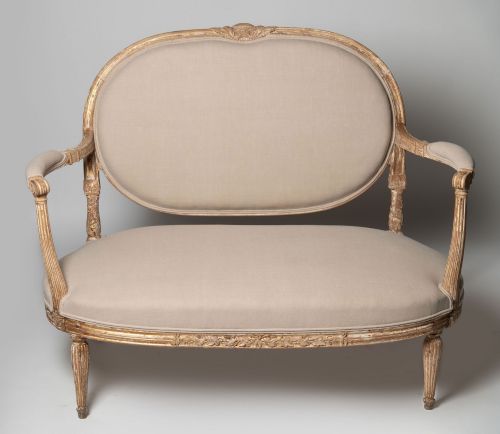
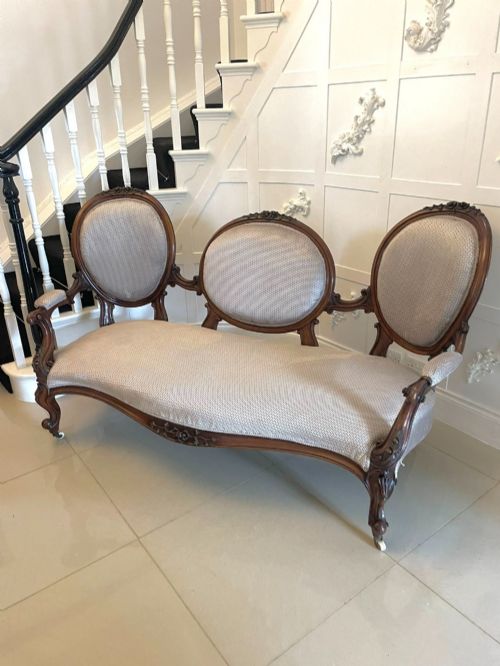
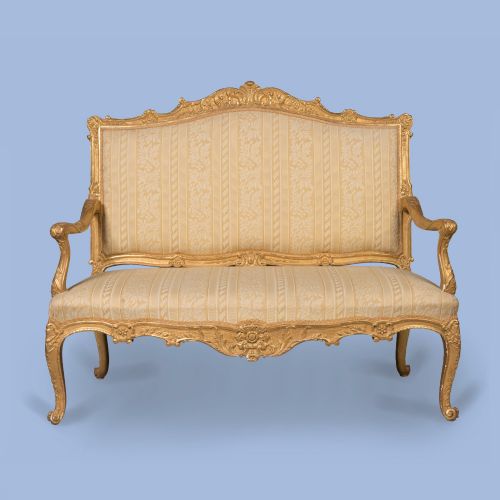
Upholstered Salon Settee
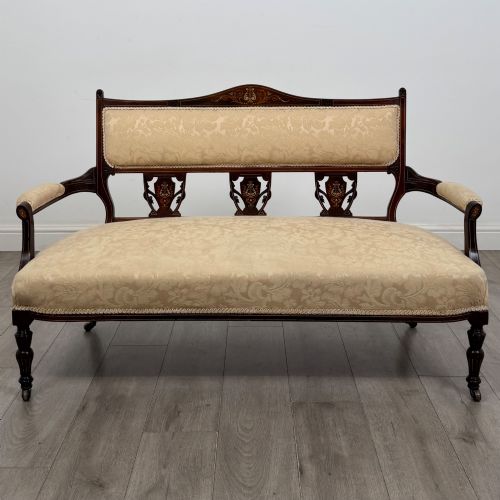
An upholstered salon settee brings formal nineteenth-century elegance to a room, offering compact seating framed in carved mahogany, walnut, or giltwood.
Upholstered Salon Settee
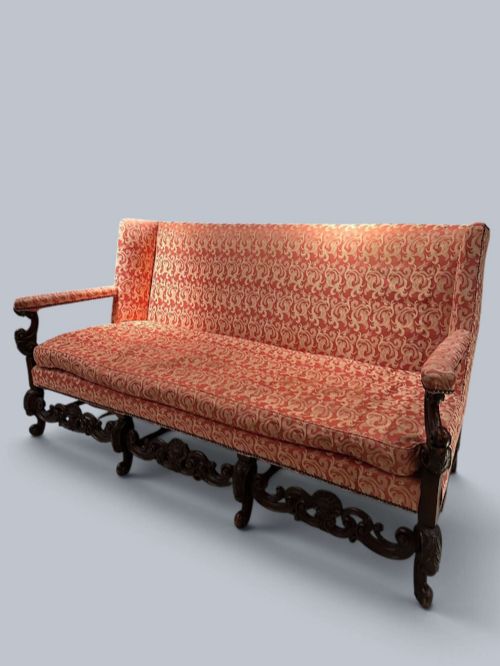
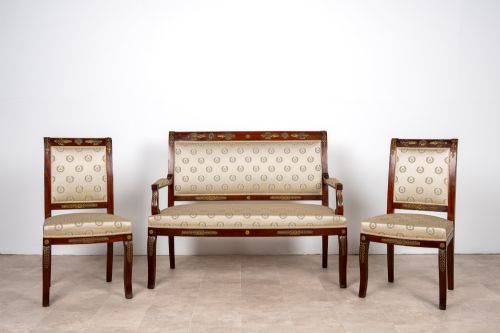
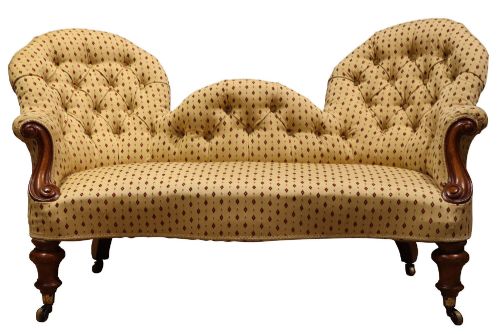
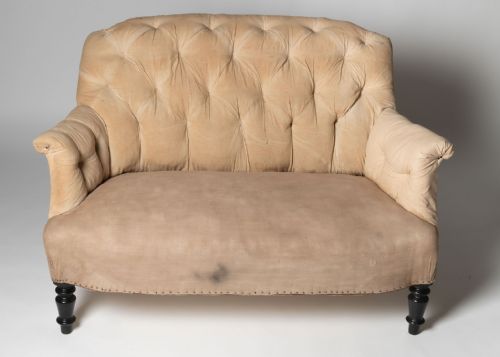
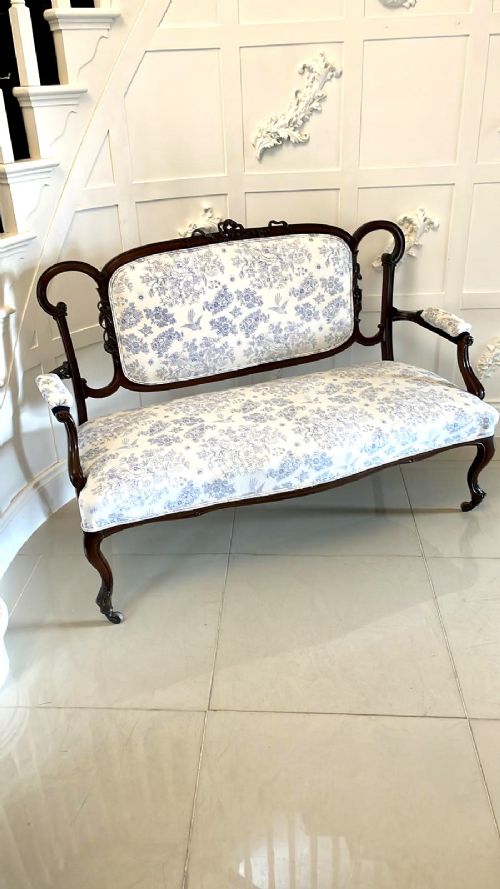
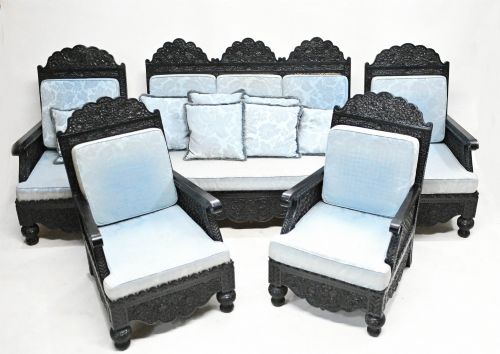
When you search for an upholstered salon settee, you encounter nineteenth-century and early twentieth-century seating designed for formal reception rooms. These pieces appear as compact sofas, canapés, and multi-piece salon suites spanning Victorian, Edwardian, and French revival styles.
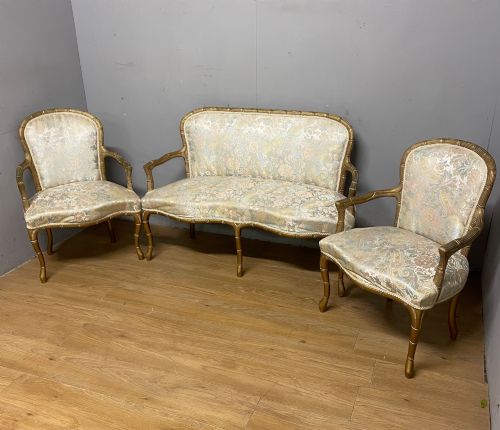
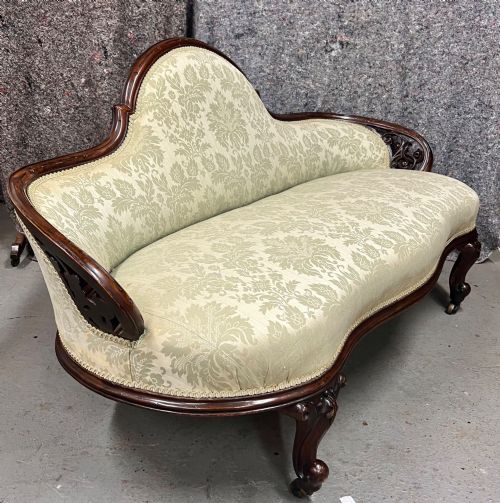
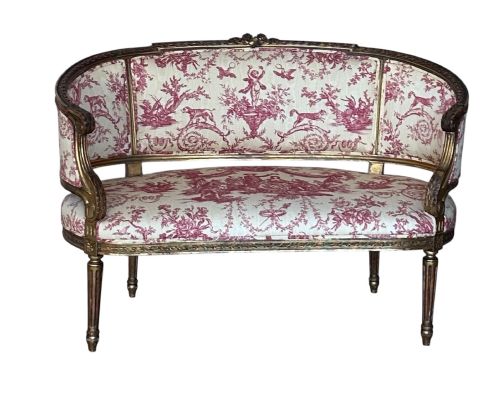
The most common examples on this page are Victorian walnut and mahogany frames, alongside French Louis XV style giltwood and painted canapés. Makers utilised rich textiles, including velvet, silk, and brocade, to cover sprung or padded bases.
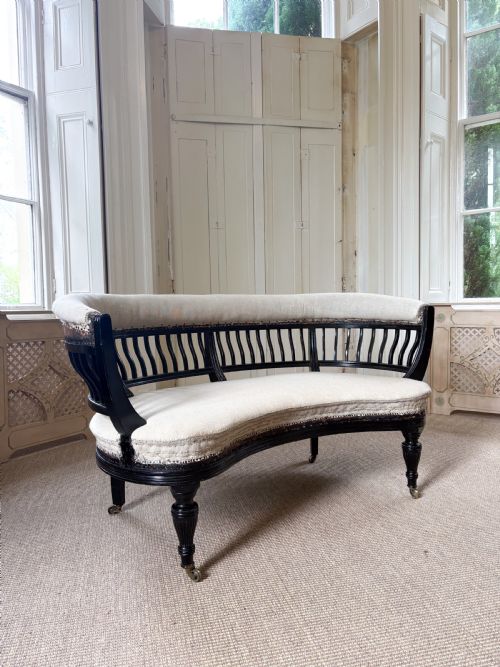
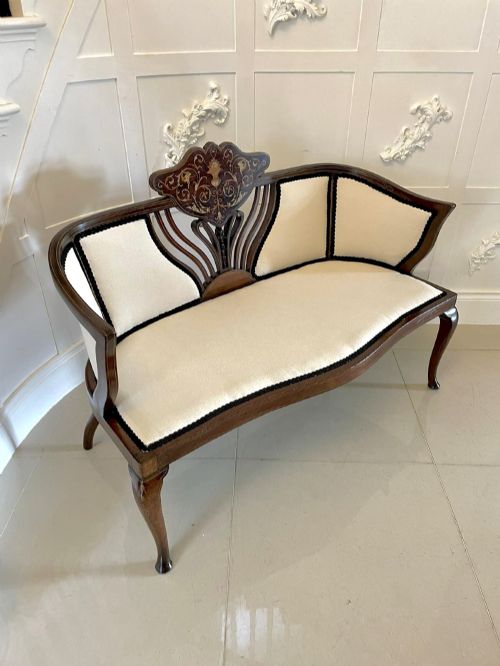
Formats range from double-ended sofas and cameo back designs to inlaid satinwood pieces and spindle back salon seating. Many originate from British cabinet makers or continental workshops adhering to classical revival aesthetics.
Materials and Construction
Carved timber frames form the structural core of an upholstered salon settee, utilising dense hardwoods such as mahogany, walnut, rosewood, and ebonised wood. Giltwood and painted finishes appear frequently on continental pieces executed in the Louis XV manner.
Upholstery techniques rely on traditional springing, horsehair stuffing, and deep buttoning, finished with textile coverings like velvet, silk, and brocade. Decorative details incorporate brass or ormolu mounts, bone inlay, and intricate wood carving.
Upholstered Salon Settee Retail Price Guide 2026
Typical asking prices for upholstered salon settee among the pieces listed under this phrase on Sellingantiques today, from the lower quarter to the upper quarter. They describe what is for sale here now, not the wider market.
The furniture styles span Victorian revival, Louis XV design, and aesthetic movement ebonised framing.
Distinction in Craftsmanship
The distinction between tiers of quality rests in the crispness of the timber carving and the integrity of the frame construction. Superior pieces display deeply sculpted woodwork, robust joinery, and well-balanced proportions that maintain stability over generations.
Surface finish and material selection further separate standard items from finer examples. High-grade items feature select timbers, refined patination, and high-specification textile choices such as silk or deep-pile brocade that complement the architectural style of the frame.
C. Hindley & Sons·Morison & Co
The Upholstered Salon Settee Glossary
- Canapé
- An ornamental French sofa featuring an exposed wooden frame, often carved in the Louis XV style with cabriole legs.
- Cameo back
- A chair or settee back shaped like a medallion or oval, popular in Victorian walnut seating.
- Giltwood
- Timber treated with gold leaf or gilt finish, commonly seen on French decorative furniture.
- Inlay
- A technique where contrasting materials like satinwood or bone are inserted into the wood surface to create decorative patterns.
- Settee
- A medium-sized upholstered seat with a back and arms, designed to accommodate more than one person.
Upholstered Salon Settee: Frequently Asked Questions
Where should I place an upholstered salon settee?
These compact seats suit drawing rooms, bedrooms, or large hallways where formal occasional seating is required. Their ornate frames look best positioned away from walls to display the carved woodwork.
Because they offer shorter lengths than standard modern sofas, they fit neatly into alcoves or act as focal points at the end of a bed.
How do I care for the antique upholstery?
Protect delicate textiles like silk, velvet, and brocade by avoiding direct sunlight and utilising gentle vacuum attachments to remove dust. Professional cleaning helps preserve fragile nineteenth-century fabrics.
Maintain the exposed wooden frame with appropriate wax polish, taking care to keep chemical polishes away from the fabric edges.
How do I identify a Victorian piece from an Edwardian one?
Victorian frames typically employ darker, heavier timbers like walnut and mahogany with deep buttoning and rich velvet or brocade upholstery. Carvings tend to be robust and heavily detailed.
Edwardian examples often display lighter satinwood inlay, bone detailing, and brighter aesthetic influences, reflecting a shift toward airier drawing room furniture.
Are these settees comfortable for daily lounging?
Designed for formal reception rooms rather than relaxed lounging, these seats feature upright postures and firm sprung or padded bases. They provide structured support for reading or conversation.
Depth and height vary significantly across French and British styles, so checking dimensions ensures the piece matches your comfort expectations.