


Upholstered Long Bench
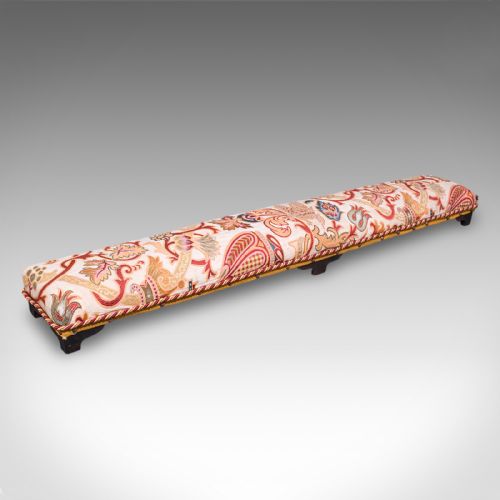
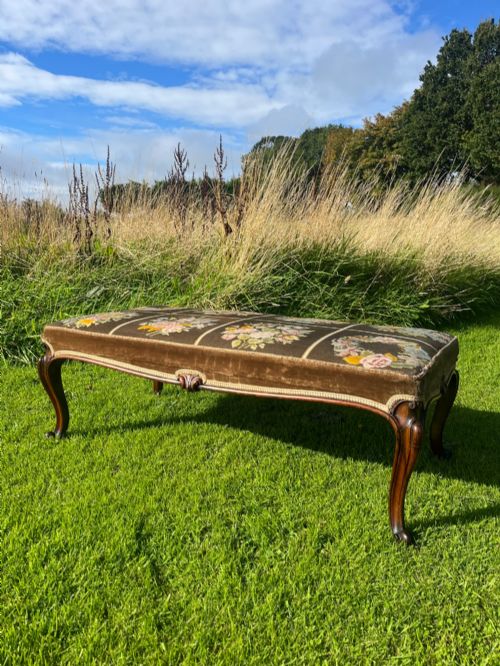
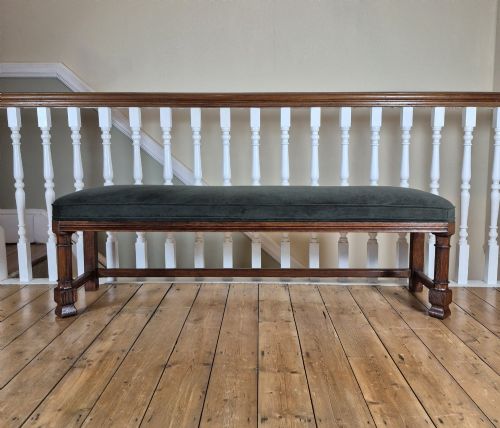
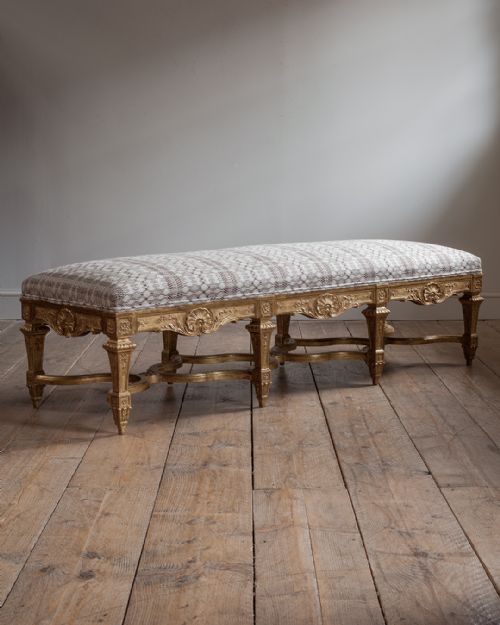
An upholstered long bench provides generous seating and rests easily at the foot of a bed or beneath a window.
Upholstered Long Bench
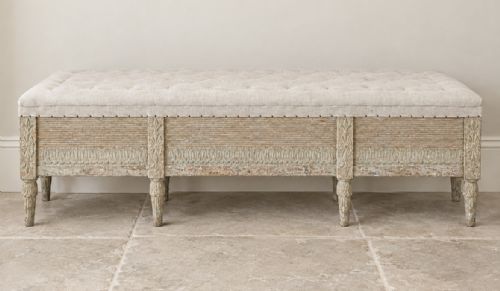
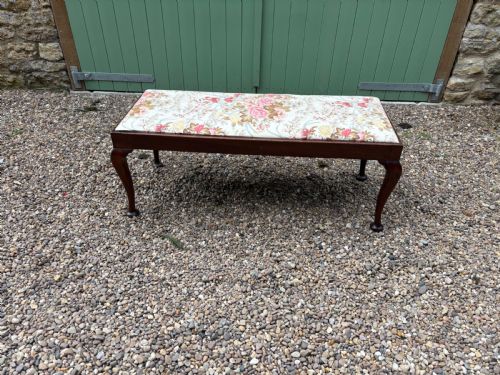
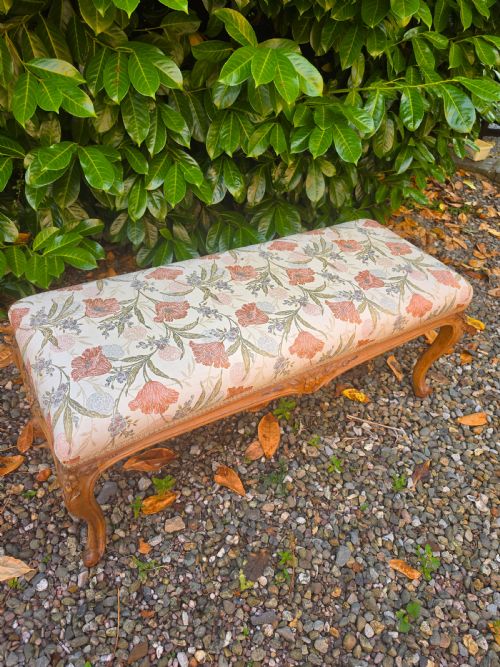
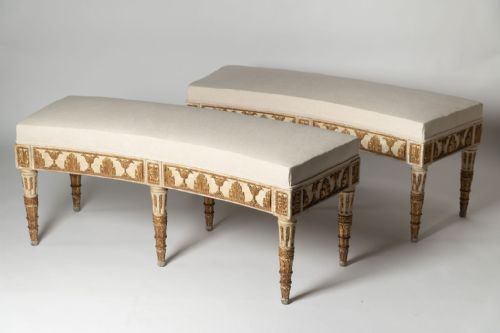
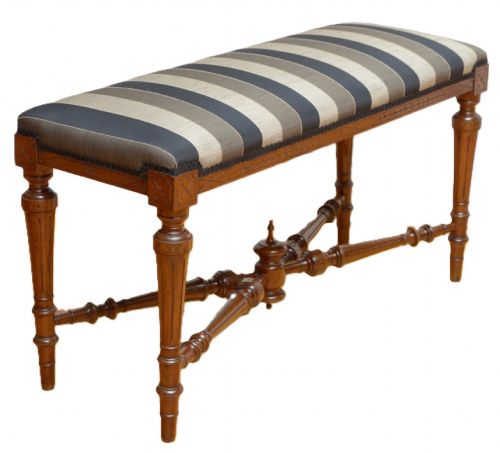
An upholstered long bench bridges the gap between a stool and a settee, taking forms such as window seats, hall benches, and extended footstools. These pieces serve practical functions in hallways, bedrooms, and reception rooms, offering comfortable padded surfaces supported by sturdy timber frames.
The selection ranges from Victorian walnut and mahogany examples to earlier Georgian and Regency designs, alongside Arts and Crafts and Edwardian iterations. Buyers frequently encounter long benches and stools dating across the nineteenth and early twentieth centuries, constructed in varied regional workshops across Britain and continental Europe.
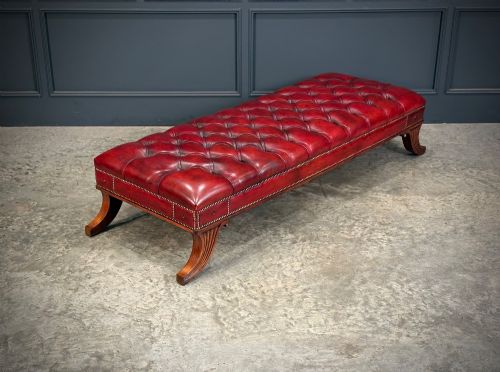
Makers often adapted formal styles including Gothic Revival, Queen Anne, and Louis XIV, applying textiles ranging from antique kilim and leather to modern patterned velvets and plain linen. Their elongated proportions accommodate multiple sitters or provide a substantial rest for the feet.
How they were made
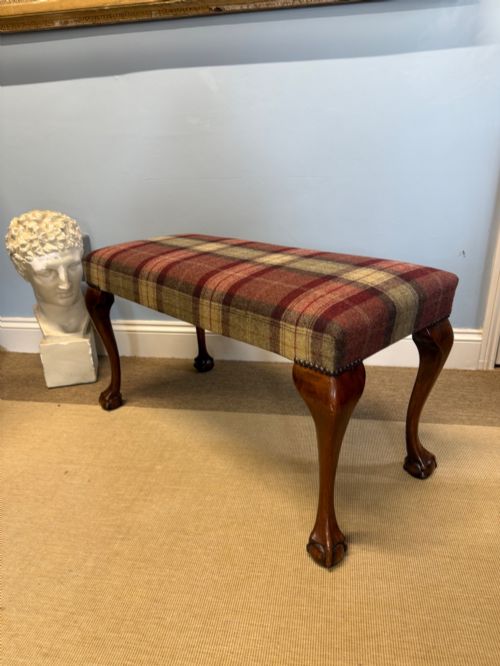
Makers built the structural frames of an upholstered long bench using dense hardwoods such as mahogany, oak, walnut, and rosewood, joined with traditional carpentry methods. Carved details, fluted legs, and ball and claw feet reveal the hand of skilled cabinet makers working within distinct historical styles.
Upholstery techniques involved durable webbing and stuffing beneath top coverings of leather, wool, textile, or brass-studded fabric. Decorative touches such as giltwood finishes, painted surfaces, and turned elements completed the construction of these versatile furnishings.
One exceptionally accommodating Victorian piano duet stool includes a hinged seat for hiding sheet music out of sight.
What varies in quality
The integrity of the timber frame and the refinement of its carved or turned members distinguish finer examples from simpler utilitarian seating. Well-drawn proportions and harmonious scaling separate bespoke pieces from standard production items.
The choice of covering materials, whether original leather, historic kilim, or specialist textile, contributes significantly to the character and preservation of the bench. Frame stability and the quality of the underlying upholstery build determine daily resilience.
Morris And Co
The Upholstered Long Bench Glossary
- Window seat
- A long, narrow bench designed specifically to fit into the recess of a bay or window. These typically feature low arms or backrests to preserve the view.
- Kilim
- A flatwoven textile often utilised for durable and decorative upholstery. It adds geometric pattern and texture to nineteenth-century frames.
- Giltwood
- Timber coated with a thin layer of gold leaf. This finish appears frequently on French and revival period decorative stools.
Upholstered Long Bench: Frequently Asked Questions
Where should I place an upholstered long bench?
These benches sit comfortably at the foot of a double bed, along an entrance hallway, or positioned beneath a large window. Their elongated proportions fill empty floor spaces effectively.
They also function well beside a living room fireplace or as extra seating in a reception room when entertaining guests.
How do I identify the period of a bench?
Examination of the timber, turning style, and joinery reveals the likely era of manufacture. Victorian and Edwardian examples often display machine-assisted turning alongside traditional hand-carving.
Earlier Georgian and Regency pieces show refined proportions, hand-cut joinery, and distinct secondary timbers that signal an eighteenth or early nineteenth-century origin.
Were these benches used for sitting or resting feet?
Historic long benches served both purposes depending on their height and context. Lower versions acted as footstools or fender rests by the hearth.
Taller examples functioned as window seats, dressing stools, or hall benches designed for upright sitting when putting on shoes.
What fabrics are typical for these pieces?
Original and replacement coverings include buttoned leather, wool tweed, decorative kilim, and printed velvet. Brass studding frequently secures the edges of leather and heavy textile upholstery.
Many pieces have been recovered in later linens or designer fabrics to suit contemporary interiors while retaining their antique frames.