



Upholstered Ladies Chair
An upholstered ladies chair is a low-slung Victorian or Edwardian seat designed for comfort and ease of movement in the drawing room.
Upholstered Ladies Chair
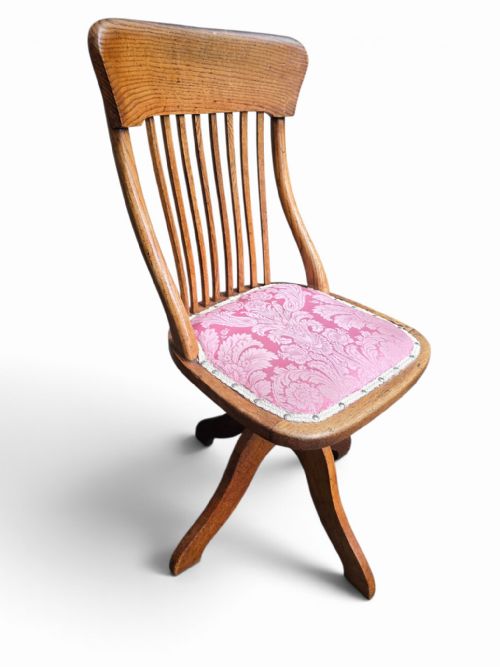
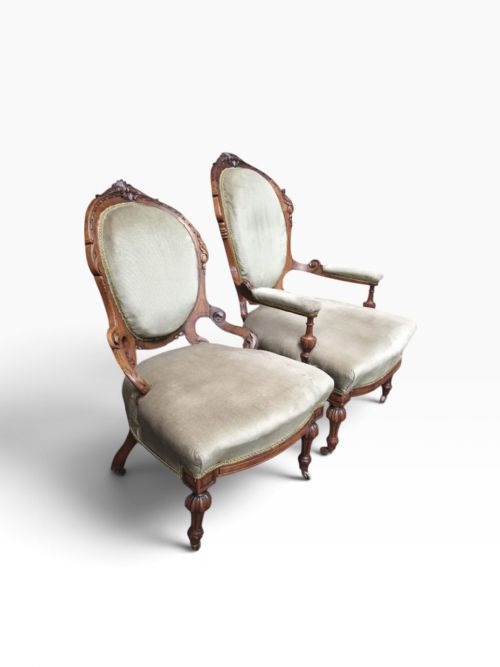
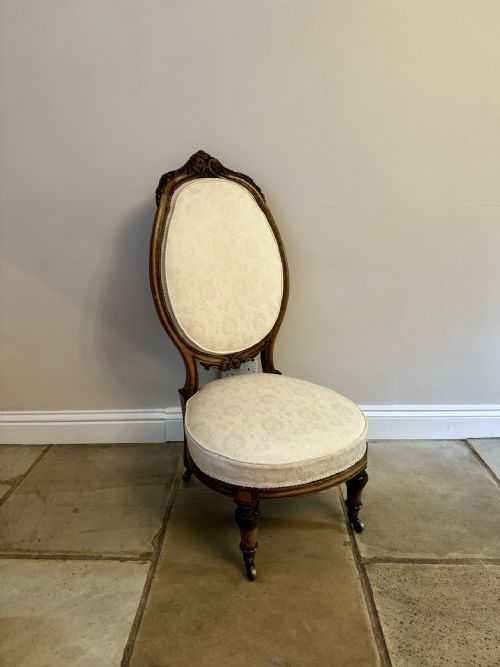
When you search for an upholstered ladies chair, you enter a category dominated by mid to late Victorian walnut and mahogany seating, alongside occasional Edwardian examples. These compact chairs are specifically proportioned with lower seats to accommodate the voluminous skirts of the nineteenth century.
The form appears frequently as part of a matching his and hers pair or as a standalone nursing or salon chair. Walnut frames with carved detailing represent the most common configuration in this collection.
Makers of the period also utilised mahogany, ebonised wood, and rosewood to frame these upholstered seats. The overarching design prioritises a harmonious blend of domestic comfort and ornate woodwork suitable for formal reception rooms.
How they were made
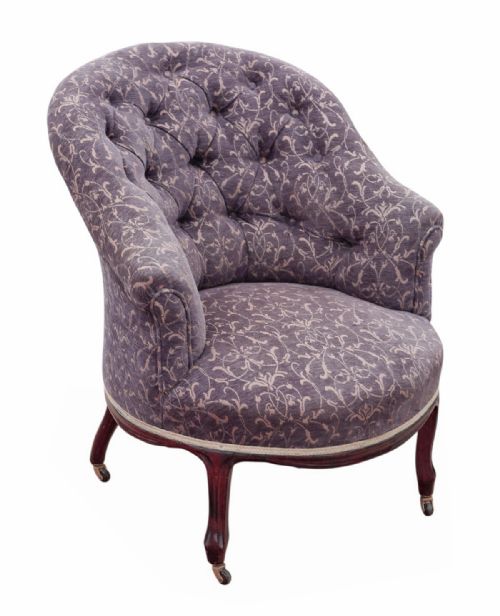
Timbers such as walnut and mahogany form the structural backbone of these pieces, shaped through hand carving and joinery. The timber frames support button back upholstery and sprung seats covered in velvet, leather, or patterned fabric.
Brass castors and ceramic components often finish the feet, allowing the chair to move across carpets without snagging. Wood turning and scrollwork details complete the frames, aligning with Victorian Rococo Revival and Louis XVI styles.
Upholstered Ladies Chair Retail Price Guide 2026
Typical asking prices for upholstered ladies chair among the pieces listed under this phrase on Sellingantiques today, from the lower quarter to the upper quarter. They describe what is for sale here now, not the wider market.
The listings on this page span the Victorian and Edwardian periods, featuring walnut, mahogany, and rosewood frames paired with velvet, leather, and fabric upholstery.
What varies in quality
The depth and crispness of the hand-carved woodwork distinguish finer frames from simpler production pieces. Dense walnut and figured mahogany with rich grain patterns indicate superior material selection by the cabinet maker.
Upholstery finish and the retention of original sprung foundations dictate the integrity of the seating. Pieces displaying cohesive proportions between the carved wooden show-wood and the upholstered body represent the higher echelon of the maker's output.
The Upholstered Ladies Chair Glossary
- Button back
- An upholstery technique where indentations are formed by pulling stitches tightly through the padding and securing them with fabric-covered buttons. This method creates a distinctive diamond pattern across the backrest.
- Show-wood
- The exposed, polished wooden portions of a framed chair that remain visible around the upholstered sections. Craftsmen carved these areas to display the grain and ornamentation.
- Nursing chair
- A low-seated upholstered chair historically used by women for nursing infants or tending to fireside duties. The reduced height facilitates relaxed posture.
- Tub chair
- A seating form featuring a continuous curved back and armrest structure resembling the shape of a half barrel. This design encloses the sitter for added draught exclusion.
- Rococo Revival
- A nineteenth-century design movement drawing inspiration from eighteenth-century French motifs, characterised by asymmetrical curves, C-scrolls, and naturalistic floral carvings.
Upholstered Ladies Chair: Frequently Asked Questions
Where did they sit?
These chairs belonged primarily in Victorian drawing rooms, parlours, and bedrooms. Their compact dimensions allowed them to be arranged easily around fireplaces or occasional tables without crowding the space.
They served as functional seats for needlework, reading, or receiving callers, functioning equally well as standalone accent pieces or paired with matching gentleman's armchairs.
How do I clean the wood?
Maintenance requires gentle dusting with a dry, soft cloth to remove surface particles. Avoid modern silicone polishes, which build up residue over time and dull the finish.
Apply a traditional beeswax sparingly to nourish the walnut or mahogany timber, buffing it gently with a clean cloth to restore the natural lustre of the grain.
Are they comfortable to use?
The low seat height and supportive button-backed upholstery provide a surprisingly upright and structured sit. They are designed for formal social interaction rather than deep lounging.
Modern users find them well suited for reading corners or vanity desks, provided the original interior webbing and springs remain supportive and firm.
How do I date the wood?
Dating relies on identifying the timber species, joinery methods, and stylistic cues present in the carved decoration. Walnut and rosewood dominate mid-nineteenth-century examples, while Edwardian pieces often exhibit lighter mahogany frames.
Stylistic shifts from early Victorian heavy scrollwork to later Edwardian refinement help narrow the decade of manufacture when combined with structural inspection.