




Upholstered Highback Armchair
An upholstered highback armchair offers deep comfort and historical presence, protecting you from draughts while anchoring a room with formal presence.
Upholstered Highback Armchair
When you search for an upholstered highback armchair, you are looking at substantial seating designed to support the head and shoulders while blocking chilly room draughts. The pieces seen here span several centuries, drawing heavily on Georgian, Victorian, and Edwardian traditions.
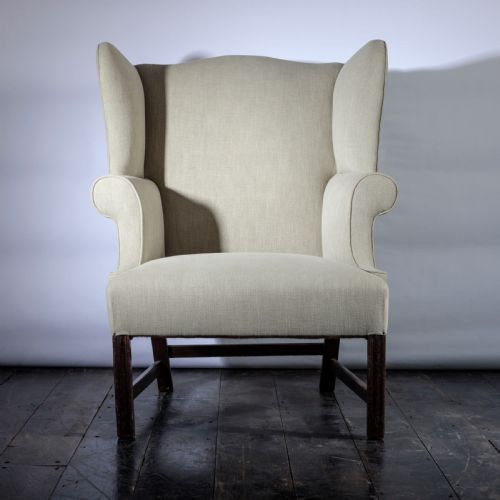
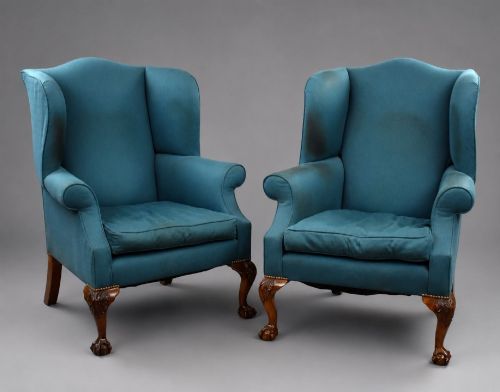
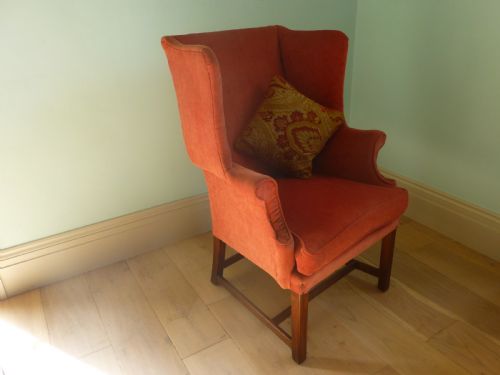
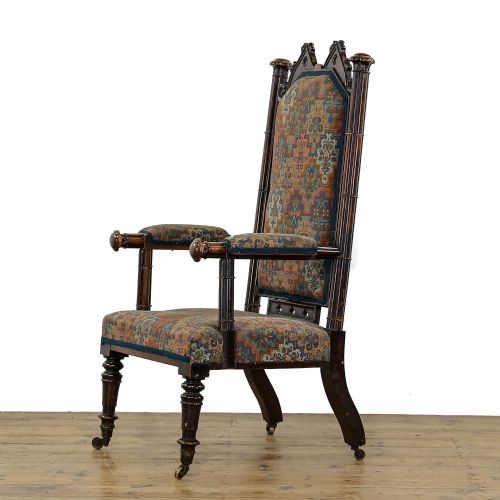
The version you are most likely to meet on this page is the classic wing armchair, often featuring deep side wings and supported by timber frames in mahogany, oak, or walnut. Alongside these traditional forms, the listings include examples ranging from Art Deco creations to imposing throne chairs.
Origins stretch across British and French workshops, utilising periods such as the 18th century, the Regency era, and the late 19th century. Each piece brings a distinct architectural silhouette shaped by the prevailing furniture styles of its decade.
Materials and construction
Frames are built from sturdy timbers including mahogany, oak, walnut, and giltwood, providing a rigid internal skeleton to support heavy padding and upholstery. These wooden elements often reveal skilled cabinetmaking in their exposed legs, arm terminals, and stretchers.
Traditional stuffing and webbing techniques give the seats and high backs their shape, finished in a variety of textiles such as velvet, chenille twill, calico, linen, and contemporary fabric. Brass details occasionally appear as castors or decorative hardware securing the upholstery.
The listings on this site encompass 18th century, 19th century, Victorian, Edwardian, and Art Deco periods, constructed from mahogany, oak, walnut, and giltwood.
Judging quality and integrity
The distinction between ordinary and exceptional examples rests upon the architectural proportion of the wooden frame and the crispness of its carved details. Superior pieces maintain their original structural harmony, where the rake of the back and the curve of the wings create a balanced profile.
Upholstery choices and the preservation of underlying timber determine the character of each piece, distinguishing items that retain their historical integrity from those altered over time. Better examples display careful attention to period-appropriate textile selection and sympathetic restoration.
The Upholstered Highback Armchair Glossary
- Wingback
- A chair design featuring projecting side panels attached to the arms or back, originally intended to shield the sitter from hearth drafts.
- Giltwood
- Timber coated with a thin layer of gold leaf or gilt paint, frequently found on decorative French frames.
- Chenille
- A fuzzy woven fabric utilised for upholstery, offering a soft texture and rich appearance.
- Calico
- A plain-woven unbleached textile often employed as a base layer beneath top upholstery.
- Stretcher
- A horizontal wooden brace connecting the legs of a chair to provide structural rigidity.
Upholstered Highback Armchair: Frequently Asked Questions
What is an upholstered highback armchair?
These pieces are large, comfortable seats designed with high backs and protective side wings to retain warmth and offer head support. They evolved primarily as fireside seating in period homes.
Today, they serve as statement reading chairs that combine traditional upholstery techniques with architectural timber frames.
How do I identify a Georgian armchair?
Georgian examples typically feature mahogany or walnut frames with restrained carved details, subtle cabriole or straight legs, and well-proportioned wings.
They reflect the formal design principles of the 18th century without the heavier ornamentation seen in later Victorian revivals.
Where were these chairs used?
Historically, highback chairs sat near fireplaces in drawing rooms, libraries, and parlours where draughts were a constant concern. The wings trapped heat from the hearth around the sitter.
Modern interiors utilise them in living rooms and studies to create a distinct reading nook or focal point.
How do Victorian chairs differ from earlier ones?
Victorian versions often embrace heavier timber frames, such as walnut or mahogany, alongside more exuberant upholstery styles like deep buttoning or throne chair designs.
They frequently draw inspiration from earlier Gothic or Rococo revivals, resulting in a bolder visual presence than their Georgian predecessors.