



Upholstered Hearth Fender
An upholstered hearth fender brings character and fireside seating to the room, blending practical metalwork with comfortable padded seats.
Upholstered Hearth Fender
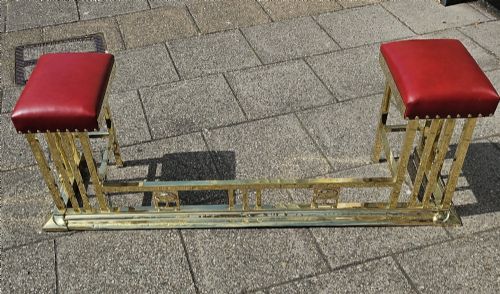
An upholstered hearth fender combines a sturdy metal frame with a padded seat, creating a traditional fireside perch. These pieces bridge the gap between architectural hardware and domestic seating, serving both to contain stray embers and to host anyone warming by the hearth.
The selections span multiple eras, including Victorian, Edwardian, and Art Deco designs alongside earlier Georgian examples. Most examples on this page utilise brass, iron, or steel frames paired with various coverings ranging from leather to tweed.
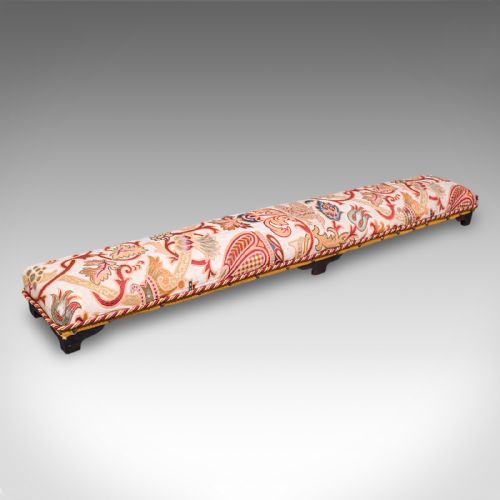
Forms extend beyond standard club fenders to encompass fender stools and carriage stools. Each variation shares a fundamental purpose around the fireplace, whether acting as a low seat or a protective barrier.
Materials and construction
Makers formed the structural frames from durable metals such as brass, cast steel, and heavy iron. These metal bases often feature gleaming polished brass surfaces or dark, robust cast steel finishes that withstand daily proximity to open heat.
Upholstered sections utilise traditional stuffing beneath durable surface coverings like leather, velvet, and tweed. Leather remains a prominent choice for its resilience, while fabric and velvet introduce softer textures to the fireside.
Upholstered Hearth Fender Retail Price Guide 2026
Typical asking prices for upholstered hearth fender among the pieces listed under this phrase on Sellingantiques today, from the lower quarter to the upper quarter. They describe what is for sale here now, not the wider market.
Materials recur across brass, leather, iron, fabric, velvet, cast steel, and tweed.
Judging quality
Quality rests upon the weight and substance of the metalwork, alongside the integrity of the underlying frame construction. Heavier gauge steel and solid brass assemblies offer greater durability and presence than lighter alternatives.
The execution of the upholstery work distinguishes finer pieces, particularly the neatness of buttoning and the choice of hide or textile. A well-proportioned frame with secure joints and high-grade materials maintains its structural stability through decades of use.
The Upholstered Hearth Fender Glossary
- Club fender
- A low, padded fireside seat built around a metal frame that encircles or flanks the hearth. This form originated in gentlemen's clubs to provide comfortable seating close to the fire.
- Cast steel
- An alloy melted in crucibles to achieve greater uniformity and strength than ordinary wrought iron. It appears frequently in the sturdy frames of nineteenth-century hearth furniture.
- Fender stool
- A low stool designed to sit directly on the hearth or immediately in front of the fireplace. These pieces often mimic the height and dimensions of traditional club fenders.
- Carriage stool
- A portable seating form adapted for domestic fireside use, often dating from the eighteenth century. They provide compact resting places near the warmth of the grate.
Upholstered Hearth Fender: Frequently Asked Questions
What is an upholstered hearth fender?
It is a low metal barrier placed around a fireplace, fitted with a padded seat on top. This design serves a dual purpose as both a safety guard and a convenient fireside bench.
Such pieces combine architectural metalwork with traditional upholstery, offering a practical way to sit close to the hearth without taking up space with separate chairs.
How do I choose the right size?
Measure the width and depth of your fireplace hearth carefully to ensure the metal frame fits the space correctly. Allowance must be made for the clearance needed around the fire grate itself.
Consider also the height of the seat relative to your existing fireplace surround. A well-proportioned piece sits comfortably against the masonry without obstructing the fire opening.
Are these pieces comfortable for sitting?
Most examples feature firm padding designed for short periods of sitting near the warmth. The inclusion of leather or fabric upholstery provides a softer surface than bare metal or stone.
Their primary function remains structural and decorative, but the padded top allows them to double as occasional seats during cooler months.
How do I care for the metal and leather?
Brass and steel components require occasional cleaning with appropriate metal polishes to maintain their finish. Care must be taken to avoid getting polish onto the surrounding fabric or leather.
Leather seats benefit from occasional conditioning to keep the hide supple and prevent cracking. Regular dusting keeps both the metalwork and the upholstery in good condition.