

Upholstered Fainting Sofa
An upholstered fainting sofa offers a reclining seat designed for rest, bringing nineteenth-century elegance and comfort into a modern interior.
Upholstered Fainting Sofa
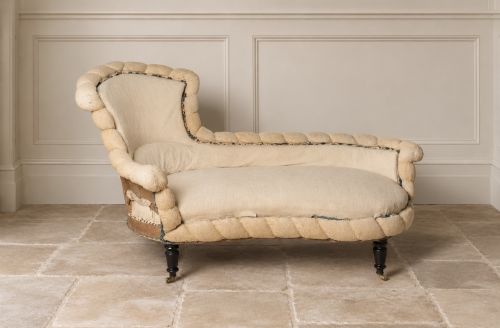
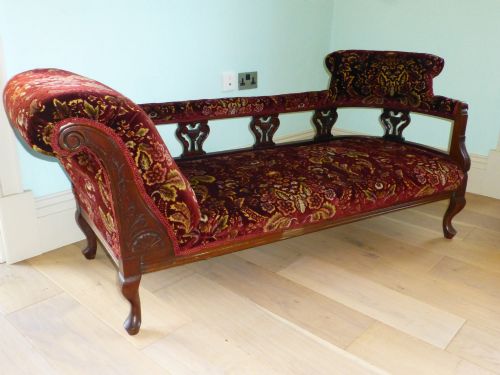
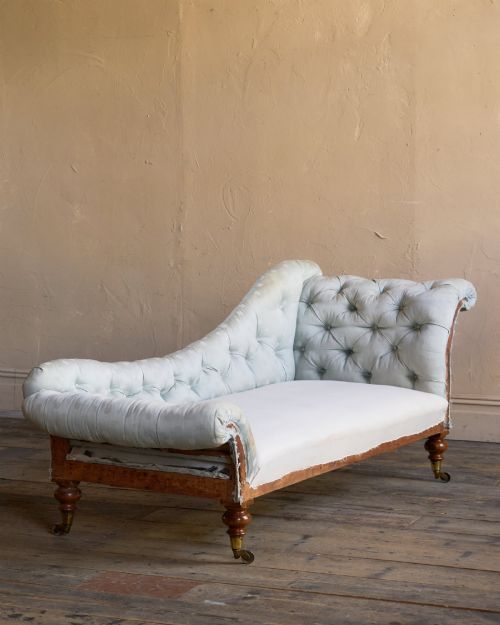
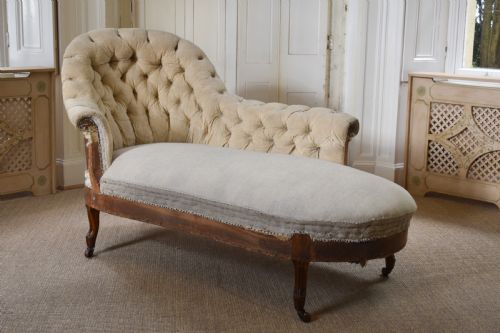
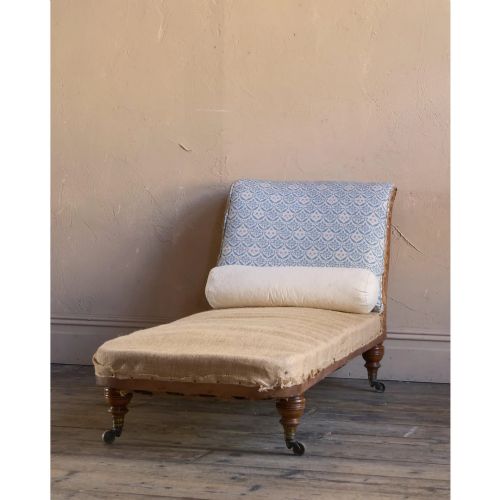
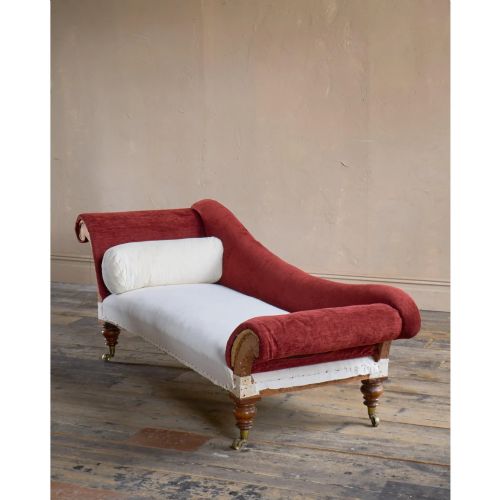
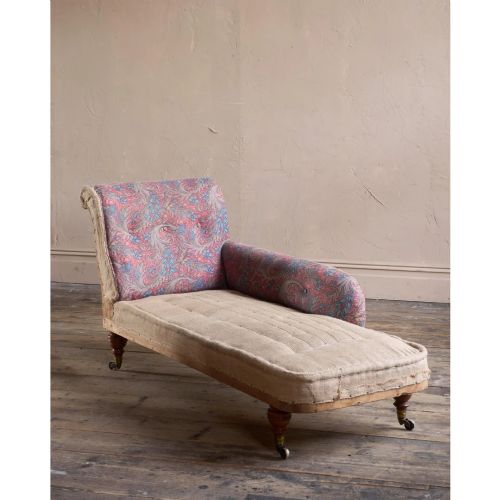
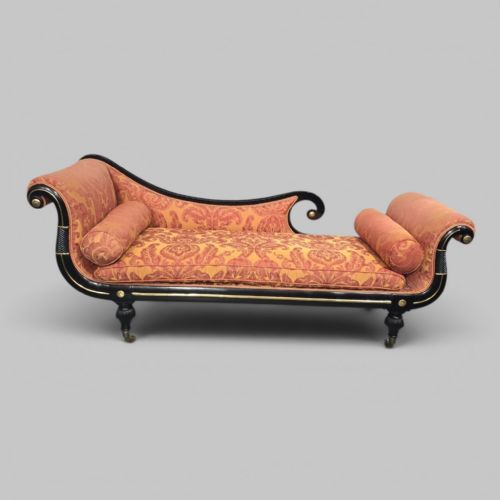
An upholstered fainting sofa, also known in the listings as a chaise longue, daybed, or settee, is a long seat designed for reclining in a semi-recumbent posture. These pieces date principally from the nineteenth century, spanning Regency, Victorian, William IV, and Edwardian periods.
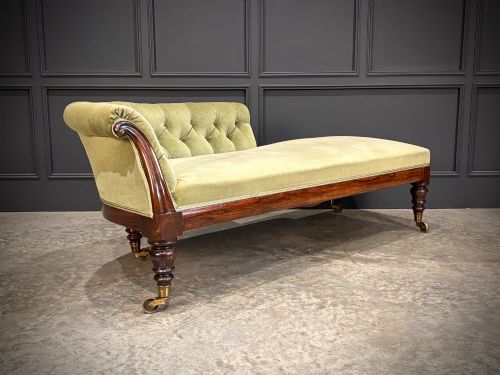
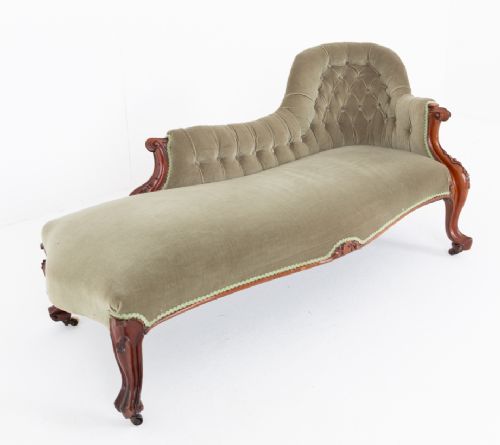
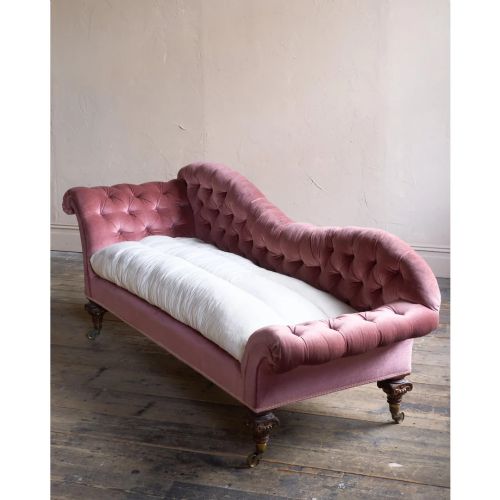
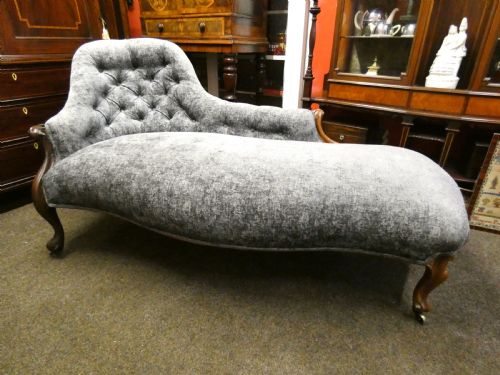
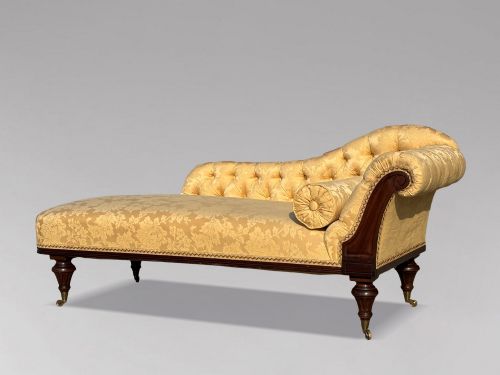
The version most commonly met on this page is the Victorian mahogany or rosewood chaise longue, often featuring a scrolled end and a buttoned back. Such pieces combine timber frames with sprung upholstery, fabric, or velvet coverings.
Makers and workshops including Howard and Sons, Holland and Sons, and Jas Shoolbred appear among nineteenth-century examples, alongside country house pieces and designs reflecting Louis XVI style or Arts and Crafts aesthetics.
How they were made
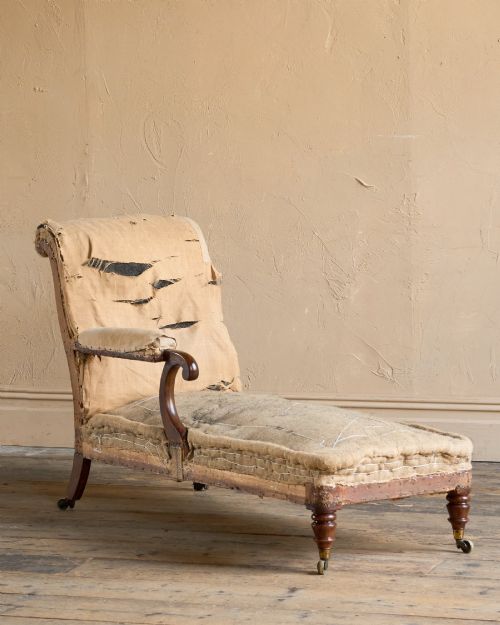
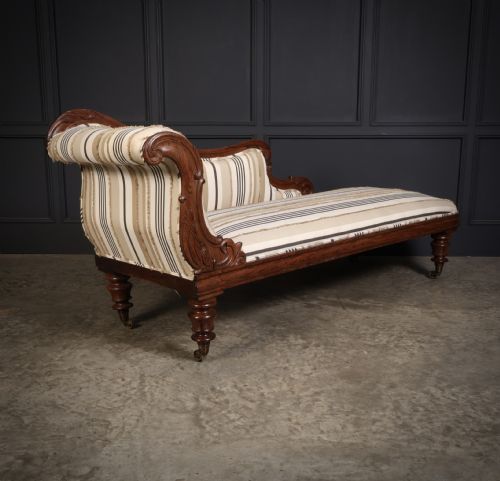
Frames are constructed from dense hardwoods such as mahogany, rosewood, walnut, and oak, providing structural support for the extended length of the daybed. Carved details, giltwood highlights, and turned legs with brass castors finish the woodwork.
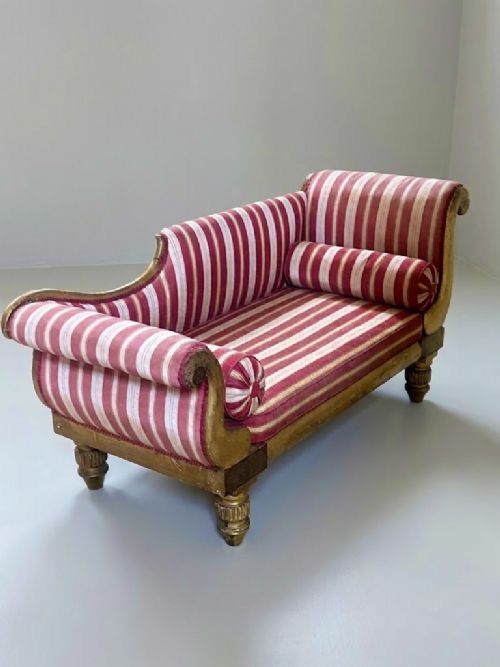
Upholstery relies on traditional stuffing materials covered in fabrics like silk, velvet, damask, calico, or striped textiles. Buttoning techniques secure the padding while creating the characteristic tufted surface found on Victorian and later pieces.
Upholstered Fainting Sofa Retail Price Guide 2026
Typical asking prices for upholstered fainting sofa among the pieces listed under this phrase on Sellingantiques today, from the lower quarter to the upper quarter. They describe what is for sale here now, not the wider market.
Listings span the nineteenth century, encompassing Regency, Victorian, William IV, Edwardian, and Arts and Crafts periods.
What varies in quality
The refinement of the timber carving and the architectural ambition of the frame separate standard examples from finer works. Pieces attributed to prominent London makers demonstrate superior joinery, balanced proportions, and carefully selected wood veneers.
The integrity of the underlying upholstery construction and the choice of covering fabric dictate the finish of the piece. Original castors, well-preserved show-wood, and sophisticated frame shapes such as double spoonbacks elevate individual examples.
Howard and Sons·Holland and Sons·Jas Shoolbred·William Birch·H. Goodall and Sons
The Upholstered Fainting Sofa Glossary
- Chaise longue
- A long seated piece of furniture for reclining, combining the functions of a chair and a daybed. The term translates from French as long chair.
- Daybed
- An upholstered couch or sofa suitable for resting during the day. These forms share similarities with nineteenth-century chaise longues.
- Spoonback
- A chair or sofa back curved in the shape of an oval spoon to fit the human form. This design appears frequently on Victorian seating.
- Giltwood
- Timber that has been coated with gold leaf or gold paint. Regency pieces often incorporate this decorative treatment on their frames.
- Castor
- A small wheel mounted on a swivel attached to the legs of furniture. Original brass castors allow these heavy wooden frames to move easily.
Upholstered Fainting Sofa: Frequently Asked Questions
What is an upholstered fainting sofa?
An upholstered fainting sofa is a nineteenth-century daybed or chaise longue designed for reclining in a seated position. These pieces combine a wooden frame with padded upholstery and a raised backrest.
They appear in styles ranging from Regency giltwood to Victorian mahogany and walnut, often featuring carved scroll arms and turned legs.
How were nineteenth-century daybeds used?
Nineteenth-century daybeds served as comfortable seating for reading, resting, or recovering from illness during the day. They provided a versatile alternative to standard sofas within drawing rooms and parlours.
The extended length allowed occupants to stretch out fully without retiring to a bedroom.
Are these daybeds comfortable to use today?
These daybeds offer functional reclining seats when the underlying upholstery and springs remain in good condition. Many buyers use them as statement pieces in living spaces or bedrooms.
Their elongated form makes them suitable for placement against a wall or floating within a spacious room.