

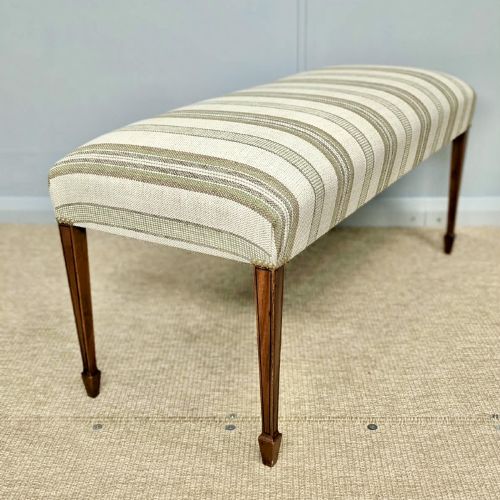
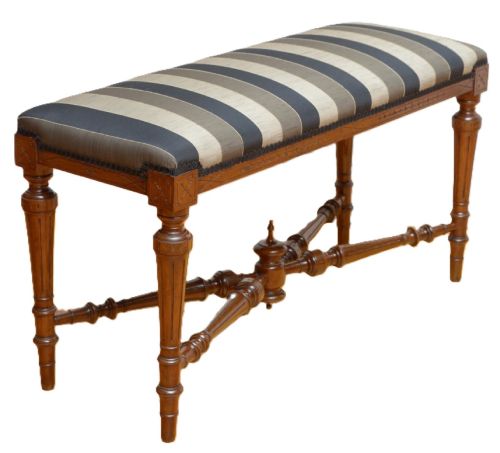
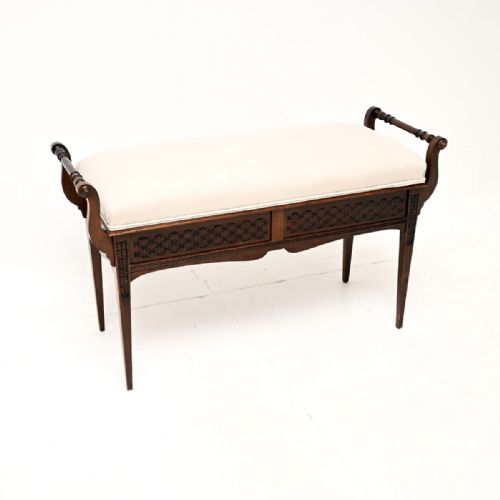
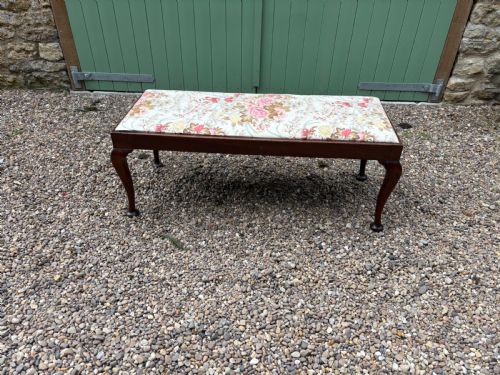
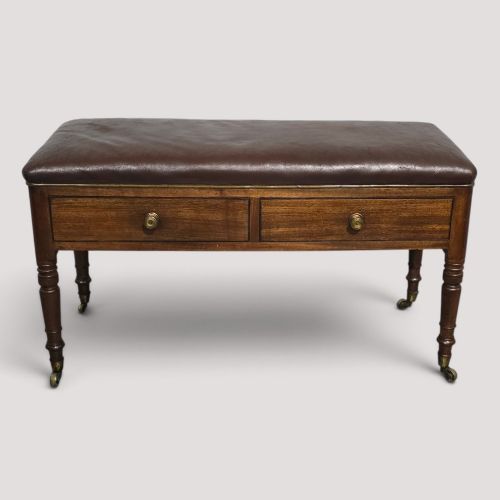
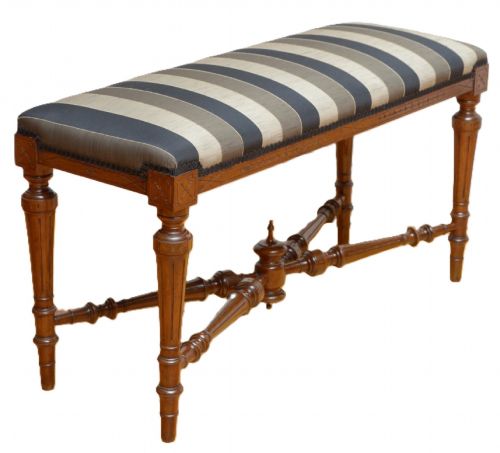


Upholstered Duet Seat
When you search for an upholstered duet seat, you seek a double-width bench designed for two players at a keyboard or for shared window seating.
Upholstered Duet Seat
An upholstered duet seat provides wider proportions than a standard single stool, accommodating two people comfortably for piano practice or placement in a bay window. The pieces gathered under this phrase span the nineteenth and early twentieth centuries, encompassing Victorian, Edwardian, and Art Deco eras.
The primary forms on this page include piano stools, music stools, window seats, and benches. Many feature hinged seats that lift to reveal interior storage compartments for sheet music or books.
Origins vary across English workshops and French ateliers, bringing together styles such as Queen Anne Revival, Georgian Revival, Louis XVI, and Neoclassical Revival.
How they were made
Carpenters constructed the sturdy frames of these stools using solid timbers including mahogany, walnut, rosewood, beech, and giltwood. Inlaid details, carved flourishes, and painted finishes frequently decorate the woodwork.
Upholstery forms the central function of each piece, utilising traditional fabrics such as velvet, tapestry, and other textiles secured over padding. Brass components appear regularly as hinges, handles, or decorative mounts.
Upholstered Duet Seat Retail Price Guide 2026
Typical asking prices for upholstered duet seat among the pieces listed under this phrase on Sellingantiques today, from the lower quarter to the upper quarter. They describe what is for sale here now, not the wider market.
Mahogany and walnut dominate the timber selections across these listings, accompanied by rosewood, beech, and giltwood.
What varies in quality
The distinction between standard examples and finer items rests in the selection of timber and the precision of the cabinetwork. Heavier mahogany or figured walnut frames with crisp carving and subtle inlay display superior workshop standards.
The execution of the upholstery and the internal mechanics of the hinged seat further differentiate the pieces. Smoothly operating compartments and durable textile choices indicate higher initial manufacture.
Charles Nosotti
The Upholstered Duet Seat Glossary
- Duet stool
- A wide seat intended for two people to sit side by side, most commonly associated with keyboard instruments.
- Hinged seat
- A top lid that lifts upward on metal hinges to provide access to a storage well beneath.
- Inlay
- A technique where contrasting woods or materials are fitted flush into the surface of the primary timber to create decorative patterns.
- Giltwood
- Timber that has been coated with a thin layer of gold leaf or gilt paint for a decorative metallic finish.
- Tapestry seat
- A cushion cover worked in heavy woven or needlepoint yarn, frequently depicting floral or figurative designs.
Upholstered Duet Seat: Frequently Asked Questions
What is an upholstered duet seat used for?
These double-width benches were originally constructed to provide seating for two musicians sharing a piano or organ. Their proportions also made them suitable for placement beneath tall bay windows or at the foot of a bed.
Today, owners utilise them in living rooms and hallways as flexible occasional seating that combines surface comfort with hidden interior storage.
How do I tell Victorian from Edwardian seats?
Victorian examples generally employ heavier timbers like rosewood and dark walnut, often featuring rich carvings and heavier proportions. Edwardian pieces tend to lean toward lighter mahogany frames, frequently enhanced with delicate string inlay and refined neoclassical lines.
Examining the underlying construction and the style of the wood turning helps clarify the specific period of manufacture.
Can I store music sheets inside the stool?
Many period examples include a hinged top that opens to reveal a compartment originally intended for organising sheet books and scores. This internal space remains practical for storing small household items.
Care should be taken when lifting older wooden lids to protect the original hinges and internal linings from strain.
Where should I place a duet seat at home?
The balanced proportions of these benches allow them to sit effectively against a living room wall, beneath a window, or at the foot of a bedroom suite. Their dual seating capacity makes them versatile for rooms where extra space is needed without adding bulky armchairs.
Keeping the wood away from direct heat sources helps preserve the stability of the timber and the condition of the fabric.