



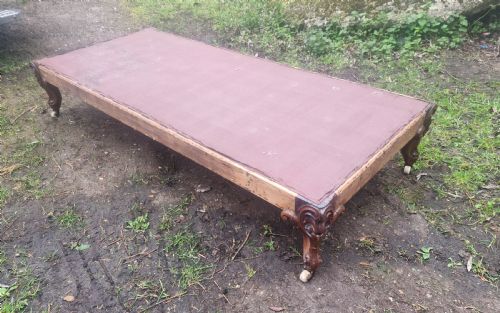


Upholstered Coffee Table
An upholstered coffee table brings a low, cushioned surface to a room, offering a tactile alternative to timber tops.
Upholstered Coffee Table
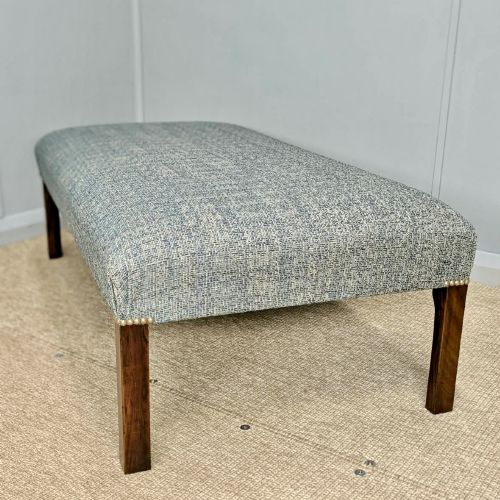
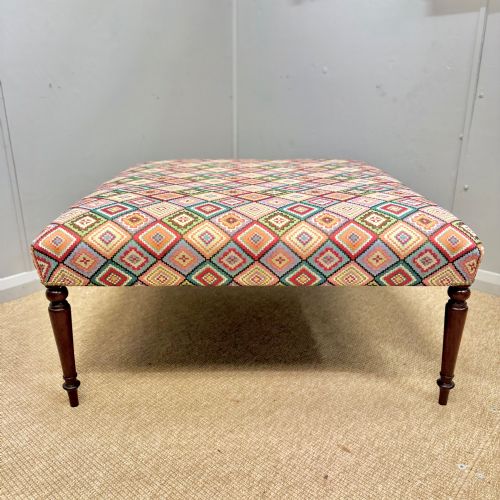
An upholstered coffee table takes the form of large footstools, ottomans, and centre stools adapted from nineteenth-century origins into low surfaces for drinks and books. The pieces on this page span the Victorian era, the nineteenth century, and the 1930s, reflecting traditional English, Georgian style, and Regency aesthetics.
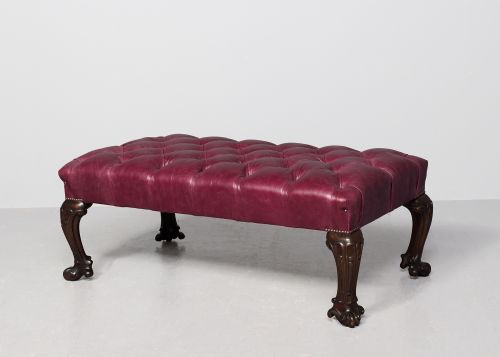
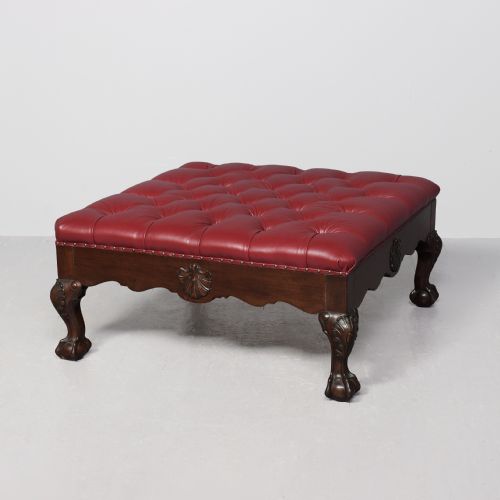
Buyers meet low stools framed in mahogany, rosewood, walnut, and oak, often topped with leather, hide, velvet, or fabric. These forms function interchangeably as seats and low tables within traditional English country house interiors.
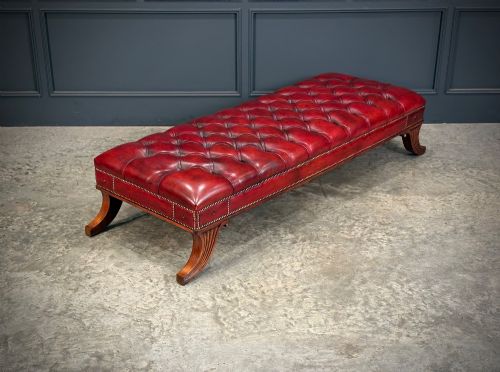
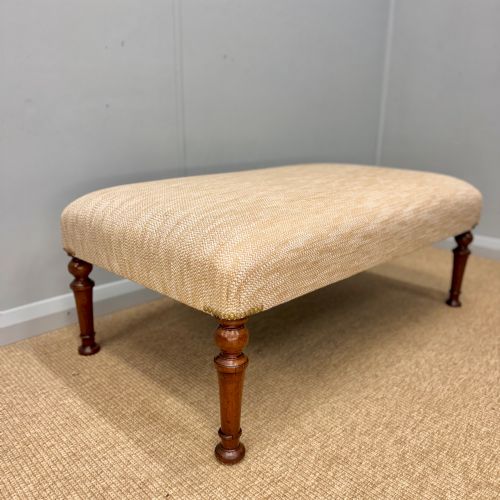
Originating as footstools or centre stools, many examples feature deep buttoning and turned wooden legs. They serve as central furniture pieces in drawing rooms and libraries.
What varies in quality
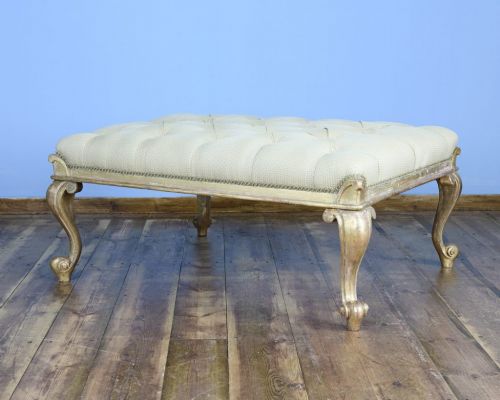
The choice of framing timber dictates the foundational quality, with dense hardwoods like rosewood and mahogany sitting above standard woods. Carving detail on the legs and the presence of parcel gilding indicate higher workshop standards.
The execution of the upholstery, particularly deep buttoning in hide or leather, separates standard pieces from grander examples. Scale also influences value, with larger proportions commanding greater presence in a room.
Upholstered Coffee Table Retail Price Guide 2026
Typical asking prices for upholstered coffee table among the pieces listed under this phrase on Sellingantiques today, from the lower quarter to the upper quarter. They describe what is for sale here now, not the wider market.
A zebra hide drum table joins the inventory, proving that nineteenth-century comfort occasionally wore wild stripes.
The Upholstered Coffee Table Glossary
- Buttoned leather
- Leather upholstery secured with deep tufting and buttons, creating a dimpled surface. This technique provides tension and texture.
- Centre stool
- A large, freestanding stool designed to sit in the middle of a room rather than against a wall. These pieces often feature decorative frames on all four sides.
- Parcel gilt
- A finishing technique where portions of a wooden frame are selectively covered in gold leaf. It highlights specific carved details against the dark wood background.
- Chippendale style
- A decorative style drawing on eighteenth-century designs characterised by carved mahogany frames and subtle classical motifs. It appears in revival pieces from later centuries.
- Monks bench
- A multifunctional wooden furniture piece that converts between a bench and a table. Examples from the 1930s utilise oak construction.
Upholstered Coffee Table: Frequently Asked Questions
Are upholstered coffee tables stable enough for drinks?
These pieces originate as sturdy footstools and centre stools built on substantial hardwood frames of mahogany, oak, or rosewood. Their solid construction easily supports trays, books, and everyday items.
To ensure complete stability for glassware, place a firm wooden or metal tray on the cushioned surface. This provides a flat base while preserving the soft textile aesthetic.
How do I choose between leather and fabric tops?
Leather and hide surfaces offer durability and develop a rich patina over time, making them practical for busy living spaces. They wipe clean easily and bring a traditional country house character to the room.
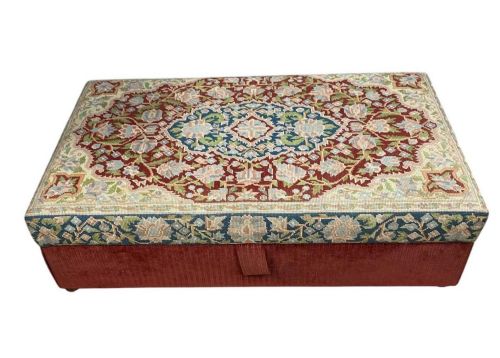
Fabric, velvet, and tapestry tops introduce softer texture and pattern, such as geometric designs or chenille weaves. They suit formal sitting rooms where tactile warmth takes precedence over heavy daily use.
What period do these low tables come from?
The pieces listed span the nineteenth century, including Victorian examples from the 1860s to 1890s, alongside items from the 1930s. Stylistic revivals also draw on Georgian and Regency designs.
Craftsmanship from these eras relies on solid hardwoods and traditional upholstery methods. Each piece reflects the dominant interior aesthetics of its specific decade of origin.
How do I integrate a large ottoman into my layout?
Large scale ottomans and centre stools function as focal points in spacious rooms, often replacing standard timber coffee tables. Their generous proportions provide ample surface area for display.
Position the piece centrally within your seating arrangement to bridge the gap between sofas and armchairs. This creates an inviting, cohesive environment for relaxation.