
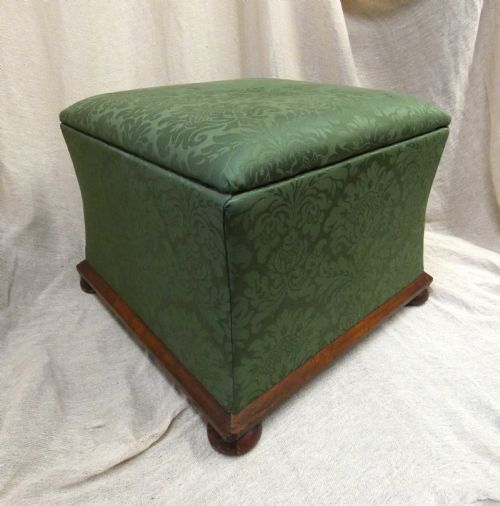


Upholstered Box Ottoman
An upholstered box ottoman combines a practical storage compartment with a padded seat, spanning the Regency and Victorian periods.
Upholstered Box Ottoman
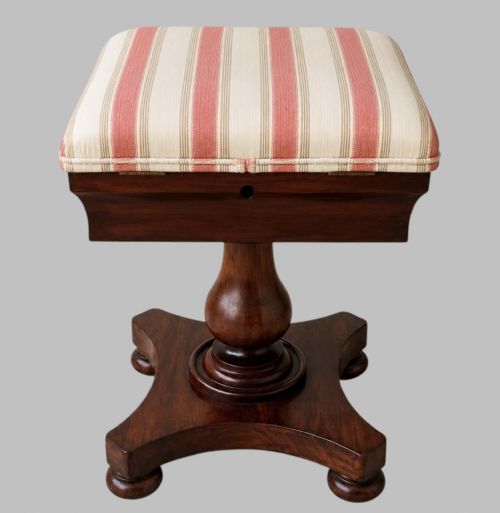
An upholstered box ottoman serves as a seat while concealing a functional storage cavity beneath the lid. When searching for an upholstered box ottoman, buyers encounter pieces configured as blanket boxes, work tables, piano stools, and storage chests.
The specimens on this page originate predominantly from the nineteenth century, including Regency, William IV, and Victorian periods, alongside early twentieth-century examples. Mahogany, rosewood, and pine form the primary structural carcasses of these dual-purpose items.
How they were made
Cabinetmakers utilised hardwoods such as mahogany, rosewood, walnut, and birch alongside pine for internal or secondary framing. Timber sections were shaped into box bodies, sometimes incorporating waisted profiles or concave curves.
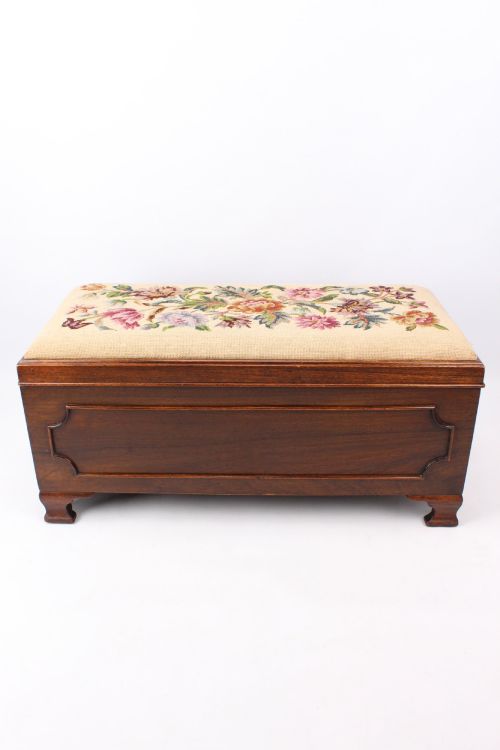
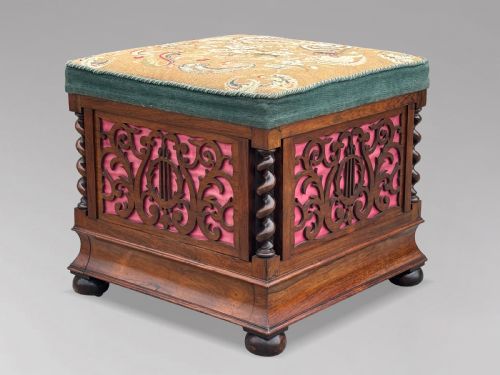
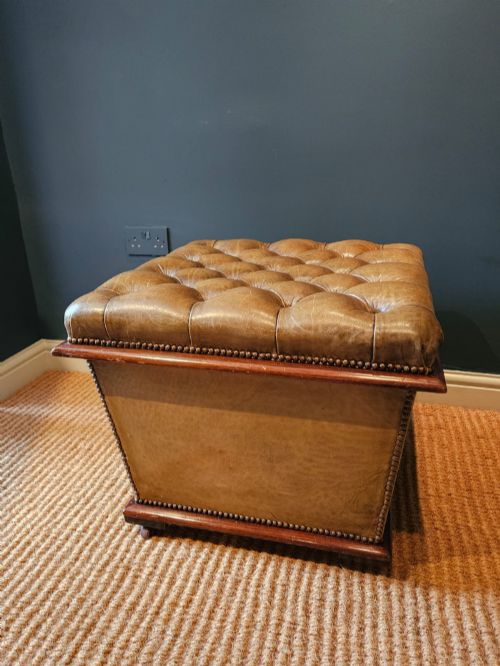
Upholstery techniques applied to the seats involved fabric, velvet, leather, and decorative needlework including gros-point, crewel work, and patchwork tapestry. Deep buttoning secured the padding on many box seats and hinged lids.
Listings span the Regency, William IV, and Victorian periods, featuring mahogany, rosewood, walnut, birch, and pine.
What varies in quality
The standard of timber selection and cabinetmaking distinguishes pieces, visible in the figure of mahogany or rosewood veneers and the joinery of the storage box. Finer examples display architectural details, carved wooden feet, or complex concave shaping.
The choice and execution of the covering material indicate grade, from standard fabric to original crewel work, needlepoint, or quality leather with deep buttoning. Original textiles and intact internal linings elevate the integrity of the piece.
Hallett & Sons
The Upholstered Box Ottoman Glossary
- Ottoman
- A seat with a cushioned top and a hollow interior for storage. These items function as footstools, blanket boxes, or daybeds.
- Concave
- A curved inward profile shaping the sides of the box body. Cabinetmakers utilised this contour to soften the rectangular mass of storage chests.
- Needlework
- Stitched textile decoration applied to seats, including gros-point and crewel work. Such needlecraft displays hand-stitched patterns across the top of the stool.
- Canterbury
- A low wooden stand or stool fitted with partitions for holding sheet music or papers. These variants combine open storage with an upholstered upper seat.
- Kist
- A traditional regional term for a heavy storage chest or trunk. These wooden boxes provide large cavities for blankets and household items.
Upholstered Box Ottoman: Frequently Asked Questions
How were box ottomans used historically?
Households utilised these pieces in bedrooms for storing blankets, bedding, and linen while providing a place to sit. In reception rooms, they served as footstools, sewing seats, or piano benches.
The hinged lid allowed quick access to the interior compartment without disrupting the padded upholstery on top.
What woods appear in these ottomans?
Mahogany and rosewood dominate the surviving examples from the Regency and Victorian eras, often finished with polished surfaces. Walnut, birch, and pine also form the structural carcasses of these storage chests.
Secondary timbers like pine appear inside the boxes and on the interior framing of the seats.
How do I identify a Regency ottoman?
Regency pieces often exhibit classical influences, featuring rosewood or mahogany veneers and distinct supports such as lions paw feet. The proportions tend to reflect the classical design vocabulary of the early nineteenth century.
Matching pairs and specific turning on the wooden elements further point to this earlier period of production.
What upholstery fabrics should I expect?
Surviving examples feature leather, velvet, and woven fabrics alongside needlework covers like gros-point and crewel work. Deep buttoning frequently secures the padding across the hinged top.
Some pieces retain period textiles, while others carry later fabric coverings applied during restoration.
Can these fit into modern rooms?
Their dual function as a seat and a concealed storage chest makes them practical for contemporary living spaces. They provide a place to tidy away clutter in a hallway, bedroom, or sitting room.
The compact footprint of a footstool combined with box storage suits rooms requiring space-saving furniture.