

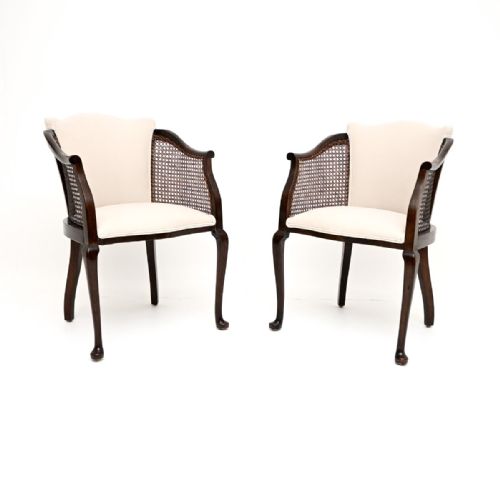
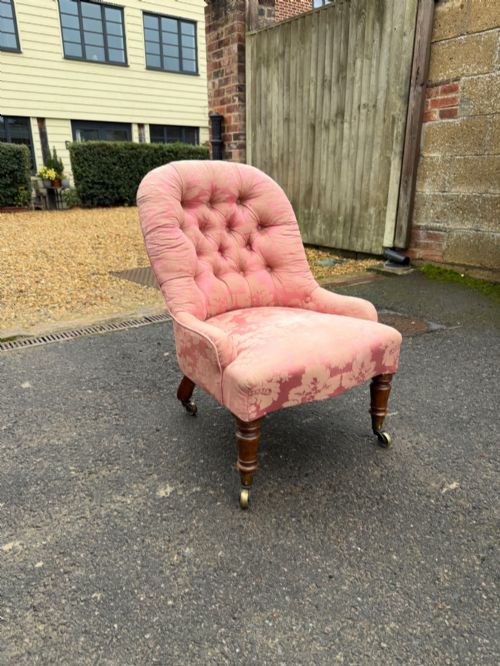
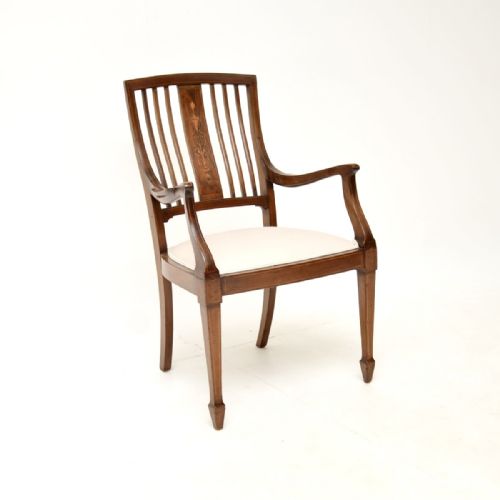
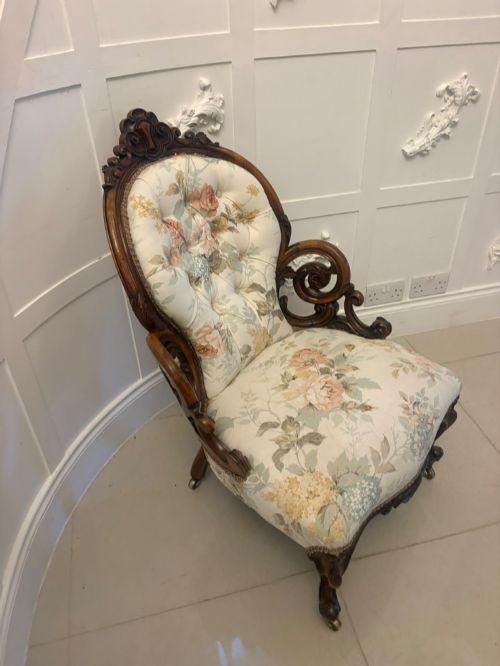
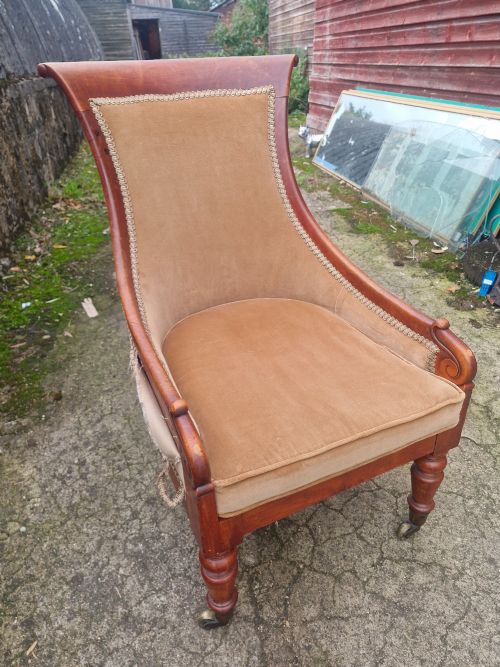
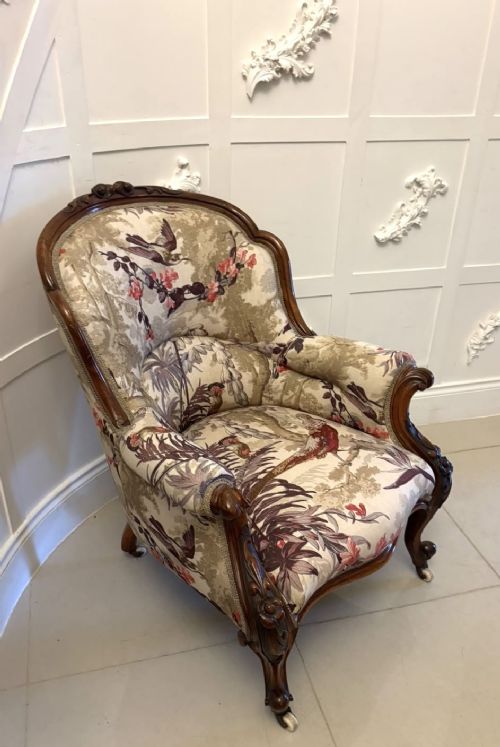
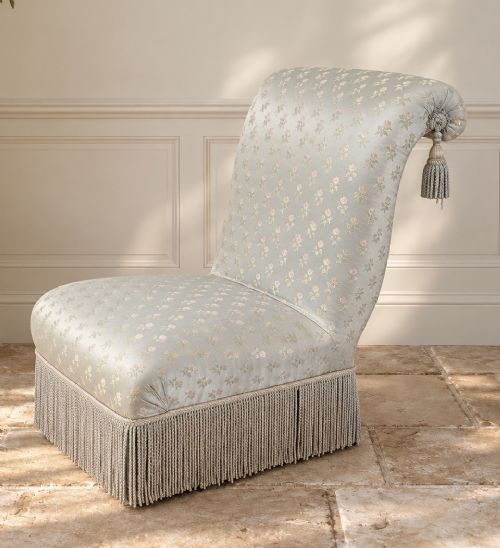
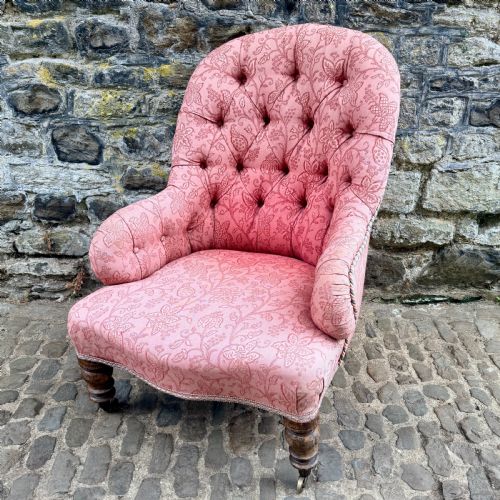
Upholstered Bedroom Armchair
These upholstered bedroom armchair selections offer a comfortable seat for dressing areas and boudoirs, bringing period charm and soft seating to private spaces.
Upholstered Bedroom Armchair
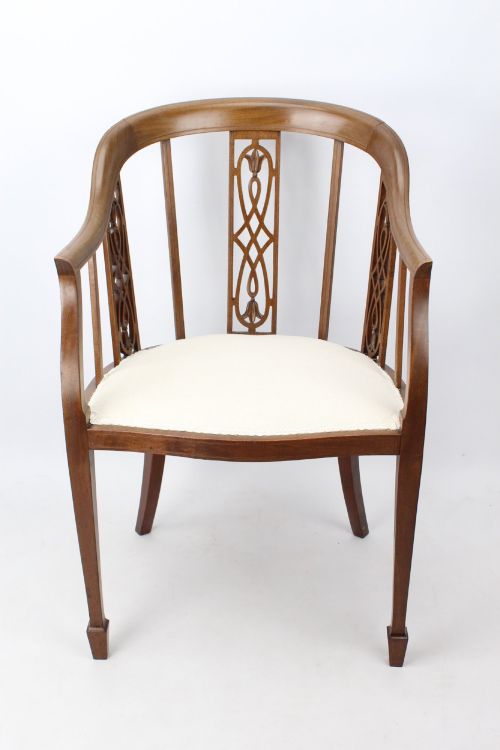
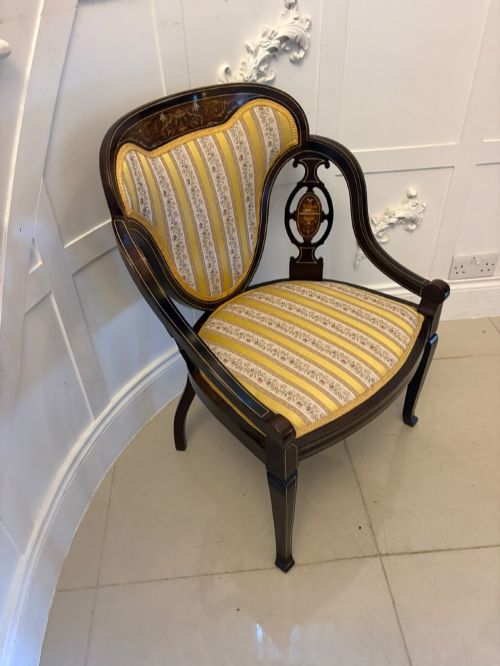
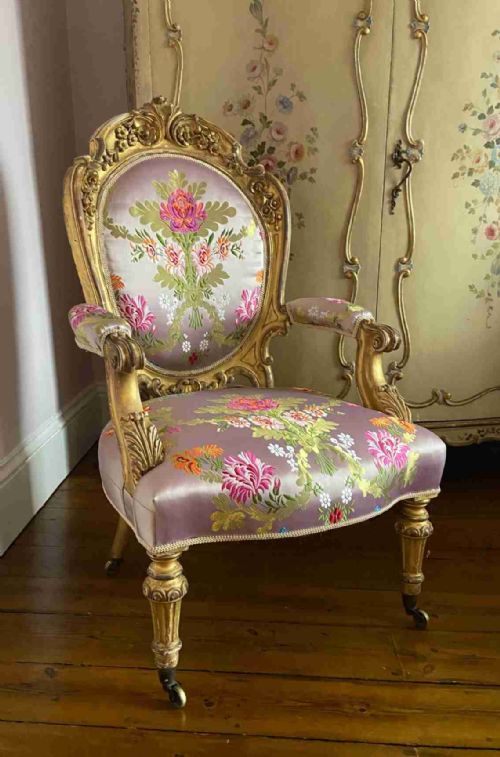
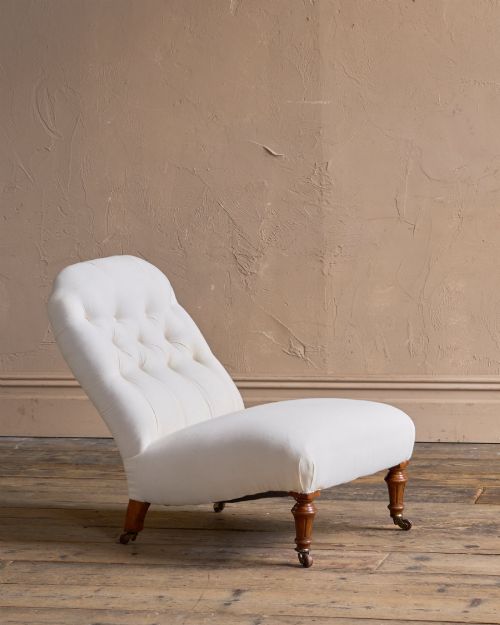
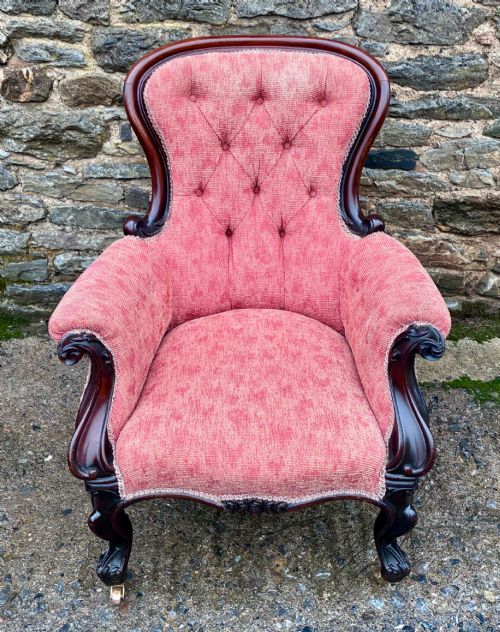
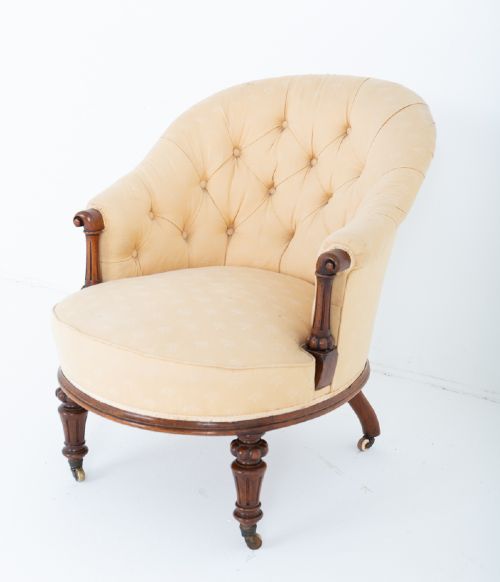
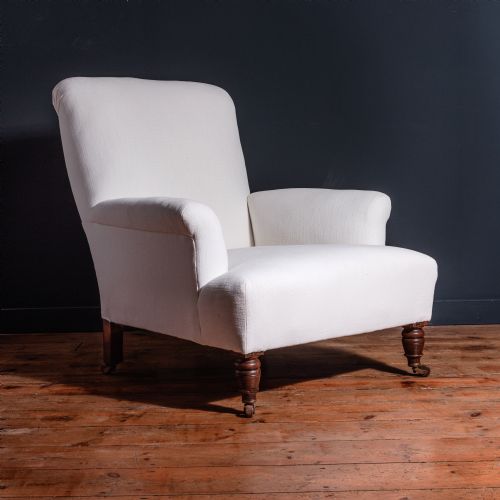
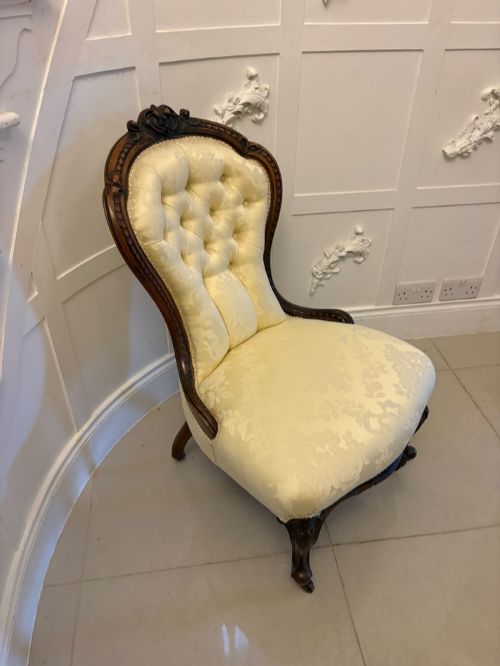
An upholstered bedroom armchair provides a low, supportive seat suited to dressing rooms and private chambers. The selections span from Victorian button-back designs to Edwardian inlaid models and French styles.
You will frequently encounter French examples from the nineteenth century alongside English Victorian and Edwardian variations. Object forms range from low slipper chairs and nursing chairs to tub chairs and spoon-back armchairs.
The periods represented stretch across the eighteenth, nineteenth, and early twentieth centuries. Makers such as Charles Hindley & Sons, Holland & Sons, and Howard and Sons appear among the English pieces.
Materials and construction
Frames are constructed from hardwoods including mahogany, walnut, oak, and timber, sometimes accented with gilt wood, bone, and boxwood inlay. Carved details and original paint finishes appear on various nineteenth-century and earlier frames.
Upholstery materials rely on traditional fabrics such as velvet, calico, and woven coverings like Aubusson tapestries. Brass elements and castors often complete the lower supports of these chairs.
Upholstered Bedroom Armchair Retail Price Guide 2026
Typical asking prices for upholstered bedroom armchair among the pieces listed under this phrase on Sellingantiques today, from the lower quarter to the upper quarter. They describe what is for sale here now, not the wider market.
Periods represented span from the 18th Century through the Victorian era and Edwardian times up to 1920.
Judging quality and craftsmanship
Quality rests on the integrity of the timber frame, the crispness of any carved or inlaid decoration, and the proportion of the silhouette. Finer examples retain their original painted surfaces, gilded accents, or documented maker stamps.
The sophistication of the upholstery work and the choice of covering fabric distinguish standard production from superior pieces. Well-balanced proportions in low-backed and tub forms indicate careful period design.
Charles Hindley & Sons·Holland & Sons·Howard and Sons·Colefax and Fowler
The Upholstered Bedroom Armchair Glossary
- Slipper chair
- A low-seated chair traditionally used in a dressing room for putting on shoes. These pieces sit close to the floor without arms.
- Nursing chair
- A low armchair designed to provide comfort while nursing an infant. They often feature low seats and supportive high backs.
- Tub chair
- An armchair with a continuous curved back and arms forming a single rounded enclosure. This form provides enclosed seating for bedrooms.
- Spoon back
- A padded chair back shaped like the bowl of a spoon to fit the contours of the spine. This style is common in mid-nineteenth-century seating.
- Aubusson
- A type of tapestry woven in France, frequently used for period chair coverings. These textiles depict floral or pictorial scenes.
Upholstered Bedroom Armchair: Frequently Asked Questions
Where should I place a bedroom armchair?
These compact chairs fit well in corners, beside dressing tables, or near bedroom fireplaces. Their lower profiles suit intimate spaces where standard lounge furniture overwhelms the room.
They offer a practical spot for reading or dressing while adding decorative character to private quarters.
What is the difference between a nursing chair and a slipper chair?
Nursing chairs typically feature padded backs and low seats designed for comfort during extended sitting. Slipper chairs are similarly low to the ground but often lack arms to accommodate bulky nineteenth-century garments.
Both forms serve well in modern bedrooms where low seating proportions create an inviting atmosphere.
How do I identify a Victorian bedroom chair?
Victorian examples frequently utilise dark woods like walnut and mahogany, often featuring button-tufted upholstery or carved spoon backs. Look for sturdier proportions and turned wooden legs.
Later Victorian pieces from the late nineteenth century may incorporate aesthetic movement details or lighter inlay work.
Can I use these chairs in living rooms?
Their smaller scale makes them ideal accent chairs for tighter corners or secondary seating areas in living rooms. They pair easily with occasional tables and larger sofas.
Ensure the seat height matches your comfort preferences for general lounging.