
Two Tier Tables
Two tier tables offer double the surface area on a compact footprint, making them a practical choice for displaying lamps or books in a sitting room.
Two Tier Tables
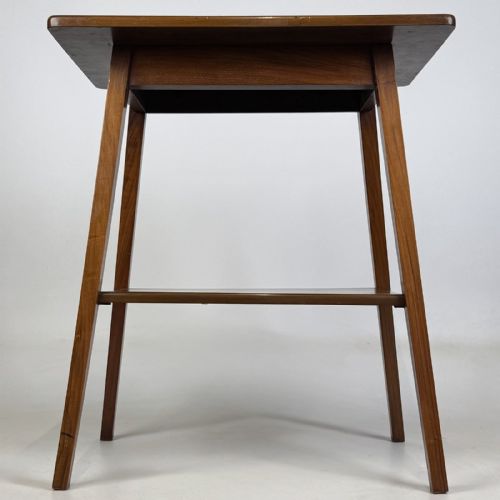
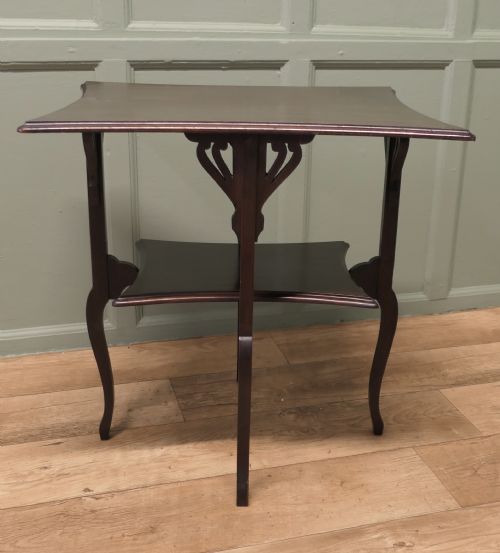
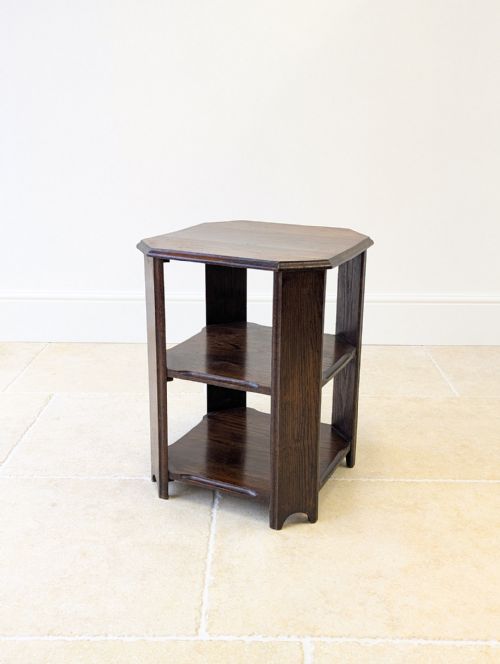
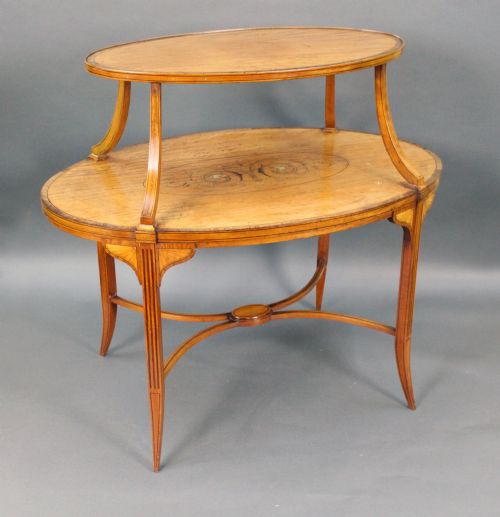
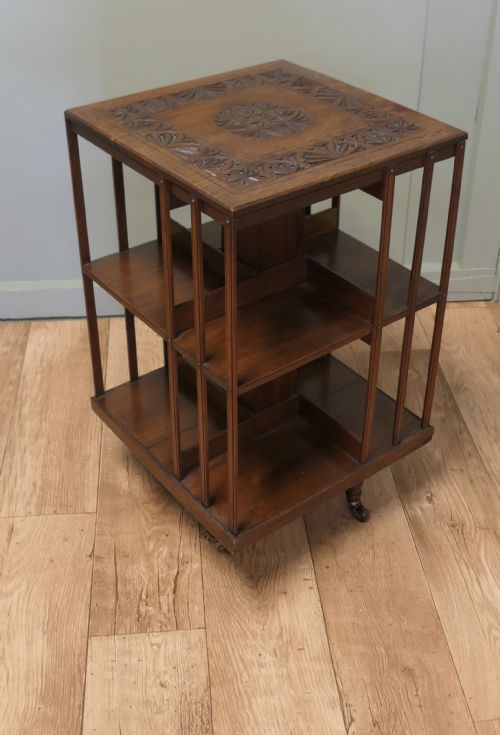
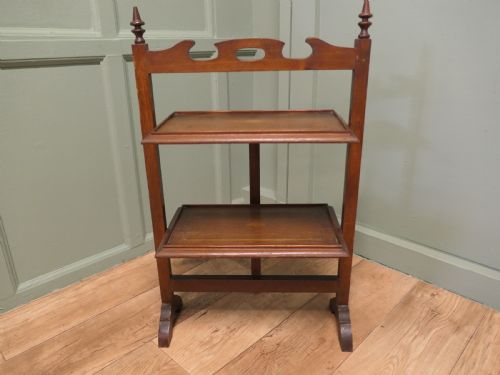
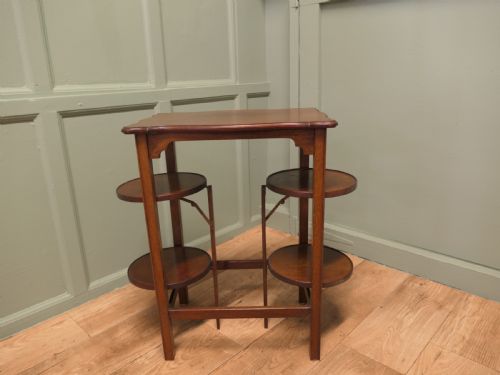
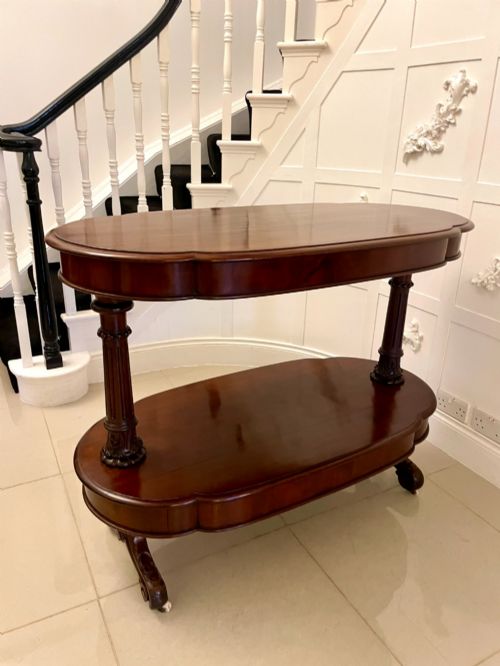
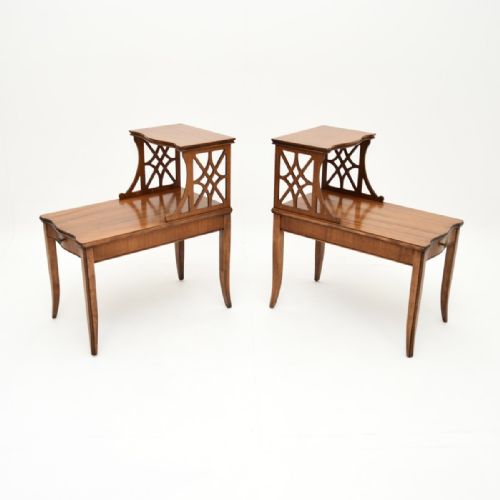
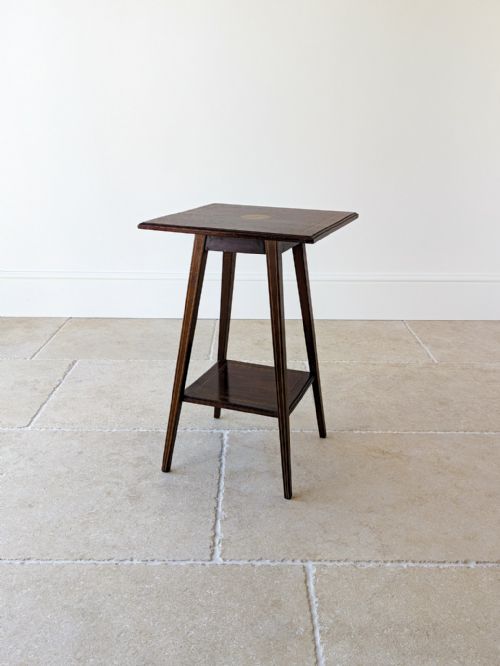
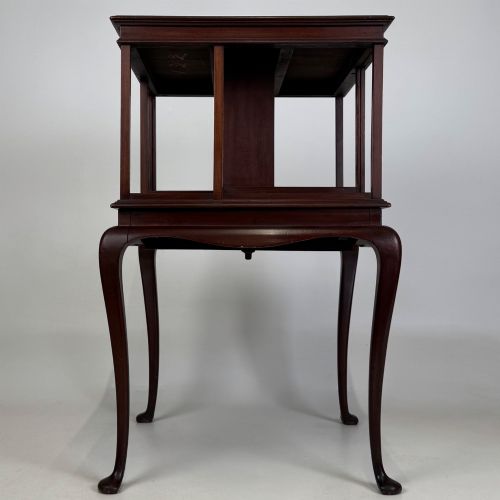
Two tier tables provide an additional lower shelf or deck beneath the main top surface, offering extra space for storage or display without expanding the footprint in a room. When you search for two tier tables, you encounter a variety of forms ranging from occasional tables and lamp stands to tea trolleys, étagères, and revolving bookcases.
The versions most common on this page date from the Victorian and Edwardian periods, constructed in timbers such as mahogany, oak, and walnut. Makers utilised these secondary tiers to add stability and utility, resulting in pieces that functioned equally well as bedside stands, lamp tables, or small serving surfaces.
How they were made
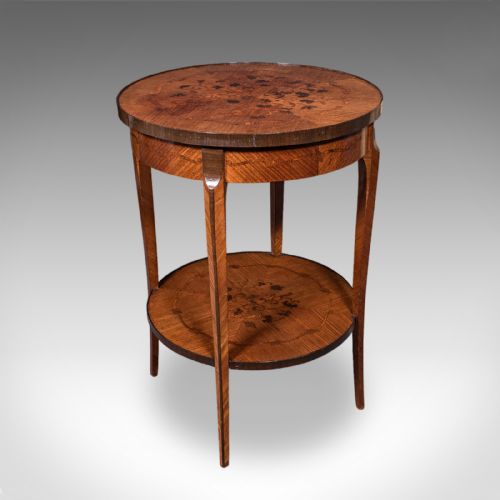
Cabinet makers constructed these pieces using solid hardwoods like oak, mahogany, and walnut, often applying decorative veneer surfaces such as satinwood, kingwood, or burr walnut to the primary tops and lower shelves. Joinery techniques varied from traditional mortise and tenon joints in earlier oak pieces to fine inlay, marquetry, and crossbanding on later mahogany and rosewood examples.
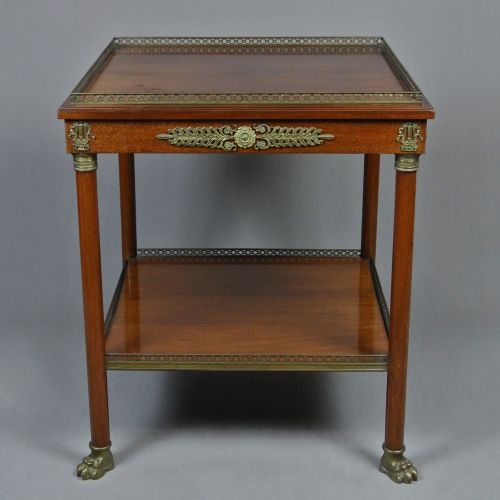
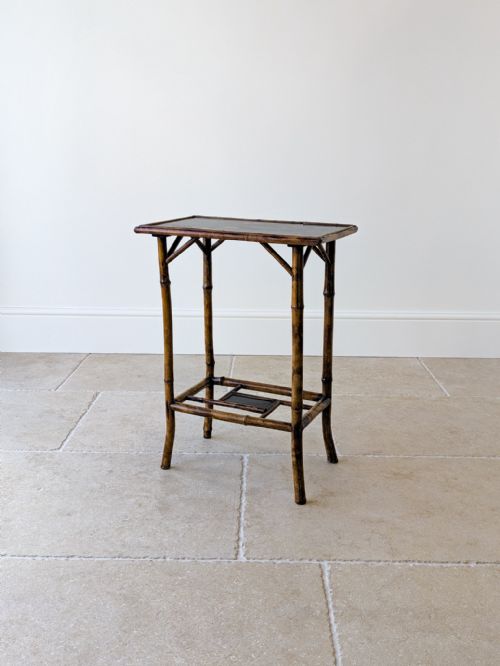
Metal components such as brass galleries, castors, and fittings appear frequently on trolleys and étagères, providing both functional mobility and decorative contrast to the timber. Glass, bamboo, and lacquered brass also feature in specific pieces, reflecting the design preferences of the late nineteenth and early twentieth centuries.
Listings span several eras, incorporating Victorian, Edwardian, and Art Deco styles alongside earlier Georgian and 18th-century forms.
What varies in quality
The standard of timber selection and veneer work largely determines the quality of a piece, with figured grains, book-matched panels, and precise marquetry setting finer examples apart from plain production work. Superior items exhibit crisp carving, well-fitted joinery that remains rigid over time, and harmonious proportions between the upper and lower tiers.
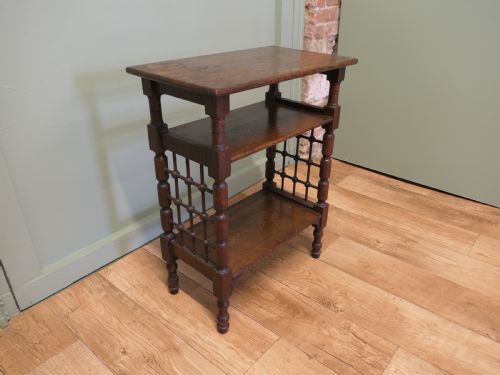
The refinement of secondary details such as turned or barley-twist uprights, cast brass mounts, and inlaid stringing indicates the level of craftsmanship invested by the maker. Tables that retain their original surfaces and structural integrity without excessive timber shrinkage or replaced components represent the upper tier of the range.
Leonard Wyburd·Liberty and Co
The Two Tier Tables Glossary
- Étagère
- A set of open shelves or tiers designed for displaying small objects, ornaments, or books. They appear in various timbers and often feature brass galleries.
- Marquetry
- Decorative patterns formed by the insertion of pieces of wood, shell, or ivory into a veneer on a solid carcase. This technique defines many finer French and revival tables.
- Dumb Waiter
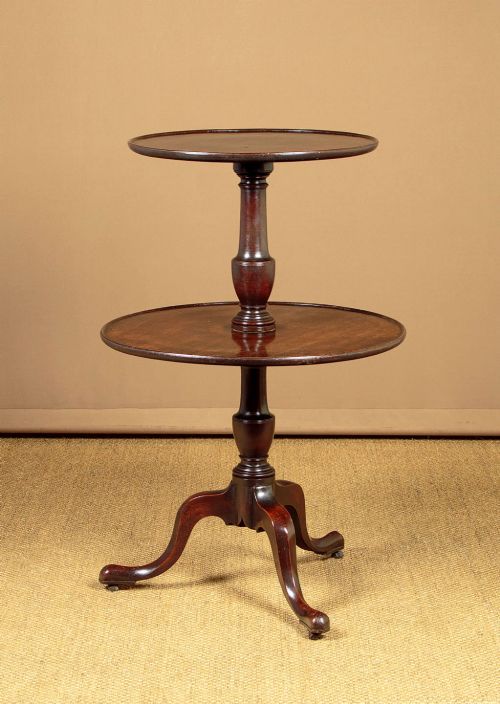
- A tiered freestanding piece of furniture used for holding food, drinks, or tableware without the need for immediate servant attendance. Georgian examples often employ a tripod base.
- Stringing
- Thin lines of contrasting wood inlay used to outline the edges of table tops, drawers, and lower shelves. It is characteristic of late Victorian and Edwardian cabinet work.
- Whatnot
- A piece of furniture consisting of a series of open shelves supported by pillars, used for storing or displaying items. Victorian versions frequently utilise turned wooden columns.
Two Tier Tables: Frequently Asked Questions
What were two tier tables used for?
These tables served multiple domestic purposes, acting as stands for table lamps, repositories for books, or movable trolleys for serving tea and drinks. The lower shelf provided convenient storage for items that would otherwise clutter the main surface.
In sitting rooms and drawing rooms, they offered a practical way to display decorative objects or hold reading materials close to seating areas without taking up excessive floor space.
How do I date a two tier table?
Dating relies on identifying the prevailing timber, style influences, and construction methods visible in the piece. Victorian examples often display heavier turned supports or burr walnut veneers, whereas Edwardian pieces frequently feature lighter mahogany with inlaid stringing or satinwood banding.
Earlier eighteenth-century pieces, such as tripod étagères or cricket tables, exhibit simpler joinery and native timbers like oak or unadorned mahogany, distinct from the mass-produced revival styles of the early twentieth century.
Where should I place a two tier table?
A two tier table fits well beside a sofa or armchair, where the lower shelf holds books or magazines while the top surface accommodates a reading lamp or a cup. They also function effectively in hallways as lamp tables or in corners to display small plants and ceramics.
Because the design is finished on all sides in many instances, freestanding placement in the centre of a room or behind a sofa allows the proportions and lower shelf to remain visible from multiple angles.
Are two tier tables sturdy enough for daily use?
Solid construction using hardwoods like oak or mahogany ensures that most traditional examples withstand everyday domestic demands. The lower shelf acts as a structural brace between the legs, contributing to the overall rigidity of the frame.
Care should be taken with pieces featuring delicate veneers or slender brass and glass components, placing them where they avoid heavy impact while still serving as functional surfaces for lamps or occasional items.