



Two Tier Library Table
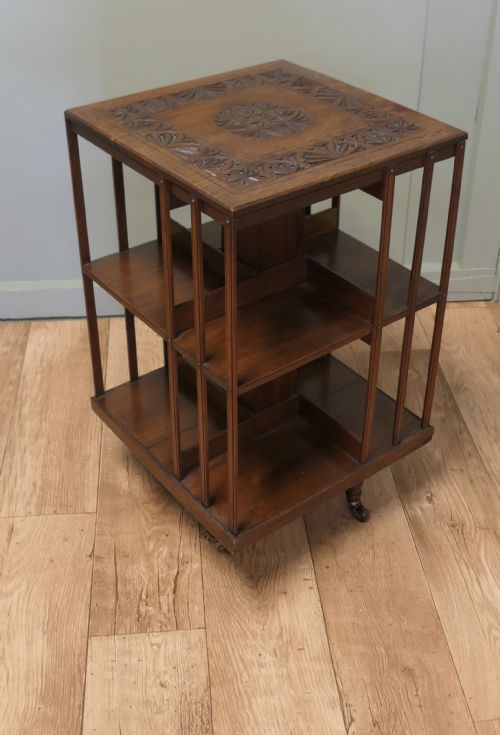
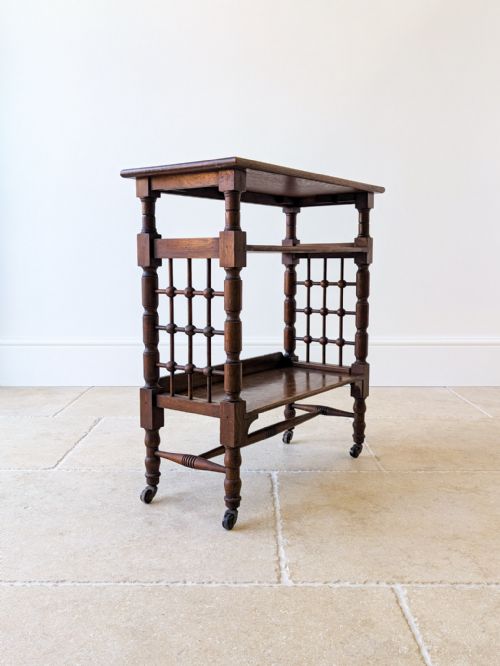
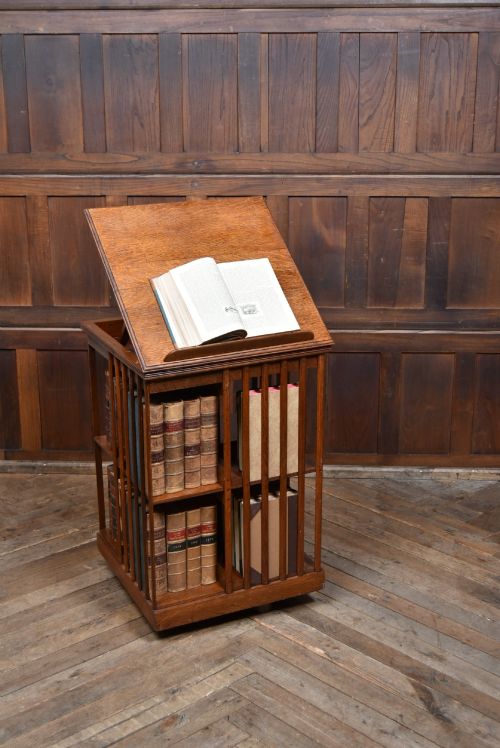
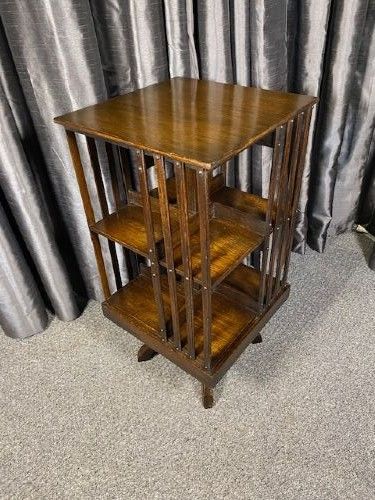
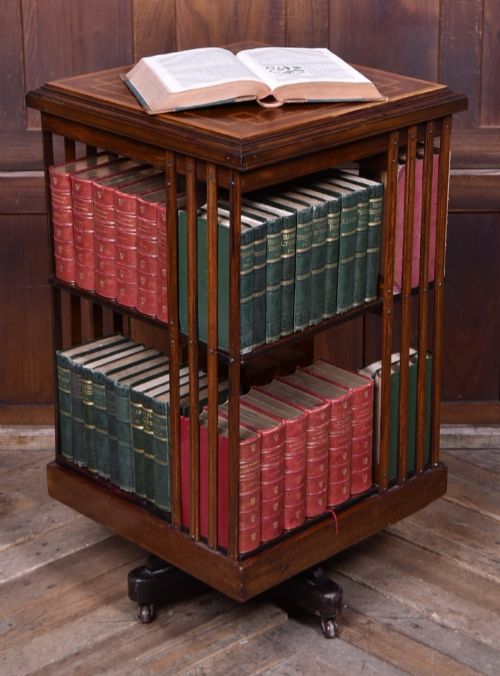
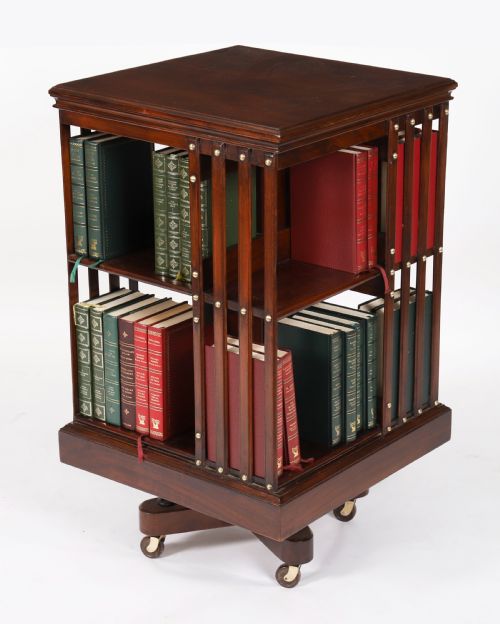
A two tier library table offers sturdy timber tiers for holding volumes close to hand while sitting by the fire.
Two Tier Library Table
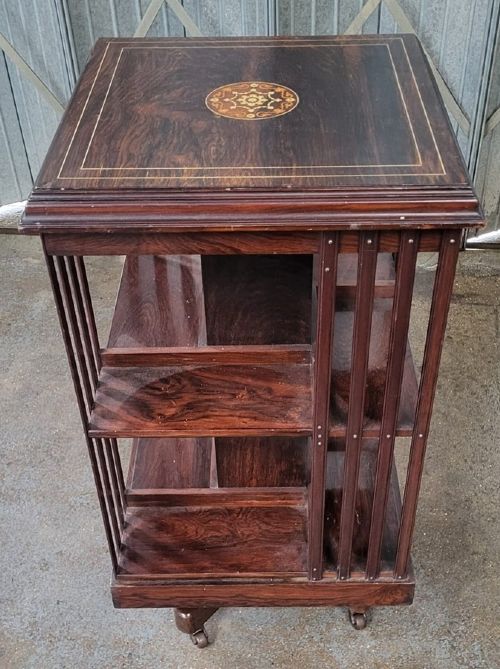
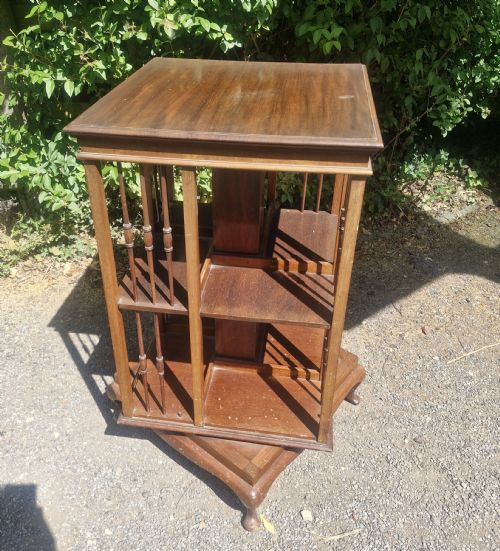
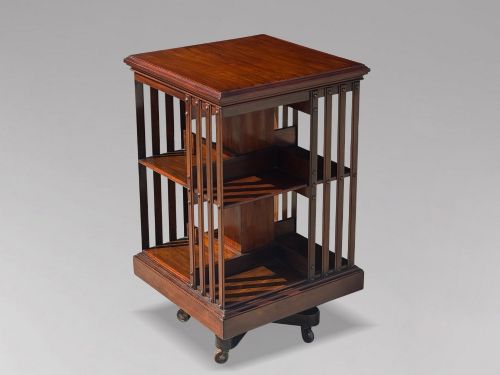
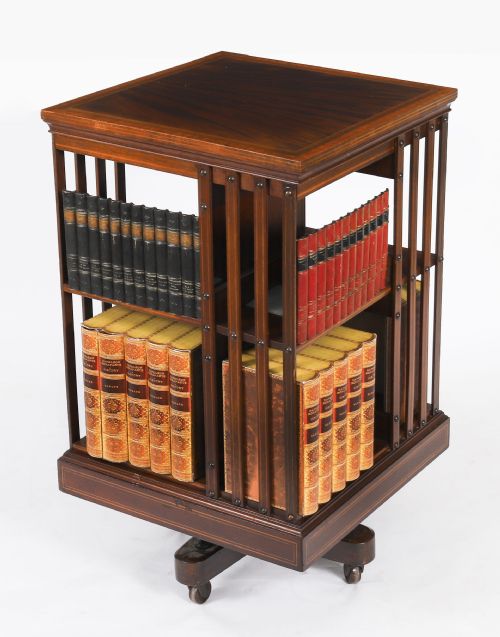
Most examples you meet here are made from mahogany, often featuring inlaid satinwood or rosewood details, alongside occasional walnut and oak pieces. They range from small tabletop book troughs to larger floor-standing revolving units supported by brass and iron mechanisms.
Makers such as Maple & Co and Howard & Sons contributed to this tradition, producing library furniture that combined utility with refined nineteenth-century cabinetmaking styles like Gothic Revival and Chippendale.
What varies in quality
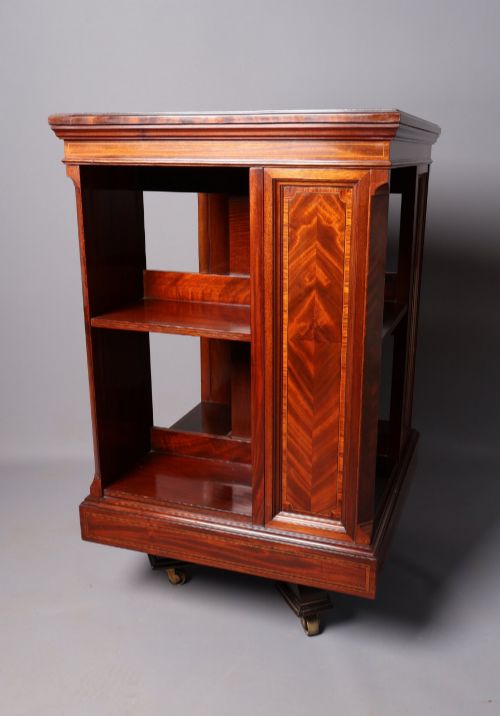
The refinement of the timber selection distinguishes the finer pieces, particularly where carefully matched flame mahogany veneers or delicate satinwood stringing are employed. Plain mahogany or simpler oak versions offer sturdiness but lack the decorative ambition of pieces bearing maker signatures.
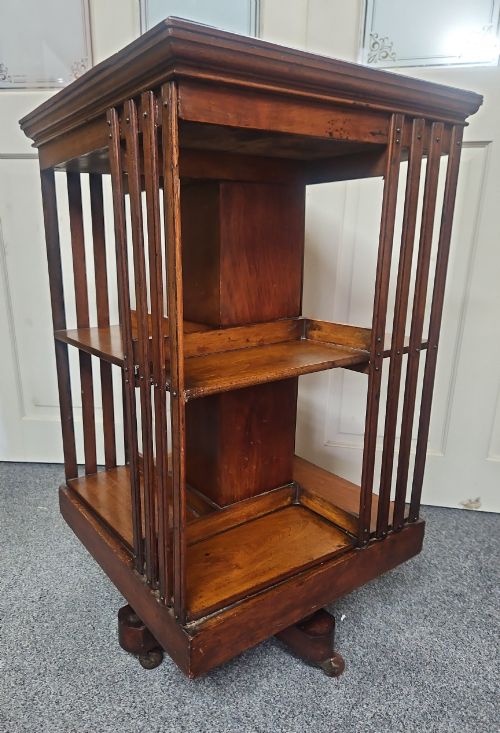
The action of the revolving mechanism dictates the mechanical success of a piece, with superior models turning silently and evenly on well-engineered concealed casters. Crispness in the fretwork slats and tightly fitted joints further separate standard production items from workshop pieces.
An early nineteenth-century revolving bookcase is essentially the Victorian answer to the modern coffee table reading pile.
Maple and Co·Howard and Sons
The Two Tier Library Table Glossary
- Flame mahogany
- A veneer cut from the fork of the mahogany tree, producing a distinctive fire-like pattern across the wood surface. It was favoured by cabinetmakers for prominent panels on high-status library furniture.
- Revolving bookcase
- A freestanding tiered unit mounted on a concealed central pivot allowing it to spin freely. This design enabled a reader to access multiple volumes from a single seated position.
- Inlay
- A decorative technique where pieces of contrasting wood, such as satinwood or rosewood, are inserted into recesses in the primary timber. This creates flat ornamental borders and motifs.
- Gothic Revival
- An architectural and decorative style popular in the nineteenth century that drew inspiration from medieval forms. Pieces in this style often feature pointed arches, trefoils, and heavy timber mouldings.
Two Tier Library Table: Frequently Asked Questions
How do I care for mahogany?
Keep wooden library furniture away from direct heat sources and strong sunlight to prevent the timber and its polish from drying out.
Dust the slats and tiers regularly with a soft, dry cloth and apply a coat of quality wax polish periodically to nourish the grain.
Where should I place a revolving bookcase?
These compact units suit studies, sitting rooms, or hallways where books need to be stored efficiently without occupying excessive wall space.
Ensure there is enough clearance around the entire unit for the tiers to spin freely without striking nearby furniture.
How can I tell Edwardian from Victorian?
Victorian library pieces tend to be heavier in proportion with darker finishes and robust Gothic or classical revival details.
Edwardian items often appear lighter, frequently incorporating satinwood inlay and brighter mahogany tones influenced by eighteenth-century revivals.
Can these tables hold heavy books?
The sturdy timber construction and internal cross-framing of nineteenth-century revolving bookcases were specifically engineered to support substantial reference volumes.
Distributing weight evenly across the tiers ensures the internal pivot mechanism continues to turn smoothly and without strain.