
Two Tier Library Bookcase
These two tier library bookcase pieces offer a practical arrangement for storing volumes in any study, appearing primarily in mahogany and oak across periods from the Georgian era to the Edwardian decades.
Two Tier Library Bookcase
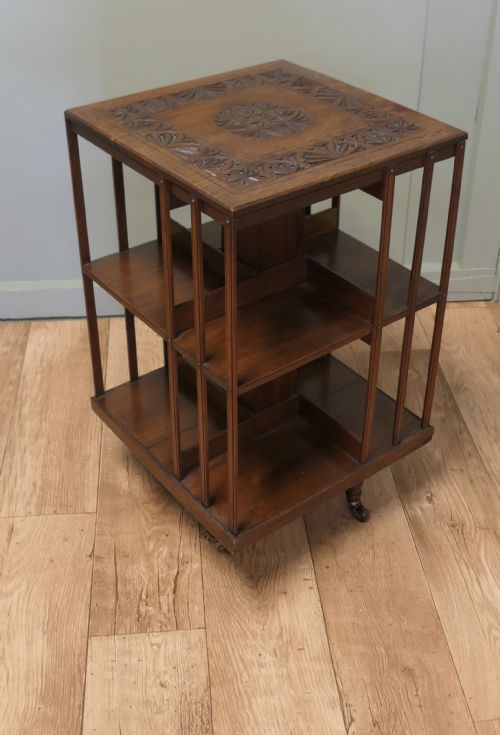
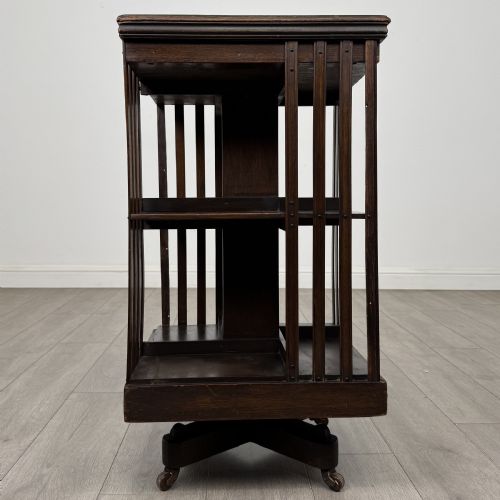
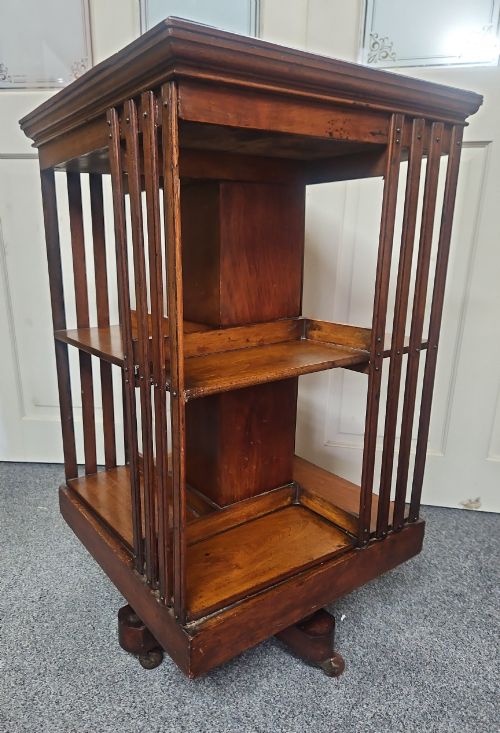
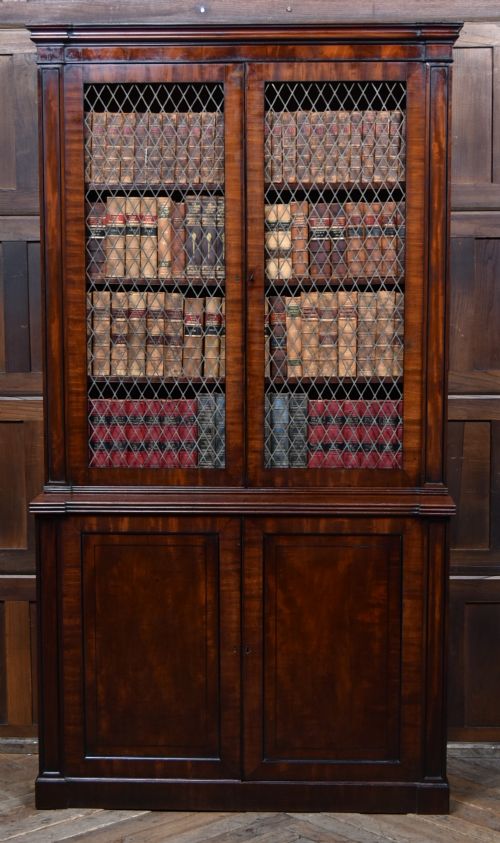
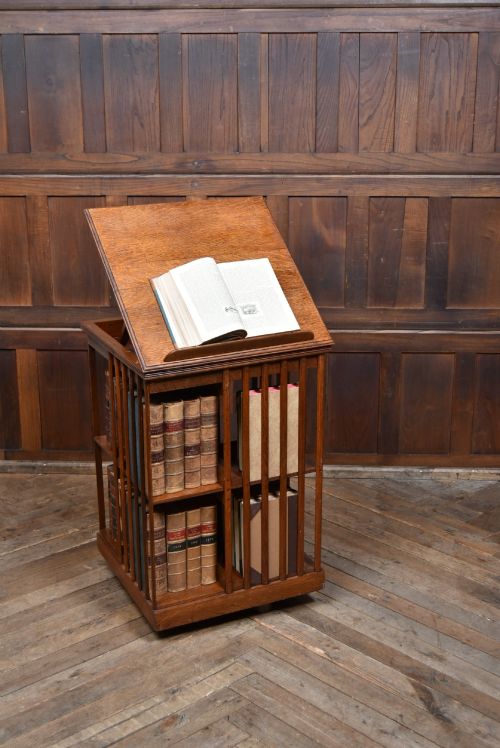
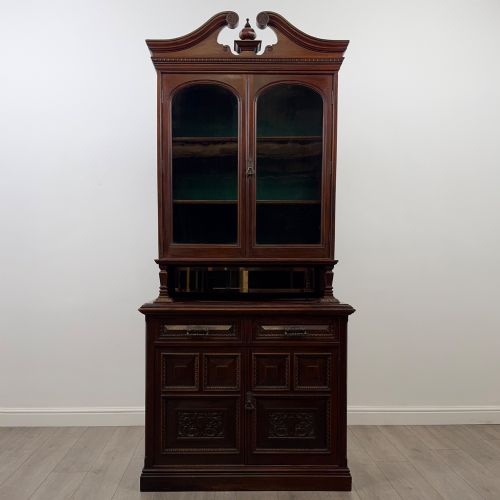
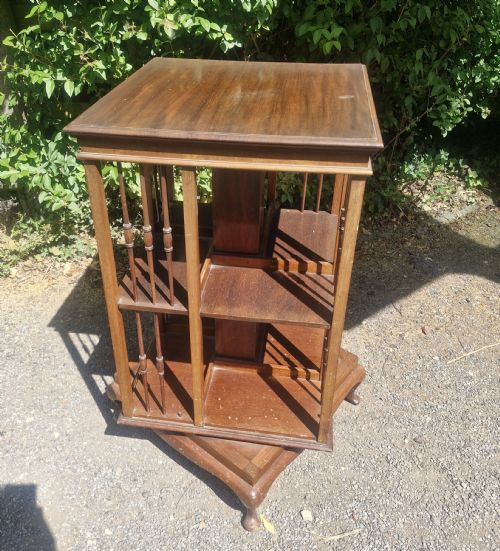
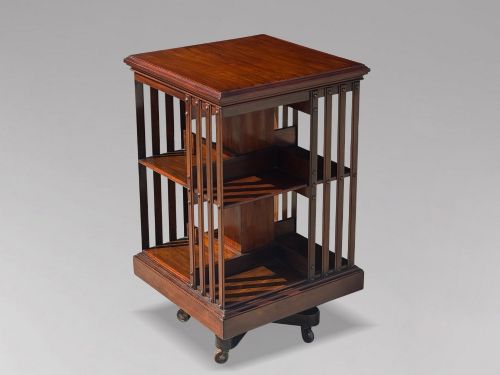
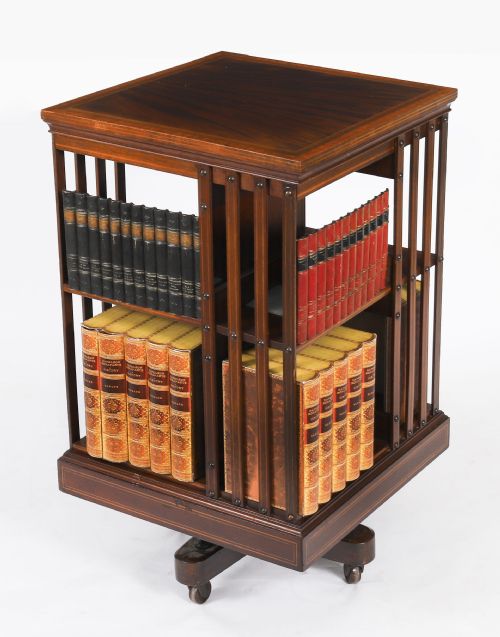
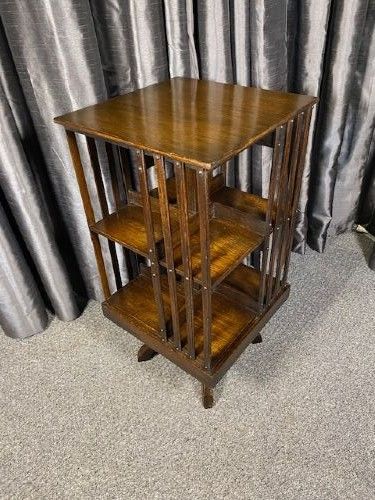
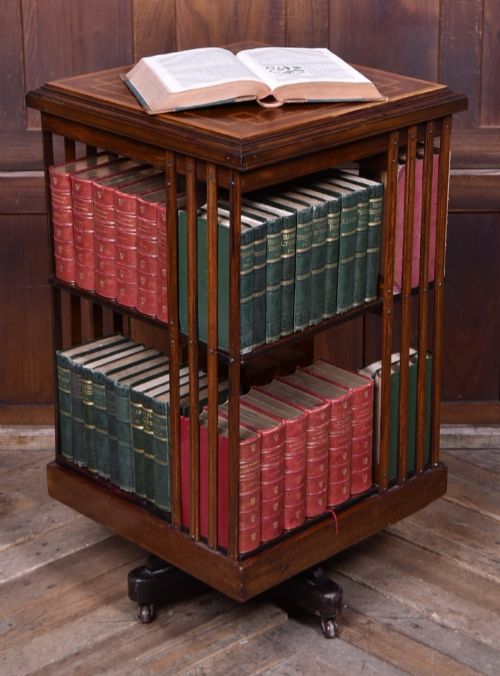
A two tier library bookcase provides tiered shelving for organising volumes within domestic studies and institutional libraries. The selection spans standard upright cabinetry alongside revolving designs that sit upon tables or floors.
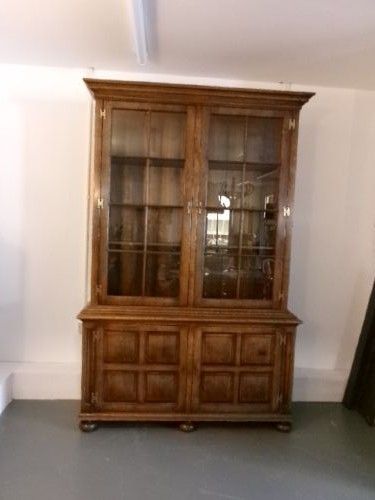
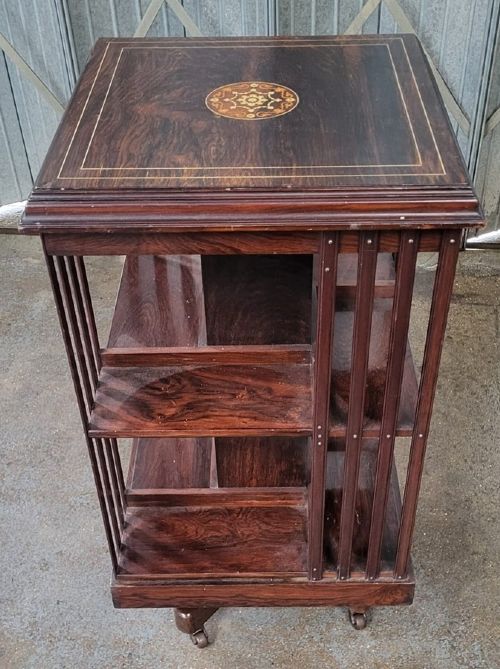
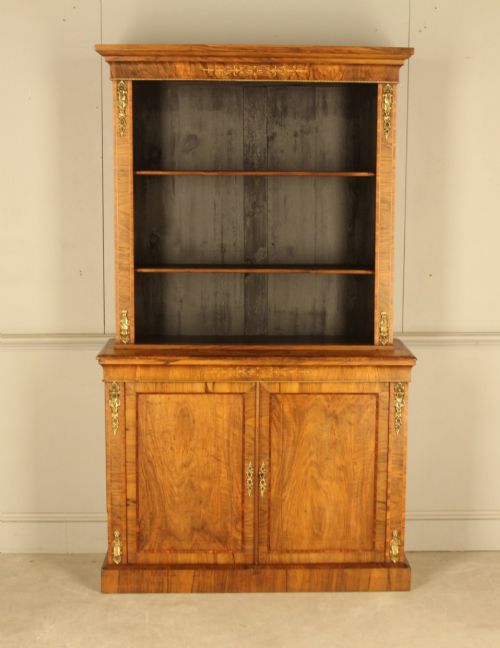
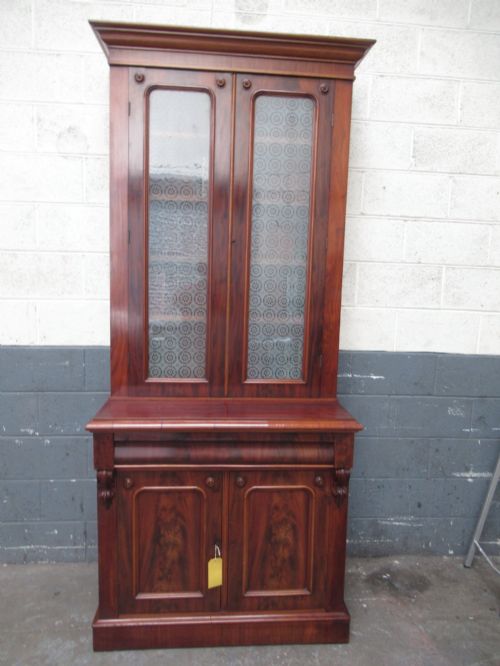
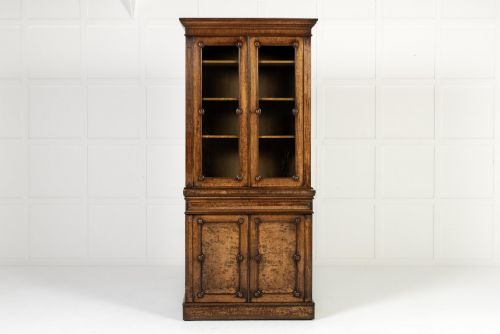
Most examples encountered here date from the Victorian and Edwardian periods, constructed in mahogany, walnut, and oak. Forms range from open bookcases and glazed cabinets to compact revolving book stands.
The objects reflect the evolving storage needs of private readers and institutional libraries across the nineteenth and early twentieth centuries. Makers adapted traditional cabinet forms to accommodate growing collections of books in limited domestic spaces.
Materials and construction methods
Makers utilised dense timbers such as mahogany, oak, and walnut, often selecting figured veneers for visible surfaces. Inlaid decoration in satinwood or other contrasting woods frequently adorns Edwardian pieces.
Structural hardware relies on brass for hinges, castors, and mounts, particularly on revolving mechanisms and cabinet doors. Glass panels appear in upper display sections, while internal elements incorporate adjustable wooden shelving.
The listings feature mahogany and oak as the predominant materials across Victorian and Edwardian periods.
Distinctions in craftsmanship
Quality rests in the selection of timber grain, such as flame mahogany or figured walnut, and the precision of inlaid details. Cabinetry constructed with solid secondary woods and dovetailed joints demonstrates superior workshop practice.
The smoothness of the revolving mechanism defines the utility of rotating models, separating standard items from finely engineered specimens. Glazing quality and the integration of original brass hardware further distinguish the range.
Howard & Sons·Maple & Co·Holland & Sons
The Two Tier Library Bookcase Glossary
- Revolving bookcase
- A freestanding bookcase designed to rotate on a central pivot base for easy access to volumes from any angle.
- Breakfront
- A cabinet design where the central section projects forward from the flanking wings.
- Pollard oak
- Oak timber derived from trees that were cut back to encourage a dense branch system, producing a highly figured grain pattern.
- Inlay
- A technique where pieces of contrasting timber or metal are inserted into depressions in the base wood to form decorative patterns.
Two Tier Library Bookcase: Frequently Asked Questions
How do revolving bookcases work?
Revolving designs rest upon a concealed ball-bearing or spindle mechanism fitted to a heavy cruciform base. This allows the entire tiered superstructure to turn smoothly with minimal effort.
Users can access multiple sides of shelving without moving the furniture piece across the floor.
What woods were used for library bookcases?
Makers relied primarily on dense hardwoods such as mahogany, oak, and walnut for structural stability and durability. Figured veneers and satinwood inlay were often applied to enhance the visual appearance of Edwardian and Victorian pieces.
Secondary timbers like pine or oak appear internally for drawer linings and shelf backs.
How do I date a Victorian bookcase?
Dating relies on combining the stylistic details, timber choices, and construction methods visible in the piece. Victorian examples often feature rich mahogany or walnut, sometimes incorporating glazed upper doors or heavy moulded cornices.
Later Victorian and Edwardian items frequently display lighter mahogany with decorative stringing or inlaid motifs.
Can shelves be adjusted in these bookcases?
Many library bookcases incorporate adjustable shelving systems using wooden or metal track supports. This allowed owners to alter shelf heights to accommodate volumes of varying sizes.
Fixed shelves remain common in older Georgian and early nineteenth-century open formats.