
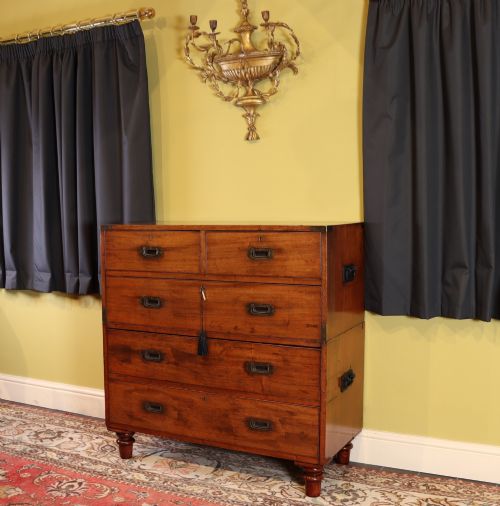
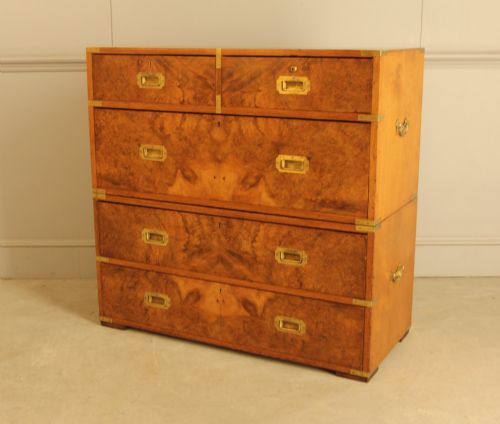
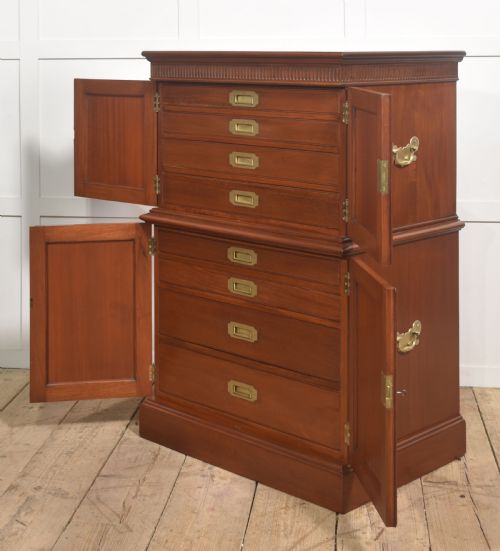


Two Section Military Chest
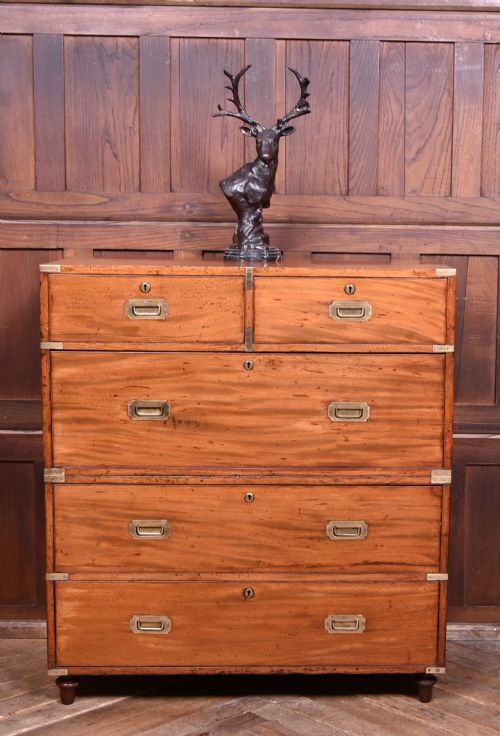
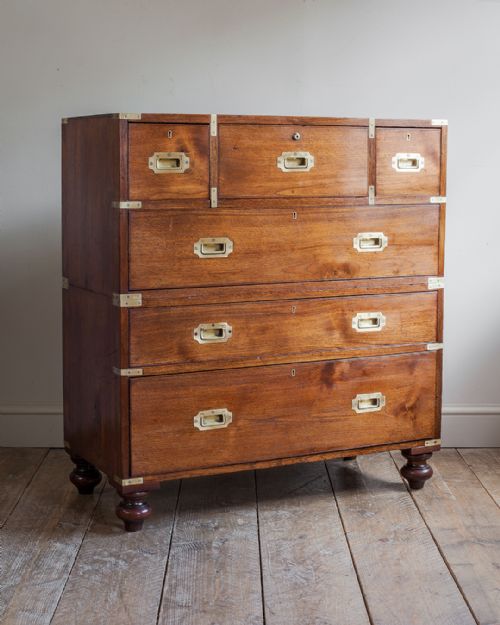
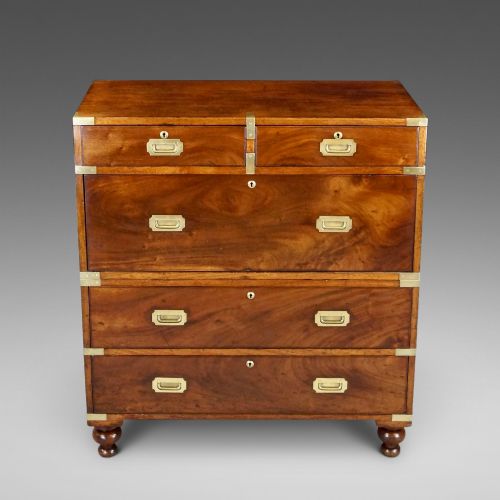
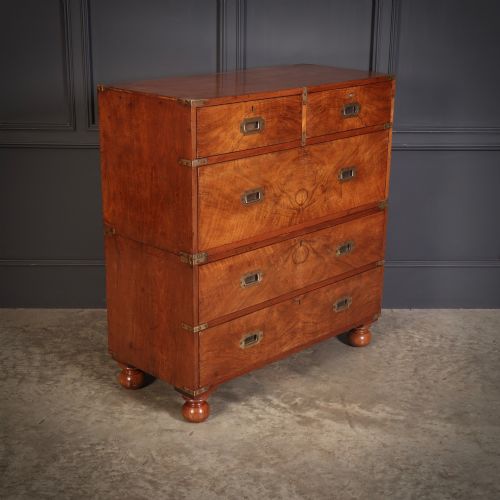
A two section military chest is a modular colonial-era drawer unit built to divide easily for travel.
Two Section Military Chest
A two section military chest is built in separate upper and lower carcases designed to stack together and travel on campaigns. The pieces on this page span the nineteenth century and the Victorian era, taking the form of chests of drawers, secretaires, and collectors cabinets.
Most examples you encounter divide cleanly at the waist with brass side carrying handles and flush drawer pulls. Timber selection ranges from dense tropical hardwoods like teak and camphor wood to native British mahogany and walnut.
The layout typically follows a two-over-three drawer arrangement or incorporates a fitted secretaire writing drawer. Cabinets and tallboy variants appear alongside standard drawer configurations, all sharing the distinct modular construction.
Materials and Construction
Makers utilised durable timbers such as teak, mahogany, camphor wood, and padauk wood to withstand tropical climates and rough transit. These woods were chosen for their stability and resistance to warping in humid conditions.
Corner brass brackets, strap work, and flush-fitting hardware protect the edges and allow sections to be packed tightly without snagging. Recessed drawer pulls prevent damage during movement and maintain flat exterior planes.
Secondary framing often employed cedar or oak, while joints were reinforced to endure the stress of frequent disassembly and reassembly.
Two Section Military Chest Retail Price Guide 2026
Typical asking prices for two section military chest among the pieces listed under this phrase on Sellingantiques today, from the lower quarter to the upper quarter. They describe what is for sale here now, not the wider market.
Listings feature nineteenth-century and Victorian examples constructed from teak, mahogany, camphor wood, padauk wood, and walnut.
Judging Quality
Quality rests on the integrity of the original brass mounts, the crispness of the flush fitting, and the preservation of the dividing seam. Superior pieces retain matching drawer linings, original locks, and uninterrupted timber grain across the split.
The choice of cabinet wood alters the character of the piece, with figured burr walnut or dense padauk representing the more decorative end of the spectrum compared to standard mahogany or teak. The precision with which the two halves lock together dictates the success of the construction.
S. W. Silver & Co·Army & Navy
The Two Section Military Chest Glossary
- Secretaire chest
- A drawer unit featuring a pull-out writing surface with small pigeonholes and letter drawers inside. This fitted compartment drops down to serve as a desk.
- Campaign hardware
- Recessed brass handles, corner brackets, and binding straps designed to sit flush with the wood surface. These fittings prevent catching and protect the carcase during transport.
- Flush pull
- A drawer handle set into a recess so it does not project beyond the face of the drawer. This allows the chest to slide tightly into packing crates.
- Camphor wood
- A fragrant tropical timber frequently utilised in campaign furniture for its insect-repellent properties. It often shows a pale golden brown hue.
Two Section Military Chest: Frequently Asked Questions
How do you separate a two section military chest?
Unfasten the internal hooks or side brackets that lock the upper and lower carcases together at the waist. Lift the top section straight up using the side carrying handles.
Ensure any securing screws or bolts inside the drawer apertures are removed before attempting to pull the two halves apart.
What timber were campaign chests made from?
Makers used durable hardwoods including mahogany, teak, camphor wood, padauk wood, and walnut. These materials handled shifting climates and heavy travel.
Secondary woods such as cedar or oak often appear in the drawer linings and internal framing.
How do you use a campaign chest at home?
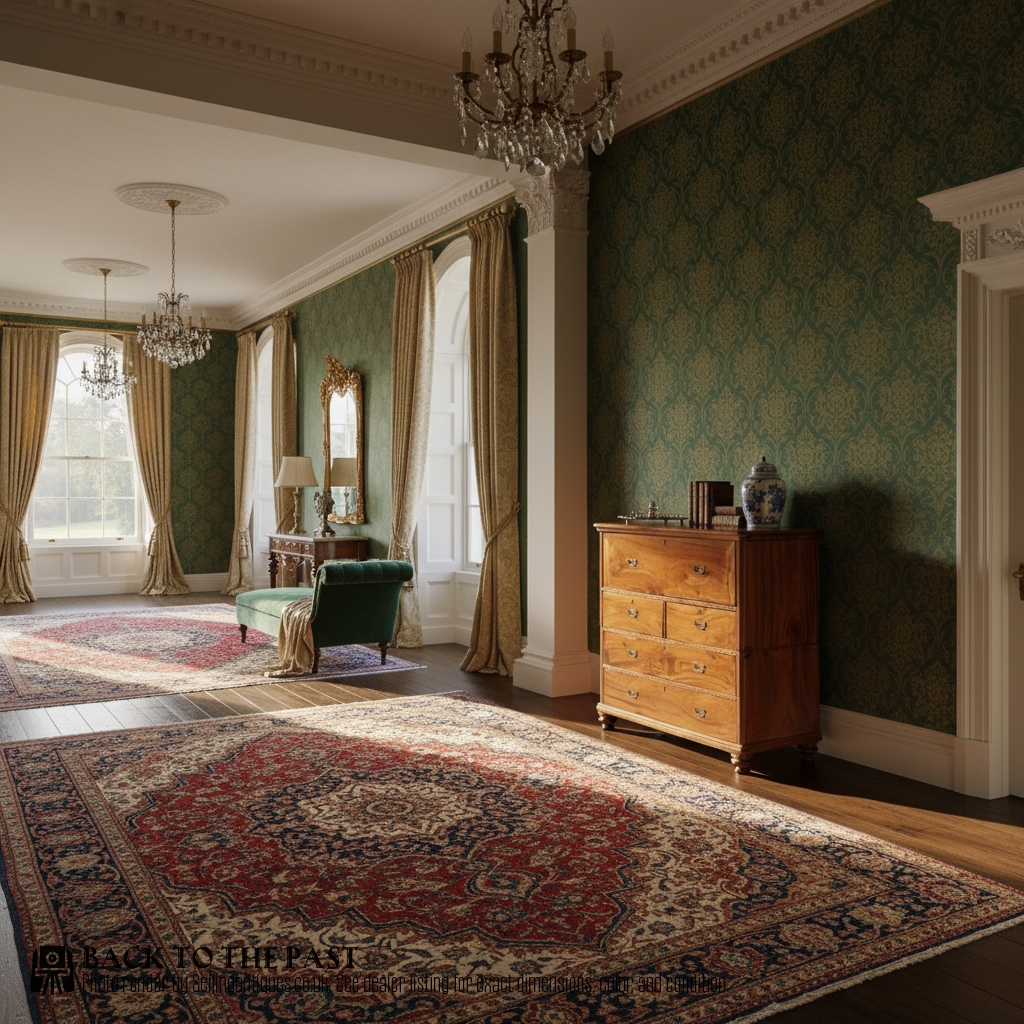
The modular height and flat top make these chests useful as bedroom dressers, side tables, or living room storage. The removable sections allow for flexible placement.
Secretaire variants provide a fold-down writing desk surface that functions well in a home study or hallway.
How do you date a nineteenth century military chest?
Examine the construction methods, brass hardware styles, and timber choices across Victorian and earlier nineteenth century examples. Screws, dovetails, and lock types help narrow the decade.
Maker stamps or retailer labels inside the drawers offer the most precise indication of origin and date.