


Two Seat Parlour Bench
A two seat parlour bench offers compact seating crafted with refined timbers and upholstery, bringing period charm to smaller spaces.
Two Seat Parlour Bench
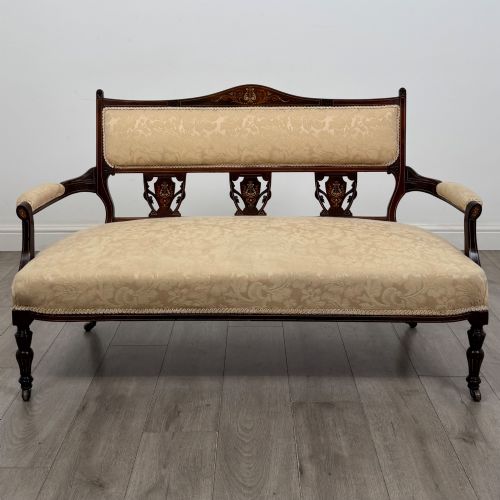
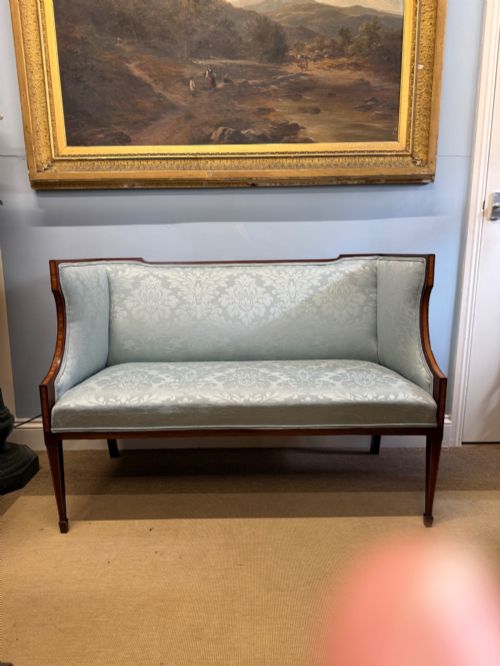
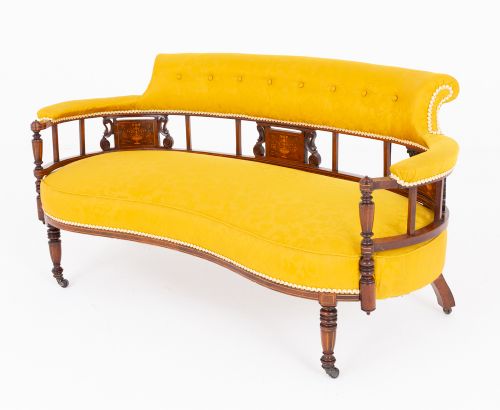
A two seat parlour bench appears primarily across Victorian, late Victorian and Edwardian periods, typically taking the form of a settee, salon settee or compact sofa designed for intimate seating arrangements. These pieces range from around 1880 through to 1910, reflecting the cabinet-making standards of the late nineteenth and early twentieth centuries.
Buyers will most frequently encounter Edwardian mahogany examples featuring satinwood inlay and various upholstery styles, alongside Victorian rosewood pieces. The selection spans distinct aesthetic revivals including Louis XVI style, neoclassical influences and Edwardian Art Nouveau.
Formats include salon settees meant for reception rooms, bedroom twin-seaters, and occasional end-of-bed sofas. Proportions remain modest to accommodate smaller drawing rooms and parlours.
Materials and construction methods
Construction relies heavily on solid mahogany and rosewood frames, frequently enriched with delicate satinwood inlay, bone details and contrasting timber banding. Cabinet makers of the period shaped these timbers to create durable structural frameworks for domestic seating.
Upholstery forms an integral part of the manufacturing technique, utilising traditional fabrics such as damask and velvet to pad the double and twin seats. Brass components and structural fittings provide secure assembly where required.
Materials recorded across the inventory include mahogany, rosewood, satinwood, velvet, damask, and brass.
Distinguishing quality in period seating
Quality reveals itself in the precision of the cabinet work, particularly the crispness and complexity of the satinwood inlay work set into the mahogany or rosewood frames. Finer examples display meticulous attention to timber selection and harmonious grain patterns.
The sophistication of the stylistic detailing, such as carved neoclassical motifs or Edwardian Art Nouveau curves, marks the distinction between standard commercial output and superior parlour furniture. Upholstery finish and the integrity of the underlying woodwork further define the tier of the piece.
The Two Seat Parlour Bench Glossary
- Settee
- A small upholstered bench or sofa with a back and arms, designed to seat two or more people comfortably in a parlour or salon.
- Satinwood inlay
- A decorative technique where lighter contrasting wood is fitted into recesses within a darker primary timber such as mahogany.
- Damask upholstery
- A reversible figured fabric traditionally woven with patterns used for covering period parlour seating.
- Neoclassical style
- A decorative movement drawing inspiration from classical antiquity, often featuring symmetrical lines and restrained ornamentation.
- Salon settee
- A lighter decorative bench intended for formal reception rooms rather than heavy daily use.
Two Seat Parlour Bench: Frequently Asked Questions
Where were two seat parlour benches used?
These compact seats were traditionally placed in Victorian and Edwardian parlours, drawing rooms, or bedrooms to provide convenient seating without overwhelming smaller floor spaces.
Their modest proportions made them suitable for placement against walls or at the foot of beds in larger homes.
How do I care for antique upholstery?
Protect delicate fabrics like velvet and damask from direct sunlight to prevent fading and preserve the original textile integrity.
Regular gentle dusting with a soft brush helps maintain the fabric without causing friction damage to older fibres.
How do I distinguish Victorian from Edwardian pieces?
Victorian examples tend to use heavier timbers like rosewood with deeper tones and more robust framing, dating from the late nineteenth century.
Edwardian pieces, built around 1900 to 1910, frequently exhibit lighter mahogany frames paired with brighter satinwood inlay and more delicate proportions.
Can these benches be re-upholstered?
Many examples survive ready for re-upholstery, allowing owners to apply modern or period-appropriate fabrics to suit contemporary interiors.
Preserving the original internal webbing and padding during restoration helps maintain the authentic shape and comfort of the piece.
What is satinwood inlay?
Satinwood inlay involves embedding fine pieces of golden-yellow satinwood into carved channels within a darker primary wood like mahogany.
This technique creates contrasting decorative patterns along the crest rails and frame borders of parlour furniture.