


Antique Wood Frame Sofa
An antique wood frame sofa brings warmth and architectural presence to a room, offering exposed timber framing alongside traditional upholstery.
Antique Wood Frame Sofa
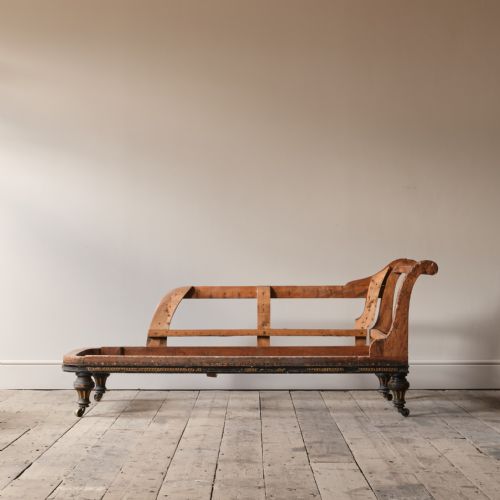
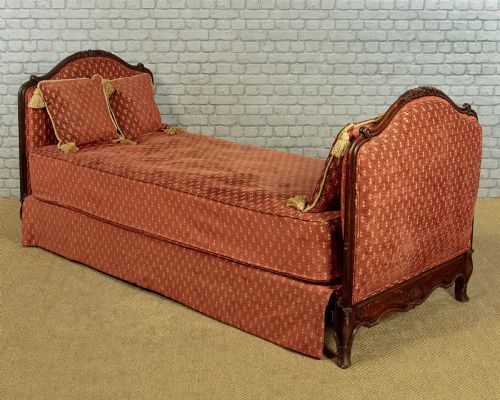
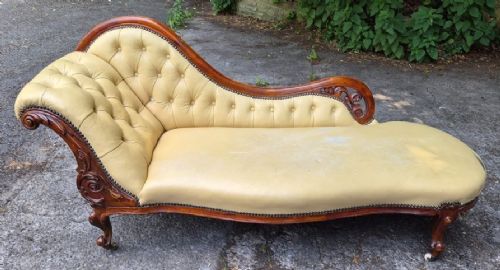
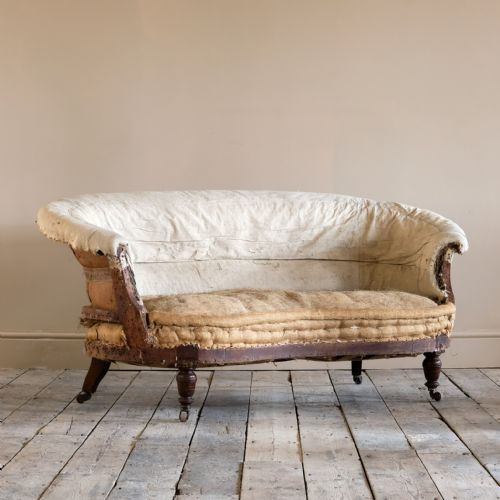
An antique wood frame sofa combines structural timber with upholstered seating, appearing in forms such as chaise longues, daybeds, settees, and large multi-seat couches. The evidence shows pieces spanning the Regency, Victorian, and Edwardian eras, alongside continental French designs.
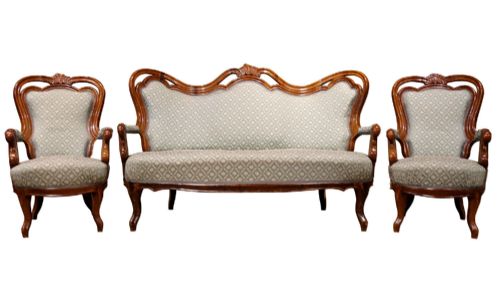
The version most commonly met on this page is the 19th-century mahogany or walnut framed sofa, often featuring carved details, exposed show wood, and scroll ends. Makers such as Holland & Sons and Hampton & Sons appear among these nineteenth-century listings.
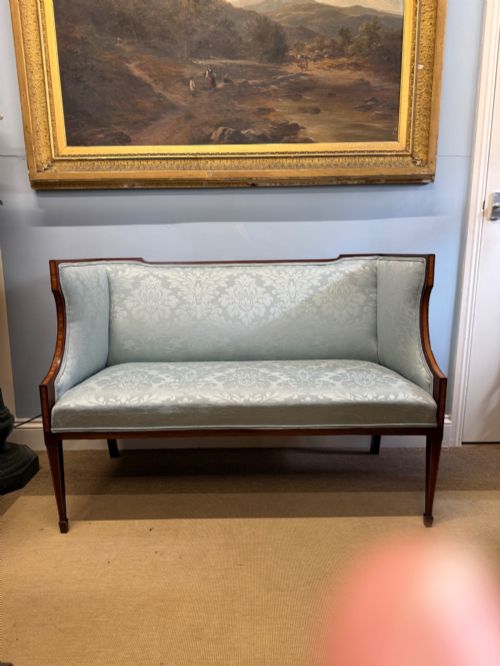
Buyers also encounter lighter Edwardian mahogany and satinwood frames, alongside painted or giltwood French styles like the Louis XV canapé and corbeille sofa. Daybeds and chaise longues provide further variations in form across the historical periods recorded.
Materials and construction methods
Makers constructed these frames predominantly from dense hardwoods such as mahogany, walnut, rosewood, and oak, which allowed for intricate hand-carving and structural stability. Giltwood, painted finishes, and ebonised timbers appear on continental and formal English seating.
Joinery relied on traditional mortise and tenon techniques to support the heavy loads placed on nineteenth-century and early twentieth-century couches. Show wood frames left the polished or carved timber exposed around the perimeter of the upholstery, distinguishing them from fully covered upholstered pieces.
Factors determining quality
The distinction between standard and superior seating lies in the crispness of the hand-carving on the exposed timber frame and the selection of quality cabinet woods like figured mahogany or rosewood. Heavier show wood frames with balanced proportions and refined scroll ends represent higher workmanship.
Makers of distinction utilised robust internal framing and premium secondary woods, whereas lesser pieces show simpler joinery or heavier, unrefined proportions. The integration of the wooden show frame with the upholstered body demonstrates the original maker's skill.
Holland & Sons·Hampton & Sons
The Antique Wood Frame Sofa Glossary
- Show wood frame
- A wooden sofa frame designed to display polished or carved timber around the edges of the upholstery rather than hiding the structure beneath fabric.
- Chaise longue
- An elongated upholstered seat intended for reclining, typically featuring a single raised backrest or end piece.
- Canapé
- A traditional French term for a decorative sofa or settee, frequently constructed with an exposed carved wood frame.
- Scroll end
- A sofa arm or terminal curved outward in a scroll shape, popular during the Regency and nineteenth-century periods.
- Corbeille sofa
- A French upholstered seating form with a rounded, basket-like back that curves continuously into the arms.
Antique Wood Frame Sofa: Frequently Asked Questions
How do I identify a Regency sofa?
Regency sofas typically display classical architectural influences, incorporating dark timbers like mahogany or rosewood, scroll ends, and sabre or reeded legs. These pieces date from the early nineteenth century and reflect the neoclassical taste of the period.
Evidence in the listings includes simulated rosewood country house pieces and double-ended designs with carved wooden frames.
What is the difference between a settee and a sofa?
Historically, a settee denotes a lighter, two-seat wooden or upholstered bench with a backrest, whereas a sofa traditionally refers to a larger, fully upholstered piece designed for lounging. In antique terminology, the terms frequently overlap depending on the maker and period.
The listings on this page include both narrower settees and longer multi-seat couches.
How should I care for an antique wood frame?
Maintain the exposed wooden frame by dusting with a soft, dry cloth and applying traditional beeswax sparingly to nourish the timber. Avoid placing the sofa near direct heat sources or strong sunlight, which can dry out the antique wood and fade the finish.
Preserving the show wood maintains the visual balance between the timber structure and the textile upholstery.
Are French antique sofas different from English ones?
French antique sofas, such as those in the Louis XV style or painted giltwood canapés, generally feature lighter carved frames, cabriole legs, and flowing Rococo or neoclassical ornamentation. English pieces from similar eras often rely on heavier mahogany or walnut timbers with formal geometric or scroll detailing.
Both traditions utilise exposed wood frames but differ markedly in ornamentation and silhouette.