

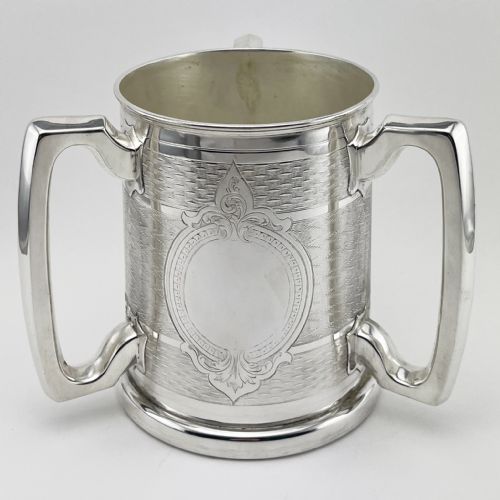


Two Handled Trophy
A two handled trophy carries the weight of victory or commemoration, shaped in silver, copper, or brass to mark an achievement.
Two Handled Trophy
A two handled trophy takes the form of a substantial vessel designed for display, competition, or formal presentation. These pieces appear across several centuries, originating in domestic and civic contexts before evolving into dedicated sporting awards.
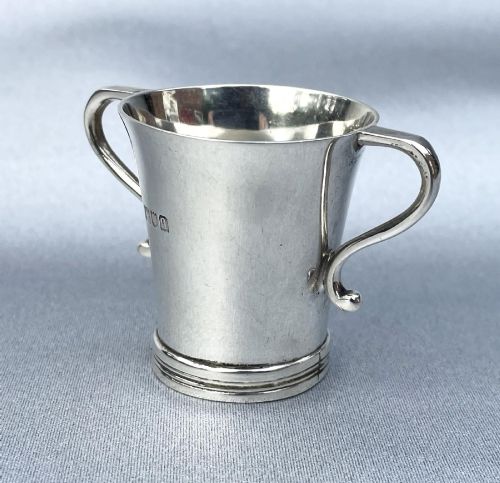
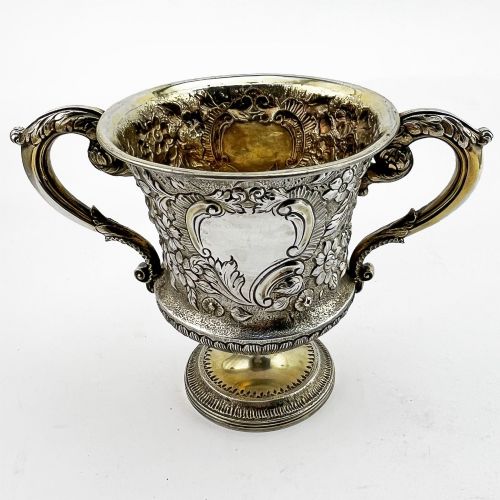
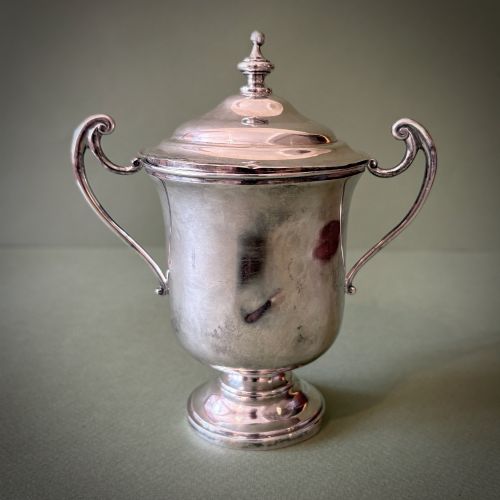
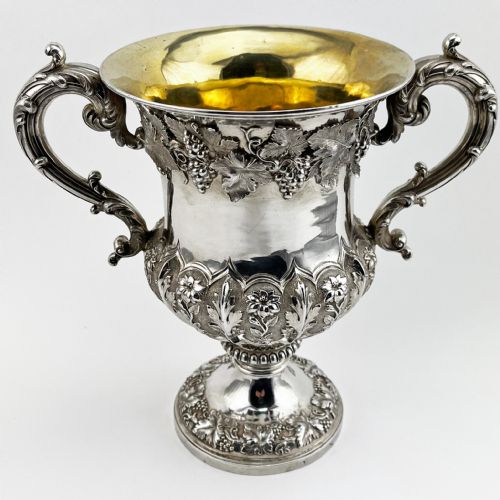
The selections available here range from George III campana shaped vessels and William IV sterling silver cups to later silver plated loving cups and Art Deco hunting prizes. Makers shaped these objects to stand securely on a pedestal or sideboard, using twin handles to allow formal lifting.
Early American silver cups and Irish silver examples with liners also emerge within this category, alongside French brass trophy vases. Buyers frequently encounter loving cups and campana shapes, reflecting both British and international silversmithing traditions.
How they were made
Silversmiths and metalworkers constructed these vessels primarily from sterling silver, Old Sheffield plate, silver plate, copper, and brass. Many sterling pieces received a layer of silver gilt or vermeil to enrich the interior and highlight decorative chasing.
Techniques varied from heavy solid silver casting and hammering to electroplating nickel silver in later decades. Workshops applied chased foliage, cast handles, and engraved inscriptions to complete the surface before mounting or finishing the base.
Two Handled Trophy Retail Price Guide 2026
Typical asking prices for two handled trophy among the pieces listed under this phrase on Sellingantiques today, from the lower quarter to the upper quarter. They describe what is for sale here now, not the wider market.
Some cups came equipped with interior liners, ensuring that whoever drank from the loving cup did not swallow the commemorative coin dropped inside.
What varies in quality
The calibre of a two handled trophy rests on the crispness of its cast ornament and the weight of the metal used in its construction. Substantial gauge silver and cleanly struck hallmarks distinguish premier workshop output from lighter plated wares.
Proportion and balance dictate the visual success of the piece, particularly where campana shapes and twin handles meet the main body. Articulation in the handle joints and the depth of hand chasing separate standard production items from bespoke presentation pieces.
Joseph Rodgers and Sons·Thomas Sutton
The Two Handled Trophy Glossary
- Campana shape
- A vase or cup profile resembling an inverted bell, widening towards the rim with a flared lip. This classical form frequently appears on Georgian and Regency presentation pieces.
- Loving cup
- A large drinking vessel featuring two or three handles, designed to be passed among company. These objects often served civic or celebratory functions before transitioning to purely decorative or competitive roles.
- Old Sheffield plate
- A composite material made by fusing a thin sheet of sterling silver to a thicker copper base. Artisans utilised this method before the invention of electroplating.
- Silver gilt
- Sterling silver that has been coated with a thin layer of gold, often applied to the interior bowl of a cup. This technique protected the silver from tarnishing when holding liquids.
- Vermeil
- Gold electroplated or fire-gilt over sterling silver. The process imparts a rich golden tone while retaining the structural integrity of the underlying precious metal.
Two Handled Trophy: Frequently Asked Questions
How were these cups used?
Historically, these vessels functioned both as communal drinking cups at banquets and as civic or sporting prizes. Loving cups passed from hand to hand during formal toasts, requiring two handles for steady lifting.
Over time, the form shifted towards permanent display on sideboards or mantelpieces, symbolising victory, patronage, or achievement without active use in drinking.
How do I care for silver trophies?
Maintaining a metal trophy involves gentle cleaning with appropriate silver or brass polishes to prevent excessive tarnish build-up. Avoiding harsh abrasives preserves engraved inscriptions, hallmarks, and delicate chased details.
Displaying the vessel away from direct sunlight and damp environments helps protect both solid metal surfaces and plated finishes over the long term.
How do I identify the period?
Dating a piece relies on examining the style, manufacturing technique, and any stamped hallmarks or maker marks. Georgian and Victorian examples often feature distinct neoclassical or revivalist motifs like French Rococo scrolls.
Materials also indicate age, as Old Sheffield plate points to the eighteenth and early nineteenth centuries, while electroplated nickel silver and specific Art Deco geometries signal twentieth-century production.