

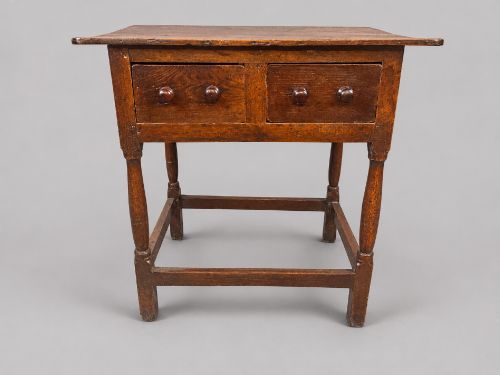
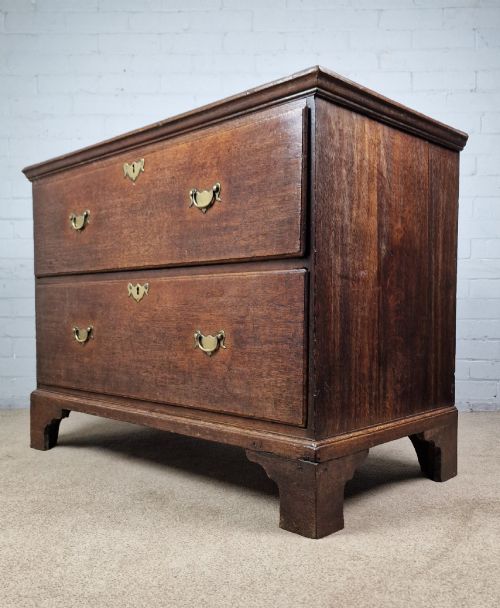


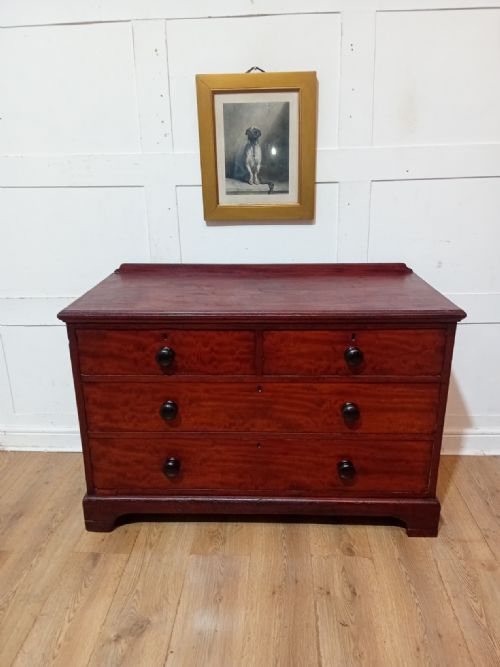

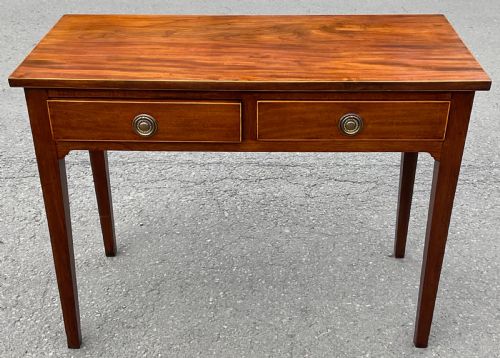


Two Drawer Lowboy
These two drawer lowboy examples are compact, purposeful tables that anchor a room with understated period character.
Two Drawer Lowboy
A two drawer lowboy functions as a compact side table or writing surface equipped with a pair of frieze drawers beneath the top. You encounter these pieces most frequently in oak, mahogany, and walnut, spanning periods from the early eighteenth century through to twentieth-century revivals.
The form often aligns with side tables, dresser bases, and serving tables from the Georgian and Queen Anne eras, alongside later revivals. These tables provide practical surface space and concealed storage while maintaining a low profile that fits neatly into hallways, bedrooms, or living spaces.
How they were made
Cabinet makers constructed these tables using solid hardwoods such as oak, mahogany, and walnut, sometimes applying burr walnut veneer to the drawer fronts for decorative contrast. Timber selection dictated the structural integrity, with native woods like oak dominating earlier rural pieces and imported mahogany or walnut defining later refined examples.
Joinery relied on traditional techniques including dovetailing for the drawers and mortise and tenon joints for the frames. Brass hardware, such as swing handles and escutcheons, was fitted to the drawers, completing construction methods handed down through generations.
Two Drawer Lowboy Retail Price Guide 2026
Typical asking prices for two drawer lowboy among the pieces listed under this phrase on Sellingantiques today, from the lower quarter to the upper quarter. They describe what is for sale here now, not the wider market.
Listings feature oak, mahogany, walnut, and pine, spanning from early eighteenth-century pieces to twentieth-century revivals.
What varies in quality
The refinement of the timber and the crispness of the carving distinguish a superior example from a utilitarian one. Finer pieces display carefully chosen grain patterns, such as figured mahogany or burr walnut veneer, paired with elegant cabriole or straight legs that balance the proportions.
Construction details also dictate distinction, evident in hand-dovetailed drawer linings and original brass hardware rather than later replacements. The harmony between the top surface and the underframe separates master cabinet work from simpler vernacular workshop production.
The Two Drawer Lowboy Glossary
- Lowboy
- A small side table or dressing table featuring one or more rows of drawers beneath the work surface. This form gained popularity during the late seventeenth and eighteenth centuries.
- Frieze
- The central horizontal band situated directly beneath the top surface of a table, typically housing the drawers in this furniture type.
- Cabriole leg
- A furniture leg that curves out in a convex arc and tapers inward in a concave arc, terminating in a pad or club foot. This design became central to Queen Anne and Georgian aesthetics.
- Veneer
- A thin layer of finely figured wood applied over a secondary timber base to create a decorative exterior surface. Burr walnut veneer provides a mottled, highly textured pattern.
- Dovetail
- A joinery technique utilising interlocking wedge-shaped fingers to bind drawer corners securely together without relying solely on metal fasteners.
Two Drawer Lowboy: Frequently Asked Questions
What is a two drawer lowboy?
A two drawer lowboy is a small, versatile table featuring a low stance and a pair of drawers built into the frieze. It served historically as a dressing table or side table for holding small personal items.
Today, collectors appreciate these tables for their compact proportions and adaptability as hallway tables, lamp tables, or writing desks in modern interiors.
How were lowboys used historically?
Historically, these tables functioned as auxiliary surfaces in bedrooms, parlours, and dining rooms for writing, grooming, or serving small dishes. The drawers kept loose items tidy while the top provided a clean surface for daily tasks.
Their modest scale allowed servants or family members to move them easily to wherever extra surface space was required in the house.
How do I live with a lowboy?
Living with a lowboy involves placing it where its compact depth will not obstruct walkways, such as in a narrow hallway or behind a sofa. Use the surface for a lamp or decorative objects while keeping the drawers for everyday storage.
Protect the timber surface from direct heat and moisture by using coasters or mats, allowing the antique finish to age gracefully over time.
How do I tell periods apart?
Distinguishing periods relies on observing timber choices, leg shapes, and construction nuances. Early eighteenth-century pieces often display robust oak construction and simpler turnings, whereas Queen Anne and Georgian examples frequently introduce cabriole legs and refined mahogany.
Twentieth-century revival pieces mimic these earlier stylistic traits but generally show more uniform machine finishing and modern secondary timbers inside the drawer structures.