

Two Drawer Campaign
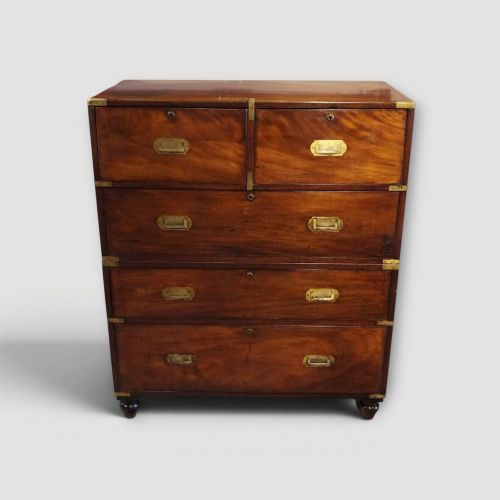
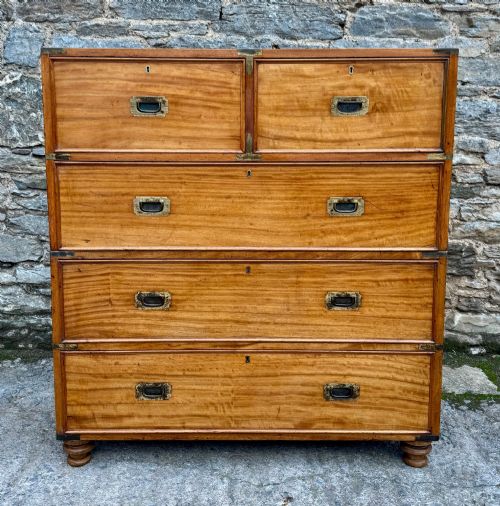
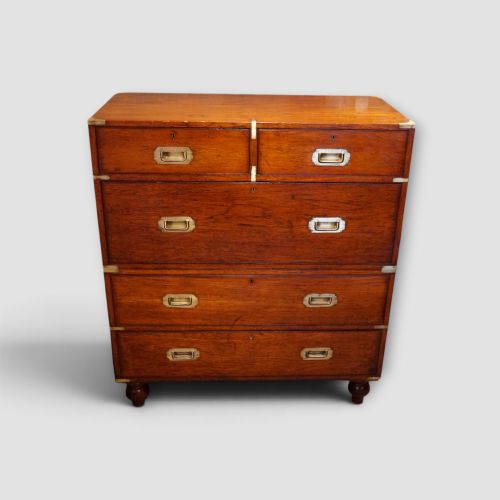
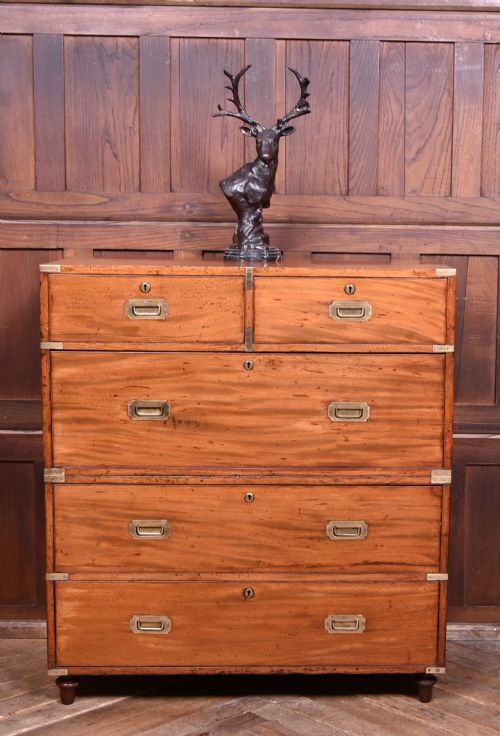
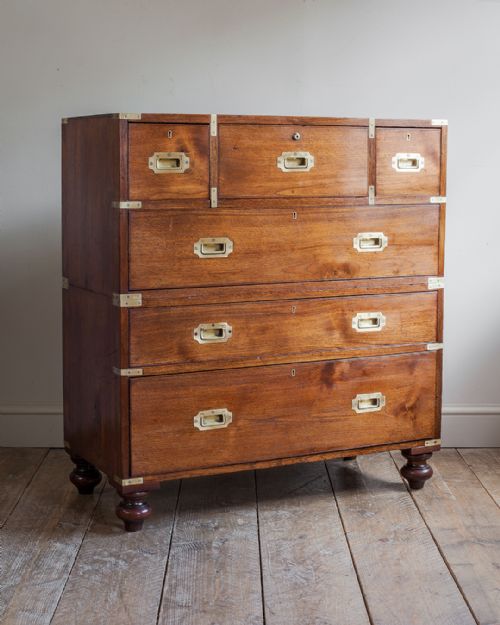
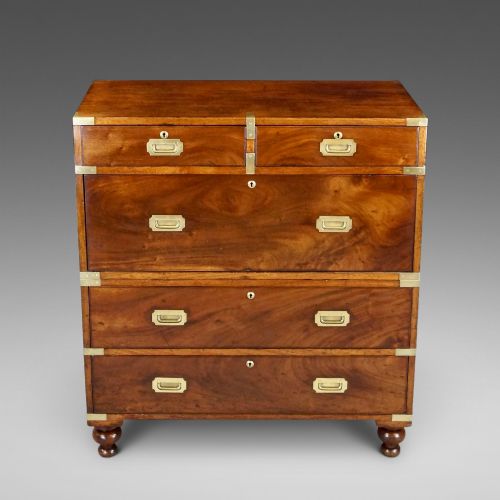
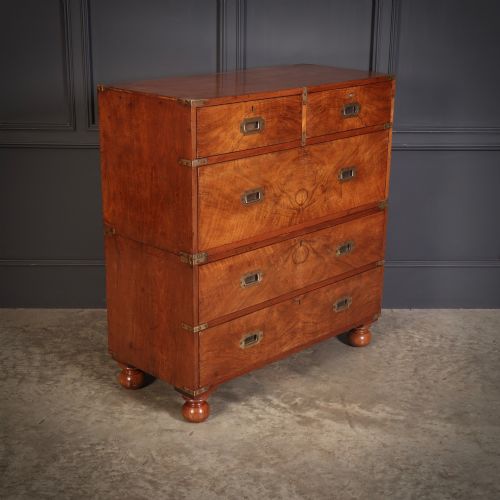
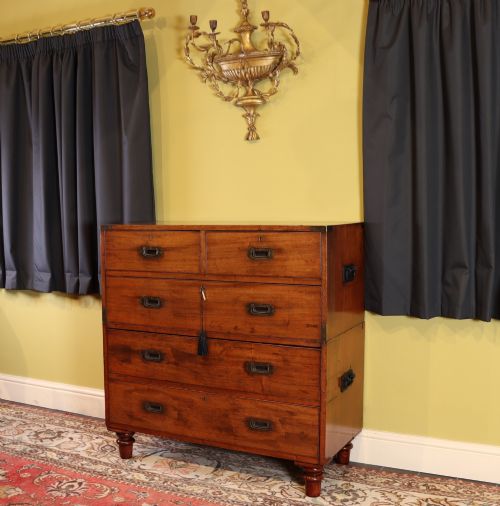
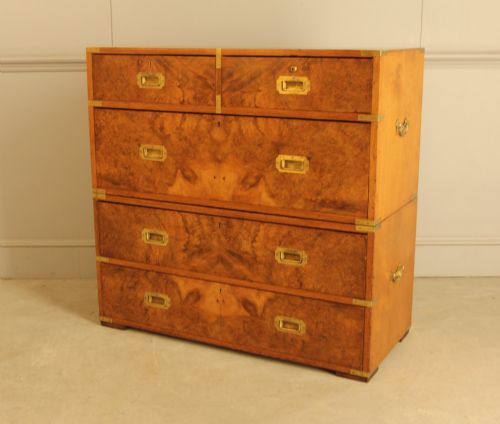
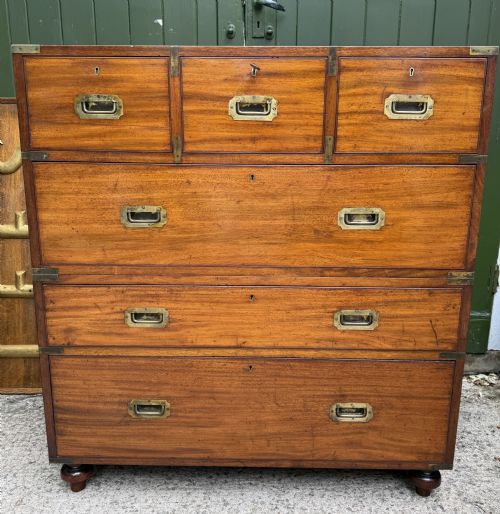
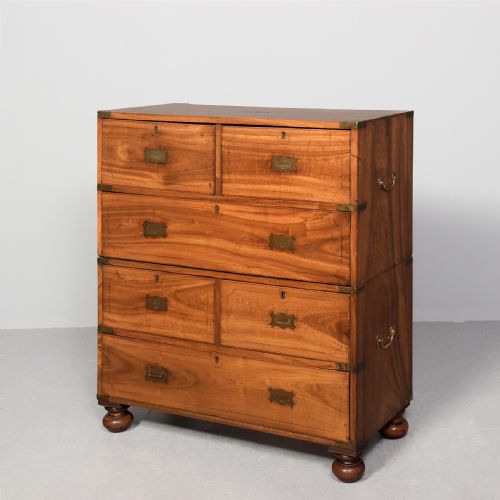
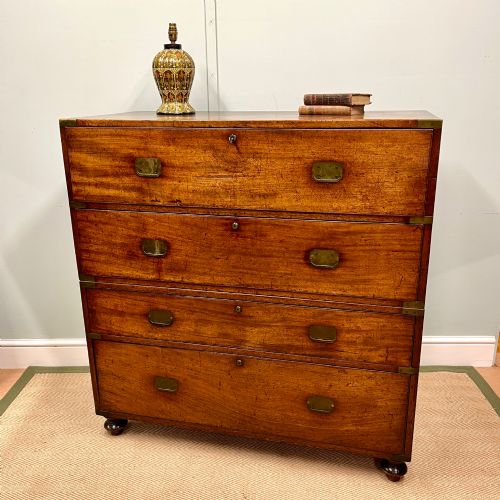
These two drawer campaign pieces offer dismantled portability designed for officers on the move, combining sturdy timber with flush brass fittings.
Two Drawer Campaign
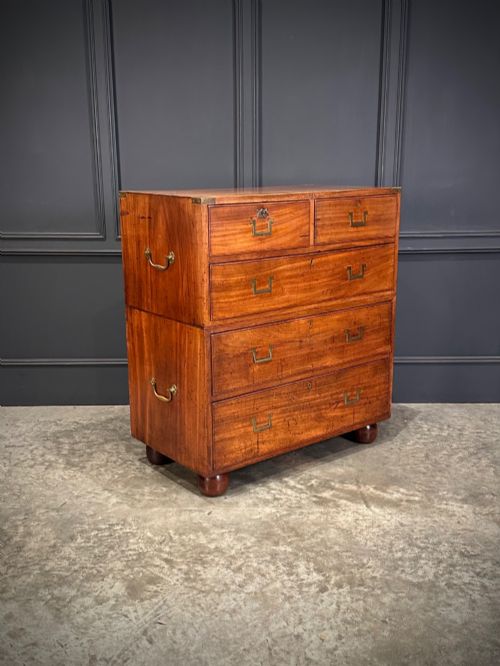
A two drawer campaign chest of drawers or equivalent furniture functions as transportable storage built in sections for officers on the move. Most pieces encountered on this page date from the nineteenth century, including Victorian and Regency periods, constructed to separate into distinct stacked boxes.
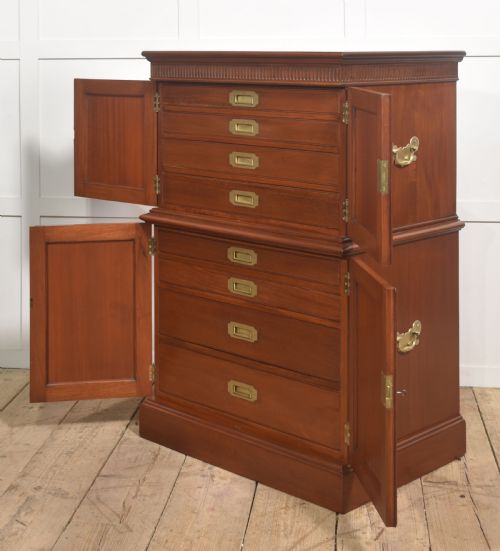
The primary forms take shape as two-part chests of drawers, secretaire chests with fitted writing drawers, collector cabinets, and low chests. These items display structural joins, recessed hardware, and carrying handles intended to withstand long journeys across the globe.
How they were made
Construction relies on durable tropical hardwoods like mahogany, teak, camphor wood, and padauk, selected for stability in shifting climates. These timbers are reinforced with brass binding on corners and edges to protect against knocks during transit.
Makers integrate flush handles, inset drawer pulls, and screw-in feet that pack away inside the furniture itself during travel. The two-part modular design employs locking pins or brass brackets to secure the upper and lower sections together firmly.
Listings feature nineteenth-century campaign pieces constructed from teak, mahogany, camphor wood, and walnut, often designed in two stacking sections.
What varies in quality
Quality rests in the precision of the joinery and the integration of the brass hardware into the timber surfaces. Finer examples maintain crisp edges on recessed mounts and smooth operation in the modular stacking mechanism.
Selection of secondary woods, the depth of figuring in veneers like walnut or mahogany, and original interior fitted drawers elevate certain specimens. The survival of original carrying hardware, locks, and maker plaques distinguishes higher-grade examples.
S. W. Silver & Co. London & Liverpool·Ross & Co.·Army & Navy
The Two Drawer Campaign Glossary
- Campaign chest
- A modular set of drawers built in two or more stacking sections for easy transport by military officers. These items feature recessed handles and protective brass corners.
- Secretaire
- A chest or cabinet incorporating a pull-out writing drawer fitted with small compartments and pigeonholes. This component often drops down to create a writing desk surface.
- Two-part design
- Construction method where a chest separates horizontally into upper and lower carcases for transit. This configuration reduces the weight and bulk of individual loads.
- Brass binding
- Metal strips and corner brackets screwed flush into the wooden edges of campaign furniture. This reinforcement prevents splitting during rough handling on travels.
- Camphor wood
- An aromatic timber frequently utilised in campaign furniture originating from Asian trade routes. The wood deters insects and resists moisture in tropical climates.
- Recessed hardware
- Handles and escutcheons set into hollowed-out cavities so they do not protrude from the furniture face. This prevents snagging during transit and allows tight stacking.
Two Drawer Campaign: Frequently Asked Questions
Why do these chests split in two?
The two-part construction allowed military personnel to pack heavy belongings into manageable loads for transport on ships, trains, and pack animals.
Each section fitted securely onto the other using internal alignment pins and exterior brass brackets once the journey ended.
What timbers were used for campaign furniture?
Cabinetmakers selected dense hardwoods capable of withstanding extreme humidity and rough travel conditions. Mahogany, teak, camphor wood, and padauk appear frequently across the available inventory.
These timbers offered natural resistance to warping and insect damage encountered during nineteenth-century colonial service.
How do secretaire chests function?
The top drawer conceals a drop-front writing surface backed by small drawers and pigeonholes for correspondence. A hinged flap folds downward while internal compartments remain fixed within the frame.
This provided officers with a portable desk that doubled as standard drawer storage.
Are brass mounts original to the pieces?
Original brass fittings sit completely flush with the timber surface, held in place by small matching screws. These elements protected vulnerable corners and provided secure anchor points for carrying handles.
Replacement brasses often show modern screw heads or slight gaps around the recessed edges.