
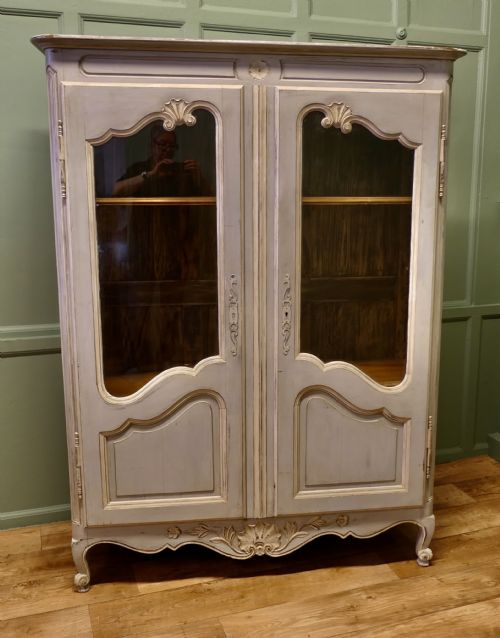
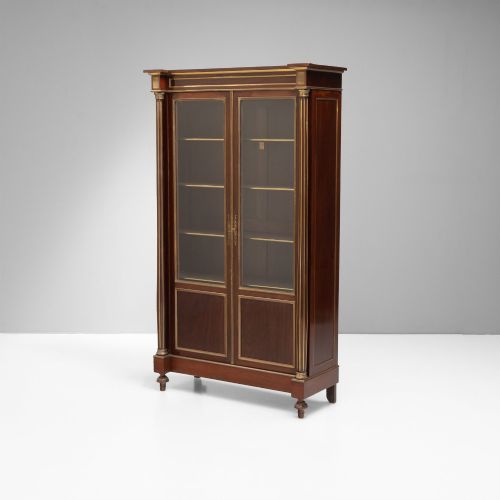
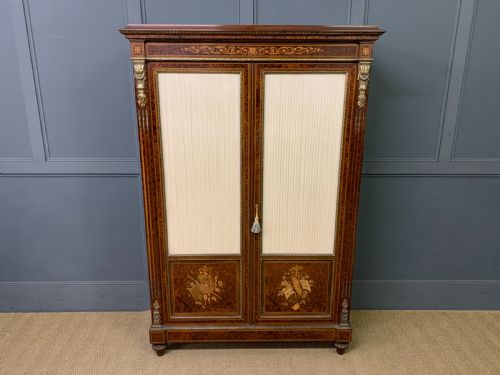
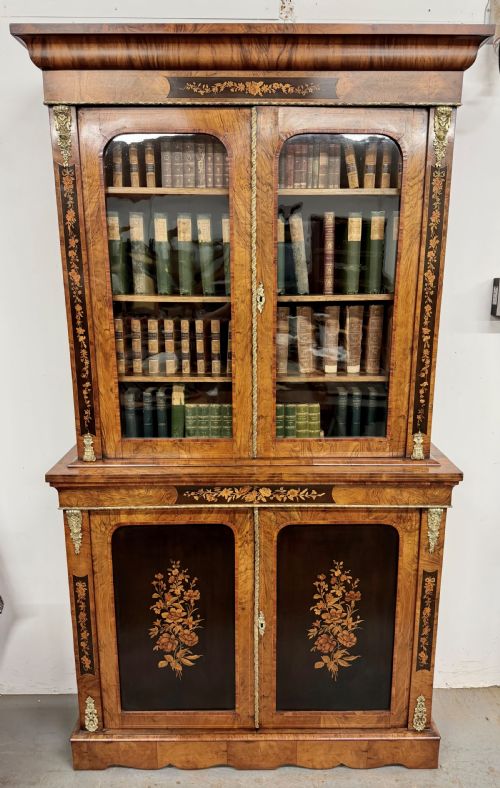


Two Door French Bookcase
A two door french bookcase gives a room architectural presence while keeping your volumes protected behind glass.
Two Door French Bookcase
When you search for a two door french bookcase, you encounter upright display furniture designed to house libraries and showcase prized possessions behind glazed panels. These pieces combine practical storage with the decorative refinement characteristic of continental cabinet-making.
The examples gathered here span the nineteenth century through to the early decades of the twentieth century. Walnut, mahogany, and ebonised finishes predominate, often paired with decorative mounts.
Most pieces show influences from French provincial, Empire, and Rococo revival styles. You will find both tall library bookcases and neat pier cabinets suited to smaller spaces.
Materials and construction
Cabinet-makers relied on solid timbers such as walnut, mahogany, and oak for structural integrity, often applying fine veneers to large flat surfaces. Marquetry and inlay added geometric or floral detail to the exterior panels.
Glass doors allowed for the display of books and curiosities while protecting them from dust. Brass or ormolu mounts reinforced corners, framed glass panes, and decorated key escutcheons.
Listings feature eighteenth-century oak cabinets alongside nineteenth-century walnut and mahogany examples.
What separates the finest examples
Quality rests in the selection of timber grain and the precision of the cabinet work. Finely figured mahogany and rich walnut veneers display a depth that lesser timbers lack.
The crispness of ormolu mounts and the integration of marquetry reveal the hand of a skilled workshop. Proportion and balance dictate whether a cabinet commands a room or merely fills it.
The Two Door French Bookcase Glossary
- Vitrine
- A glass-fronted cabinet designed for displaying fine objects or porcelain. These cases often feature glazed side panels as well as doors.
- Ormolu
- Gilt bronze mounts applied to furniture for decorative effect. The technique involves mercury gilding over bronze.
- Marquetry
- Inlaid patterns of wood veneer forming decorative pictures or geometric designs. Craftsmen cut contrasting timbers to fit precisely into a prepared ground.
- Pier cabinet
- A low cabinet designed to stand against the wall space between windows. These pieces provide surface display alongside enclosed storage.
- Ebonised
- Timber treated to imitate ebony. This dark finish gained popularity during the nineteenth century, particularly on revival furniture.
Two Door French Bookcase: Frequently Asked Questions
How do I date a french bookcase?
Dating relies on timber choice, construction methods, and stylistic revival markers. Nineteenth-century pieces often display characteristic French proportions and specific revival motifs.
Hardware, lock mechanisms, and the type of glass further narrow down the decade of production.
Are these cabinets suitable for modern books?
Most antique bookcases accommodate standard modern volumes on their adjustable timber shelves. Depth varies, so checking internal shelf dimensions ensures your larger volumes fit comfortably behind the glass.
Heavier art monographs require sturdy fixed shelving to prevent sagging over time.
How should I care for walnut veneer?
Keep walnut furniture away from direct sunlight and heat sources to prevent the timber from drying out. Consistent indoor humidity protects the delicate veneer from lifting.
Dust gently with a dry cloth and avoid silicone-based polishes that build up on the surface.
What is the difference between a vitrine and a bookcase?
A vitrine primarily showcases decorative objects with glass panels on multiple sides. A bookcase prioritises shelving for books, though many nineteenth-century French examples combine both functions.
Glazed doors appear on both forms to protect the contents while maintaining visibility.