

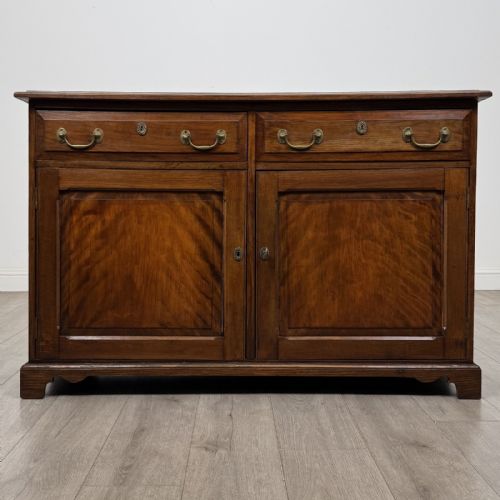
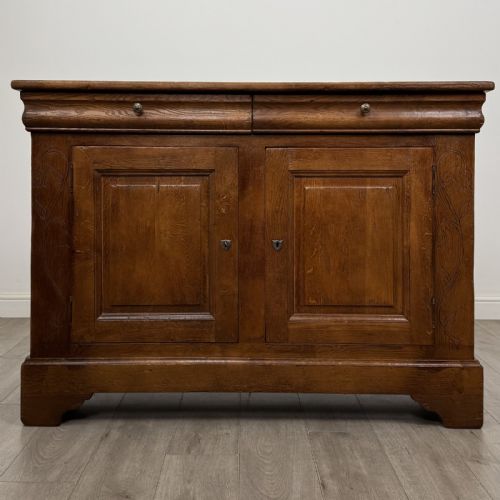
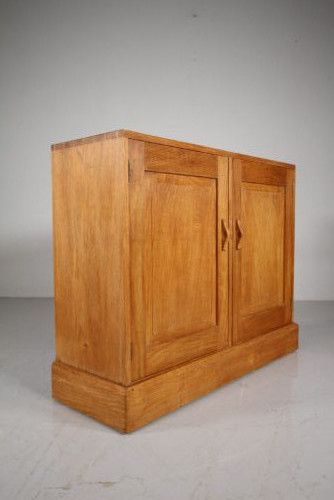
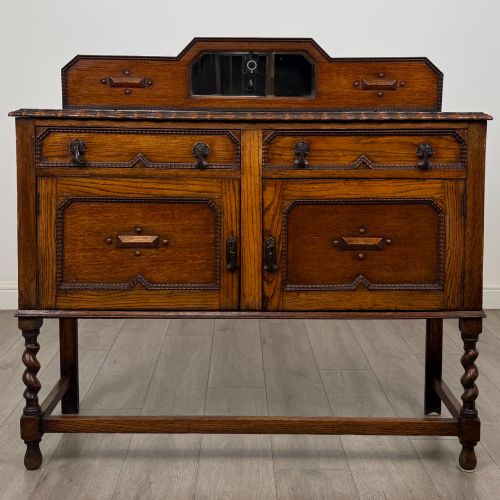
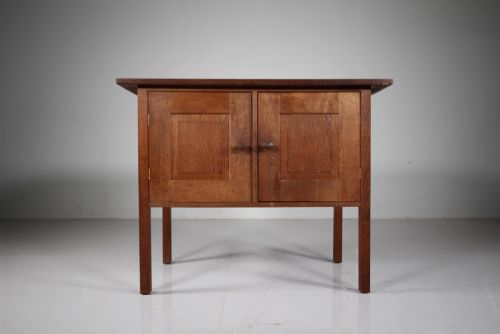
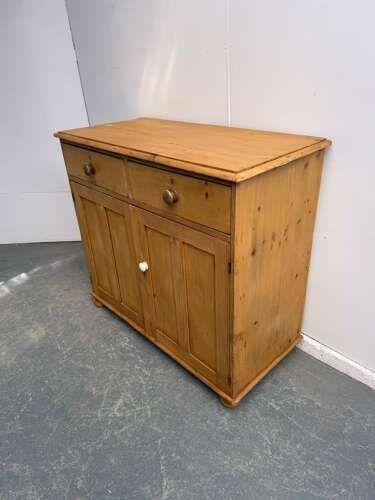
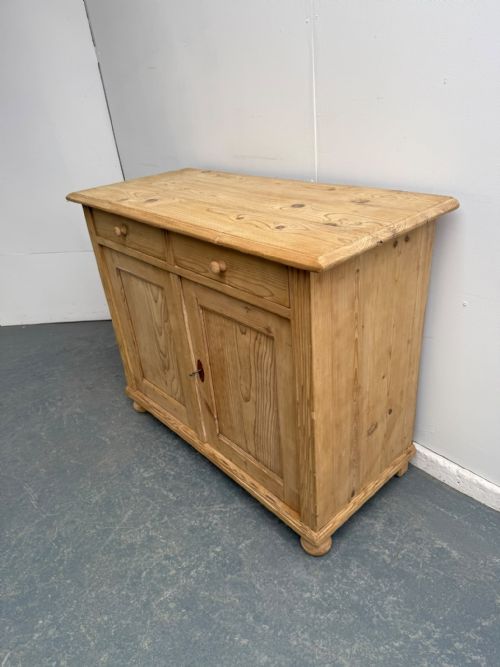
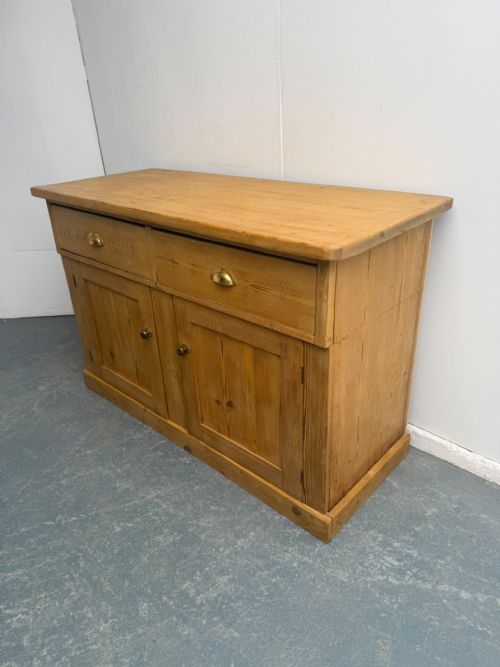

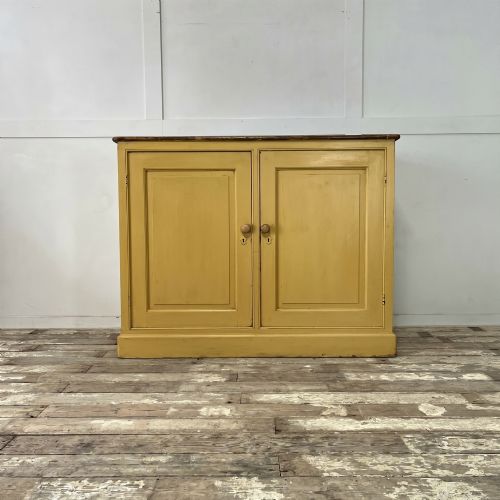
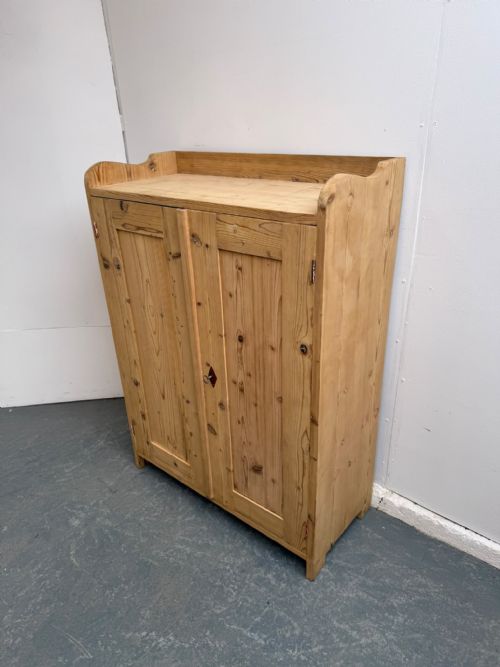
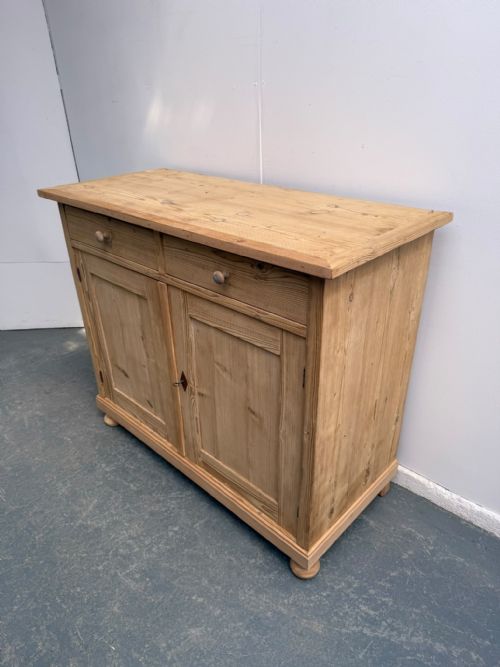
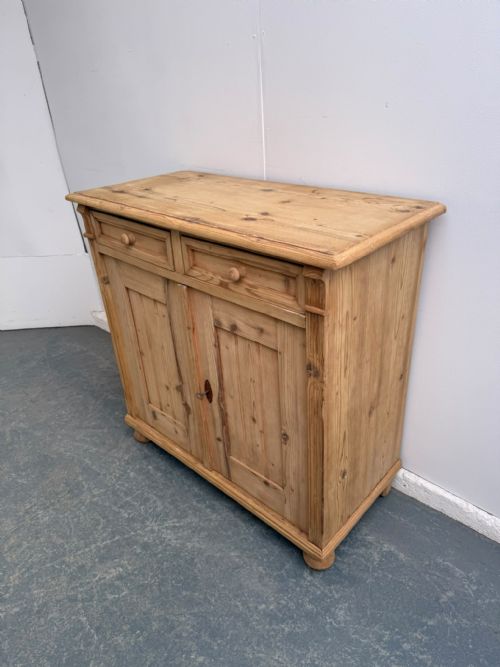
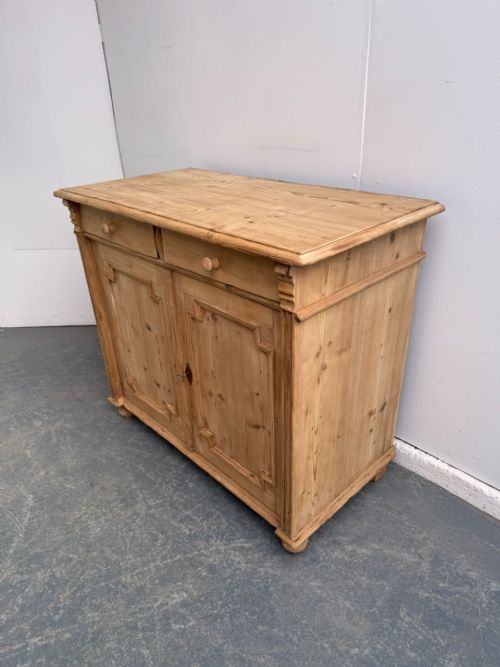


Two Door Dresser Base
A two door dresser base grounds a country kitchen or dining room with honest timber storage and a low working surface.
Two Door Dresser Base
When you search for a two door dresser base, you are looking at sturdy utilitarian storage furniture designed originally for domestic work and household provisions. These pieces typically combine a pair of cupboard doors with matching drawers above, standing at a convenient counter height.
The versions you are most likely to meet on this page span several centuries and regional traditions, running from substantial Georgian and Victorian pine country pieces to oak and cherry examples from the eighteenth and nineteenth centuries. Alongside English vernacular work, French buffets and provincial cabinets appear frequently in the selection.
The form adapts easily to modern domestic interiors, functioning as a sideboard in a dining room, a prep surface in a kitchen, or a low media console. Their enduring appeal lies in this practical combination of surface display and concealed cupboard space.
How they were made
Timber selection dictates the character of these pieces, with native English oak and sturdy pine forming the backbone of vernacular cabinet making, supplemented by imported mahogany and French cherry in finer examples. Cabinet makers utilised traditional pegged mortise and tenon joints to build rigid frames that could withstand heavy daily use in busy households.
Surface finishes range from waxed or polished finishes that highlight natural grain to historical painted schemes in black or soft tones. Iron, brass and glass details appear selectively for handles, hinges and glazing, keeping the focus firmly on solid timber construction.
Two Door Dresser Base Retail Price Guide 2026
Typical asking prices for two door dresser base among the pieces listed under this phrase on Sellingantiques today, from the lower quarter to the upper quarter. They describe what is for sale here now, not the wider market.
Several pine pieces arrive bearing decades of honest kitchen wax, ready to be polished further or painted afresh.
What varies in quality
The distinction between ordinary utility furniture and finer examples rests on timber selection, proportion and the crispness of joinery. Pieces built from well-figured oak or cleanly dressed pine with tight drawer dovetails command greater appreciation than utilitarian workshop items.
Proportion and restraint also define the upper tier of the range, where hardware, bracket feet or turned legs integrate harmoniously with the main carcase rather than appearing clumsy or purely functional.
Peter Waals
The Two Door Dresser Base Glossary
- Dresser base
- The lower section of a traditional kitchen dresser, featuring a flat top surface above cupboards and drawers, designed to stand alone as a sideboard.
- Vernacular furniture
- Domestic pieces made by regional craftsmen for local use rather than high style city workshops, prioritising function and local materials.
- Bracket foot
- A simple structural foot shape popular on case furniture from the eighteenth century onwards, providing a stable platform with clean architectural lines.
- Chiffonier
- A low sideboard or cabinet developed during the Regency and Victorian periods, often featuring doors enclosing shelves and small drawers beneath the top surface.
Two Door Dresser Base: Frequently Asked Questions
What is a two door dresser base used for?
These low cupboards serve multiple roles in modern homes, from kitchen preparation counters and dining room sideboards to hallway storage units.
The enclosed lower cupboards conceal tableware, linens, or household items while the flat top provides a stable surface for serving food or displaying lamps and pottery.
How do I care for a waxed pine dresser base?
Pine dresser bases finished with wax require minimal upkeep beyond regular dusting with a dry cloth and occasional re-waxing to nourish the timber.
Keep natural wood furniture away from direct heat sources and excessive moisture to prevent warping or shrinkage of the solid boards over time.
How can I tell a Georgian dresser base from a Victorian one?
Georgian pieces generally display softer proportions, fine dovetailing and vernacular regional timbers like local oak, whereas Victorian examples often utilise heavier pine carcases built for robust household utility.
Hardware styles, drawer construction methods, and foot types also offer clear clues to the period in which the cabinet was built.
Are painted finishes on these dressers original?
Many older pieces carry historical painted surfaces applied decades after manufacture, while others retain traces of earlier decorative schemes.
Examining the wear patterns, paint layering and preparation beneath helps determine whether a finish is a later decorative addition or part of the object's history.