



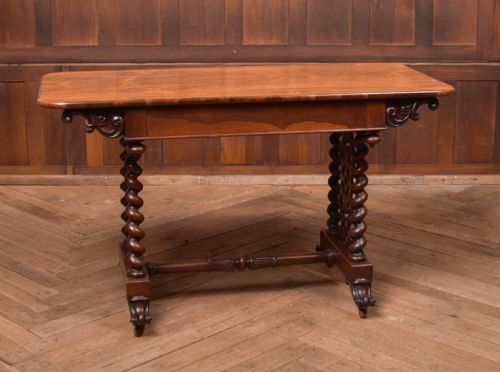


Twisted Leg Desk
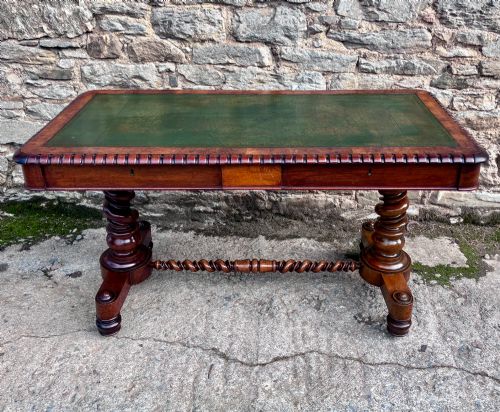
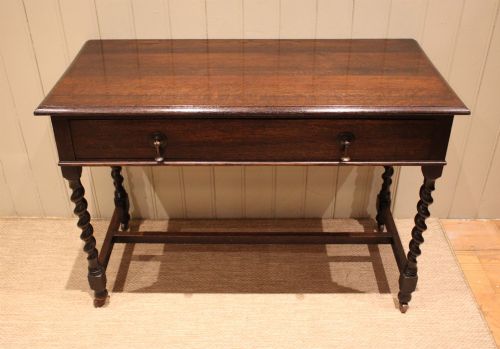
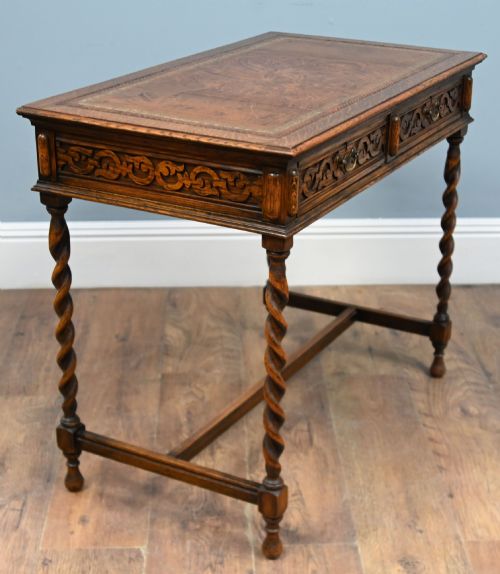
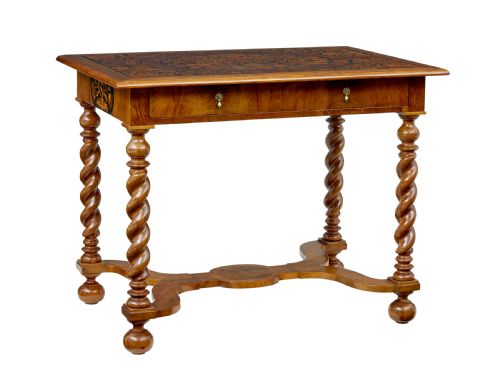
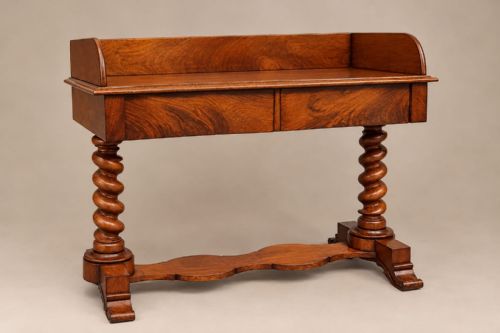
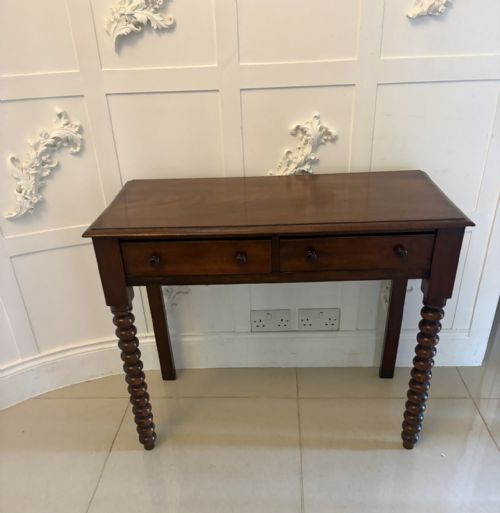
A twisted leg desk brings vigorous turned timber to a workspace, offering solid writing surfaces supported by spiral-cut uprights.
Twisted Leg Desk
A twisted leg desk combines a functional writing platform with distinctive turned supports, appearing most frequently in Victorian interpretations of earlier styles. These pieces range from compact side tables adapted for correspondence to substantial bureau bookcases fitted with drawers and pigeonholes.
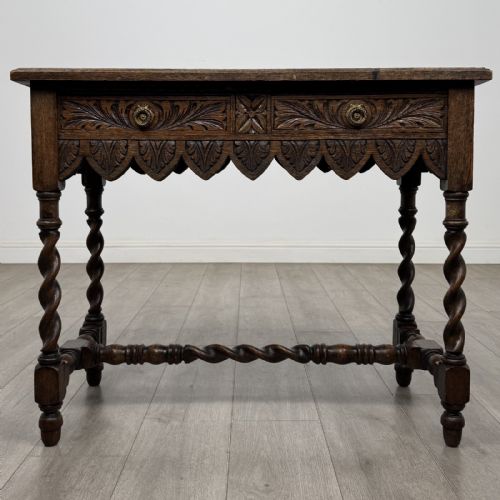
Makers drew on 17th-century vernacular traditions, producing oak and walnut surfaces raised on barley twist or rope-turned legs. Such forms bridge the gap between plain utilitarian furniture and ornate decorative pieces intended for prominent display.
The layout typically incorporates one or more drawers beneath the writing surface, though larger library tables and kneehole configurations also utilise the characteristic turned underframe. Buyers seeking a twisted leg desk often encounter pieces spanning several centuries, from genuine period examples to revivalist workshop output.
How they were made
Cabinetmakers utilised dense hardwoods such as oak, walnut, mahogany, and rosewood to provide the structural integrity required for carved and turned components. Timber selection dictated whether the grain remained visible under a polished finish or served as a base for intricate marquetry and bone inlay.
The iconic twist was achieved through lathe-turning or hand-carving, shaping the solid wood into helical rhythms that reflect light across the leg. Joinery involved traditional methods such as mortise and tenon frames, securing the heavy tops firmly to the patterned underframes.
Twisted Leg Desk Retail Price Guide 2026
Typical asking prices for twisted leg desk among the pieces listed under this phrase on Sellingantiques today, from the lower quarter to the upper quarter. They describe what is for sale here now, not the wider market.
Several miniature tables remind us that earlier craftsmen occasionally practiced their turning skills on doll-sized furniture.
What varies in quality
The crispness of the turning on the legs distinguishes finer workshop output from simpler production, with hand-carved spirals showing greater depth and definition than machine-run versions. Timber choice also marks the grade, where figured walnut or richly grained rosewood elevates a piece above standard oak utility furniture.
Integration of secondary materials, such as brass hardware, leather writing inserts, and marquetry details, determines the overall refinement of the desk. Superior examples maintain balance between the robust turned legs and the delicate surface ornamentation.
The Twisted Leg Desk Glossary
- Barley twist
- A spiral turning resembling a stalk of barley, popularised in furniture design during the seventeenth century and revived in the Victorian era.
- Marquetry
- The art of applying decorative veneer pieces to a structure to form intricate geometric or floral patterns.
- Kneehole desk
- A writing table featuring a central recess for the user's legs, flanked by pedestals of small drawers.
- Bureau bookcase
- A dual-purpose piece combining a sloping desk flap for writing with upper shelving enclosed by doors.
- Ebonised wood
- Timber treated with a dark finish to imitate expensive ebony.
Twisted Leg Desk: Frequently Asked Questions
What is a twisted leg desk?
A twisted leg desk is a writing surface supported by spiral-turned wooden legs, often associated with revivalist periods.
These pieces combine functional drawers with distinct decorative timber work.
Where should I place a twisted leg desk?
These desks suit studies, living rooms, or libraries where the turned legs remain visible.
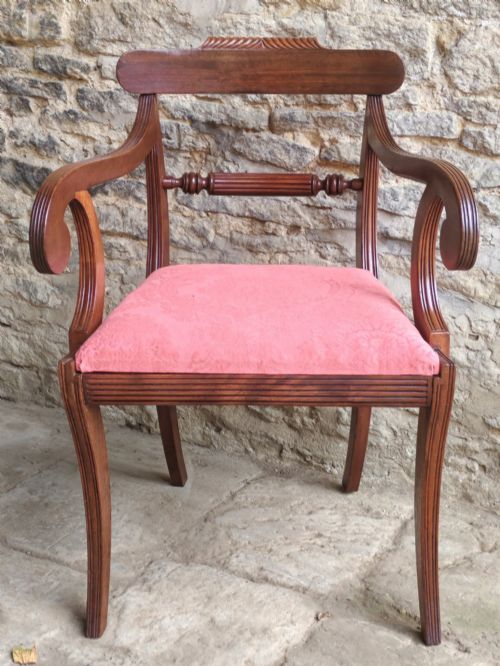
Pairing them with a matching carver chair creates a cohesive study arrangement.
What woods are common in these desks?
Oak and walnut appear frequently in revival and period pieces, alongside mahogany and rosewood.
Selected surfaces often feature polished finishes to highlight the natural grain.