




Twisted Brass Sconce
A twisted brass sconce brings warm metal reflection to a dark panelled wall, catching candle flame across centuries of domestic ritual.

Twisted Brass Sconce
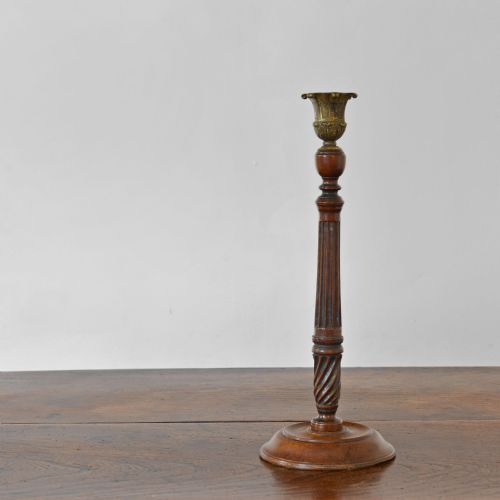
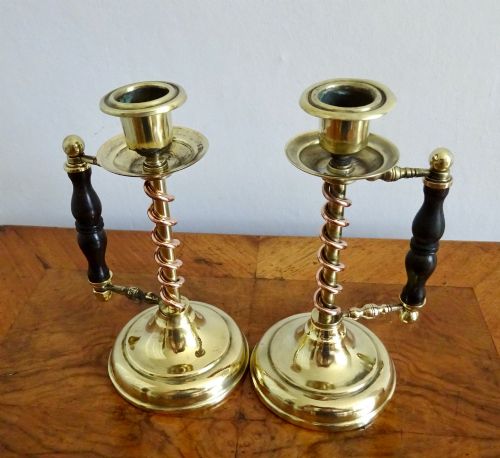
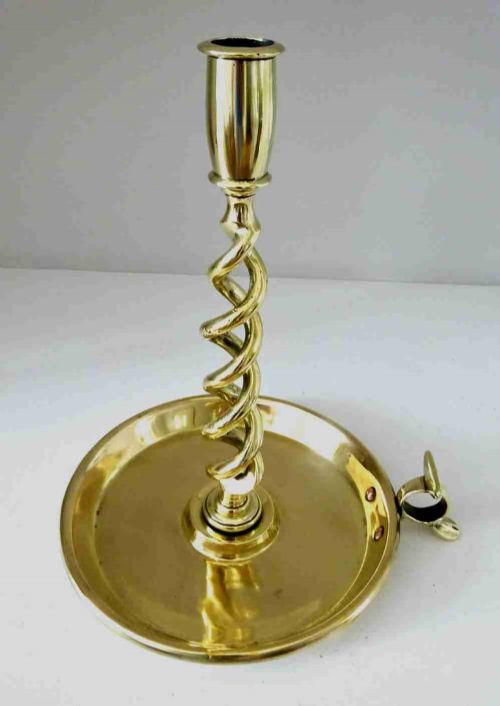
A twisted brass sconce combines linear metalwork with domestic illumination, appearing in forms from Victorian wall lights to Gothic revival wall sconces. Buyers searching for a twisted brass sconce encounter wall-mounted lighting and candlesticks featuring spiral stems, often paired with oak, mahogany, or copper.
The evidence shows these pieces span the Georgian period, the Victorian era, and the early twentieth century, including Arts and Crafts interpretations. While wall lights and girandole mirrors feature alongside candlesticks, the core aesthetic relies on turned metal and twisted shafts.
Originating as functional household lighting, these objects survive in brass, oak, and mixed metals. The selection ranges from ecclesiastical Gothic brass wall sconces to simple twentieth-century brass candlesticks with fitted bases.
How they were made
Maker construction relies on brass and copper combined with hardwoods such as oak and mahogany. Metal components are cast or beaten, while wooden elements like barley twist stems are hand-turned on a lathe.
Assembly often involves threaded fittings, rivets, or peg joints securing brass drip pans and candle nozzles to wooden or metal bases. Mirror glass and giltwood appear in specific wall-mounted girandole forms.
Twisted Brass Sconce Retail Price Guide 2026
Typical asking prices for twisted brass sconce among the pieces listed under this phrase on Sellingantiques today, from the lower quarter to the upper quarter. They describe what is for sale here now, not the wider market.
Listings feature brass, oak, mahogany, copper, and mirror glass across Victorian, Georgian, and Arts and Crafts styles.
What varies in quality
Quality rests in the crispness of the twist and the weight of the metal. Heavier brass castings and deeply carved wooden barleys command greater presence than thin sheet metal or shallow turning.
Proportion and material integration distinguish finer examples, such as those combining polished copper accents or original mirror plates. The integrity of the original joints and unpolished patination elevate the piece.
The Twisted Brass Sconce Glossary
- Barley twist
- A spiral turning resembling a stalk of barley, popular in furniture and candlestick stems from the seventeenth century onward. It creates dynamic movement and catches light along its ridges.
- Girandole
- A decorative wall mirror featuring one or more candle arms attached to the frame. The reflective glass multiplies the illumination of the room.
- Sconce
- A wall-mounted bracket designed to hold candles or lamps. Historically positioned to cast light down corridors and beside mirrors.
- Ecclesiastical
- Pertaining to a church, describing items originally made for religious spaces. These pieces often feature Gothic revival details and heavy brass construction.
- Giltwood
- Wood that has been covered with a thin layer of gold leaf or gesso paint. It provides a bright reflective surface for wall mirrors and sconces.
Twisted Brass Sconce: Frequently Asked Questions
Are twisted brass sconces meant for candles or electricity?
Most historical examples were designed strictly for wax candles before the introduction of domestic wiring. Many are adapted for modern electrical wiring by contemporary owners.
Buyers should check individual listings to see whether the original candle sockets remain intact or if wiring has been introduced.
How do I date a twisted brass wall light?
Dating relies on material combinations, fastening methods, and stylistic cues such as Victorian Gothic revival or Arts and Crafts simplicity. Heavy brass casting and hand-turned oak typically point toward nineteenth or early twentieth-century manufacture.
Examining the backplates and screws provides further clues regarding the period of production.
Where were wall sconces placed in historic homes?
Sconces were traditionally mounted beside mirrors, fireplaces, or along wood-panelled hallways to maximise the reach of flickering candlelight. The reflective properties of brass and mirror glass amplified the limited light available.
Placing them at eye level ensured safe illumination without obstructing household traffic.
What is the difference between a sconce and a candlestick?
A sconce mounts directly to a vertical wall surface, whereas a candlestick stands on a horizontal base like a table or mantelpiece. Both formats utilise twisted brass and wood shafts across the recorded periods.
Wall lights and girandole mirrors extend the sconce family into more decorative domestic settings.