


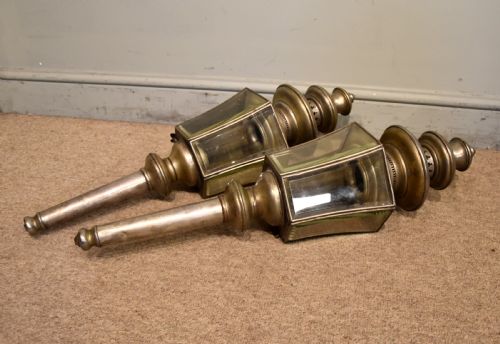


Antique Carriage Lantern Sconce
These antique carriage lantern sconce lights bring genuine transport heritage into the home, offering robust metalwork and bevelled glass that collectors prize for hallways and porches.

Antique Carriage Lantern Sconce
An antique carriage lantern sconce takes the form of lighting originally mounted to horse-drawn transport or coach-houses, adapted for domestic wall installation. Buyers find these items spanning the Victorian era and the early twentieth century, reflecting practical road illumination from the past.
The objects appear predominantly as pairs, utilising designs from neo-classical, French Empire, and Arts and Crafts traditions. Wall lights and coach-house style lanterns form the core of what meets the eye on this page.
Origins stretch across nineteenth-century workshops and subsequent decades into the nineteen-thirties. The selection bridges heavy-duty transport ironmongery and decorative domestic bracket lighting.
How they were made
Maker workshops built these lanterns using combinations of brass, iron, copper, and cast iron, often forming rigid structural frames. Verdigris patinated copper appears alongside polished brass and wrought iron, showing the varied metalworking techniques of the period.
Glazing relies on glass panes, frequently bevelled, which fit tightly into the metal housing to withstand outdoor movement and weather. Riveted joints, bracket arms, and heavy castings secure the wall lights for permanent fixture.
Antique Carriage Lantern Sconce Retail Price Guide 2026
Typical asking prices for carriage lantern sconce among the pieces listed under this phrase on Sellingantiques today, from the lower quarter to the upper quarter. They describe what is for sale here now, not the wider market.
Periods represented reach from the eighteen-seventies through the Victorian era up to nineteen-thirty.
What varies in quality
Quality separates standard utilitarian road lamps from high-status decorative pieces through the fineness of the metal casting and the complexity of the design style. Neo-classical details, French Empire mounts, and Arts and Crafts proportions distinguish superior examples from simpler ironwork.
The survival of original bevelled glass panels and the integrity of patinated surfaces dictate the desirability of a pair. Weight, sturdy brackets, and named workshop signatures elevate certain fixtures above standard workshop production.
Daris
The Antique Carriage Lantern Sconce Glossary
- Carriage Lamp
- A lighting fixture originally designed to mount to the exterior of a horse-drawn vehicle to illuminate the road ahead. They typically feature heavy metal bodies and protective glass panels.
- Wall Sconce
- A decorative lighting fixture fixed to a wall, projecting outward to hold a light source. In this context, it describes carriage lanterns adapted for domestic interior or exterior wall mounting.
- Bevelled Glass
- Glass panes featuring an angled edge cut around the perimeter, catching and refracting light. This treatment adds a decorative finish to the lantern windows.
- Verdigris
- A green patina formed naturally or chemically on copper, brass, or bronze surfaces over time. It provides an aged decorative finish prized on nineteenth-century metalwork.
- French Empire Style
- A decorative design movement characterised by classical Roman motifs, symmetry, and heavy metal ornamentation. It influences the formal brass wall lights found in this selection.
Antique Carriage Lantern Sconce: Frequently Asked Questions
Where were carriage lanterns originally mounted?
These lamps were mounted on the exterior sides of horse-drawn carriages, coaches, and carts to guide travellers along dark nineteenth-century roads.
Their sturdy metal construction and glass windows protected the internal flame from wind and rain during transit.
How do I install an antique carriage sconce?
Most pieces require professional electrical conversion and secure wall bracket mounting to support their considerable weight.
Qualified electricians can adapt the internal fittings to house modern bulbs while preserving the historic exterior housing.
Can these carriage lanterns go outside?
Many examples suit exterior porch installation given their original weather-resistant purpose on nineteenth-century transport.
Buyers should check the specific metal condition and sealing of each pair before exposing them to constant outdoor moisture.
How do I distinguish Victorian from later styles?
Victorian pieces tend to feature heavy cast iron, brass, and traditional coach lamp proportions dating from the mid to late nineteenth century.
Later nineteenth-century and early twentieth-century examples often incorporate Arts and Crafts styling or verdigris copper finishes.