

Twist Leg Table
A twist leg table brings spirited turned timber into a room, offering sturdy charm and tactile line.
Twist Leg Table
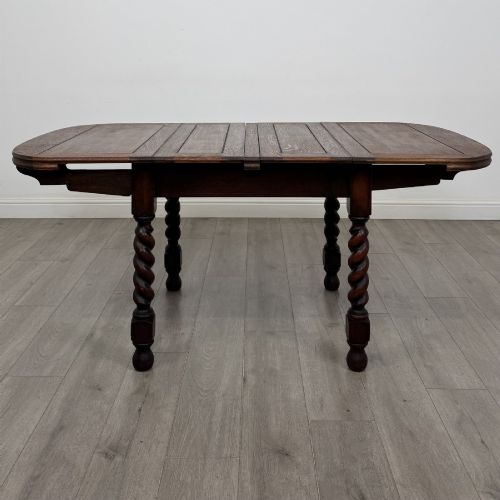
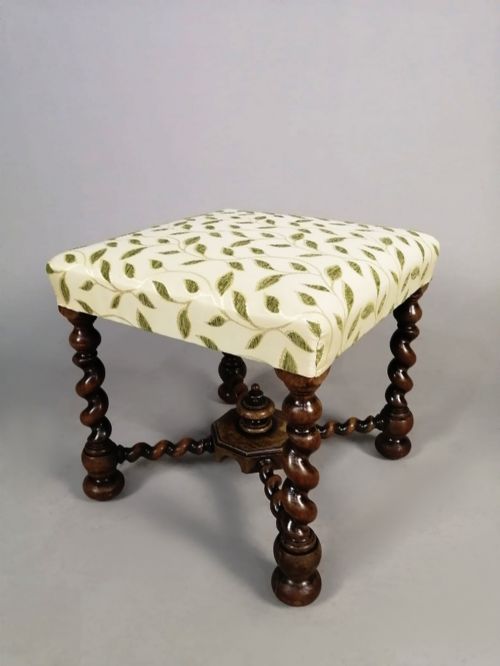
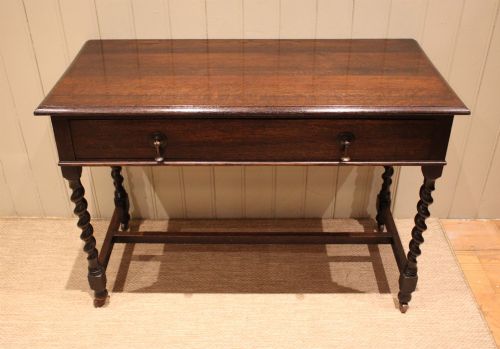
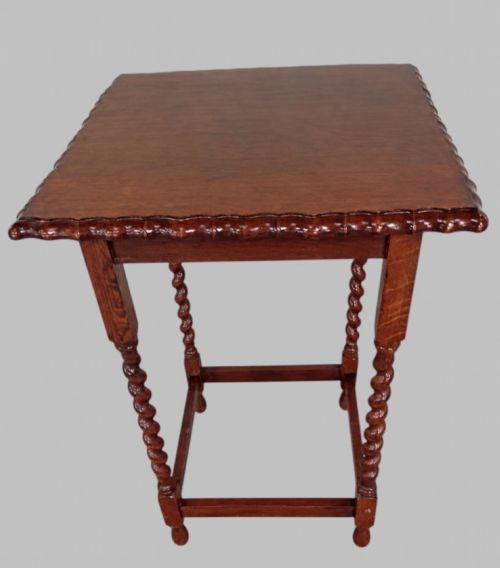
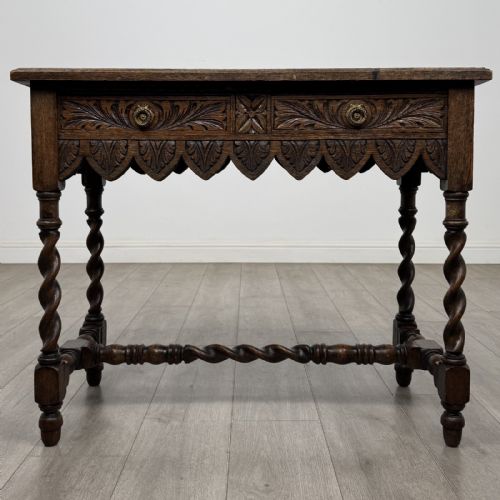
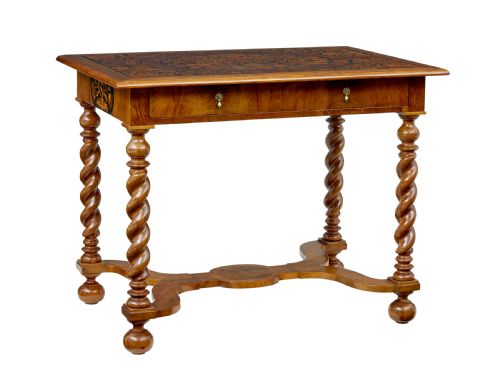
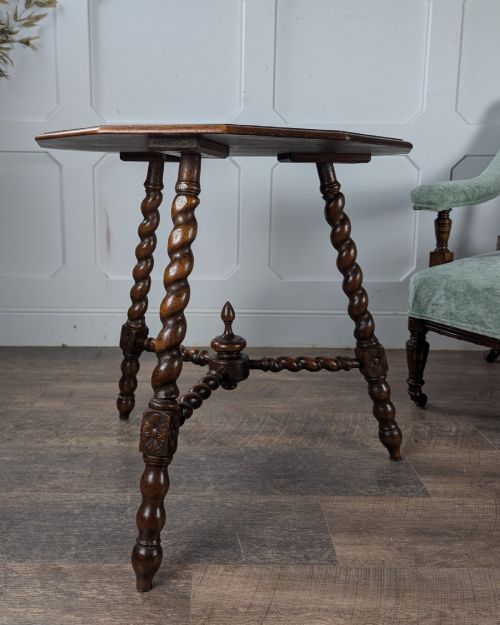
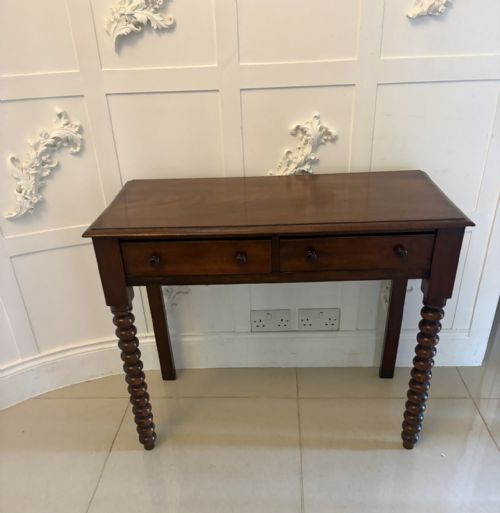
A twist leg table is defined by its characteristic spiralled timber supports, which define a range spanning the seventeenth century through to the Edwardian period. When searching for a twist leg table, buyers encounter various formats including side tables, gateleg dining pieces, and occasional tables.
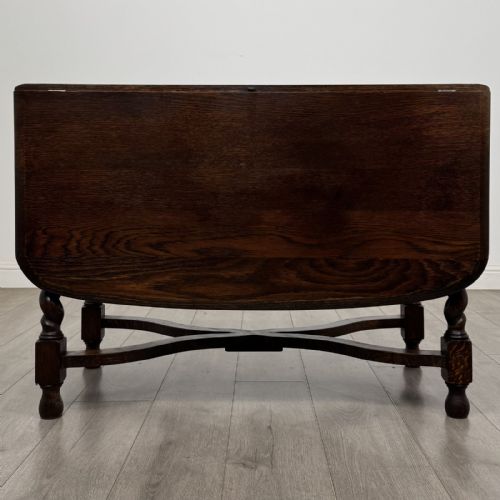
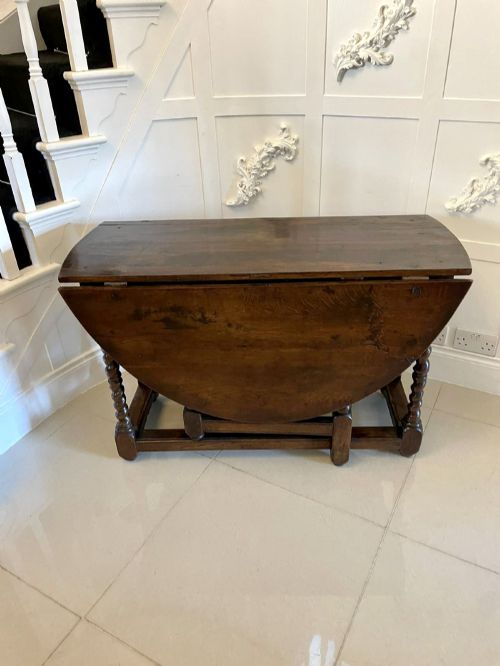
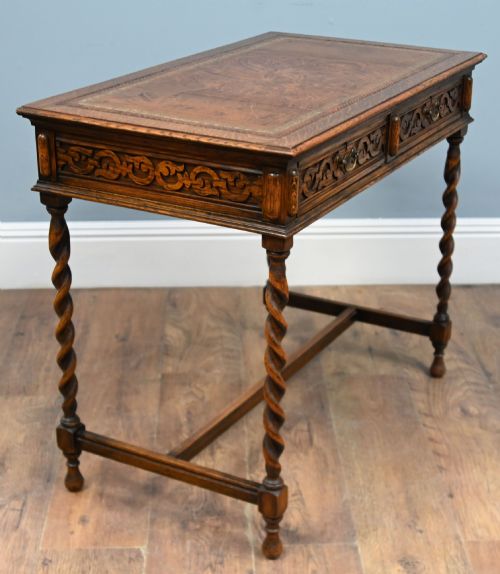
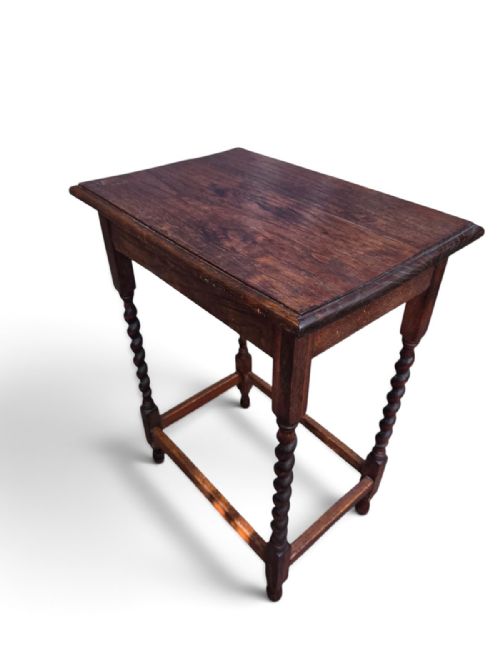
The Edwardian era yields many oak examples featuring barley twist supports, often taking the form of side tables or drop-leaf surfaces. Earlier centuries contribute substantial gateleg dining tables in solid oak, alongside refined walnut and rosewood occasional pieces.
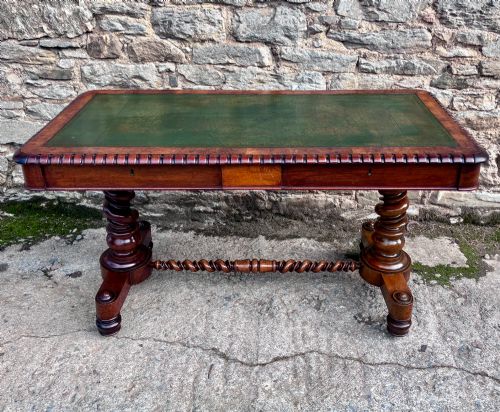
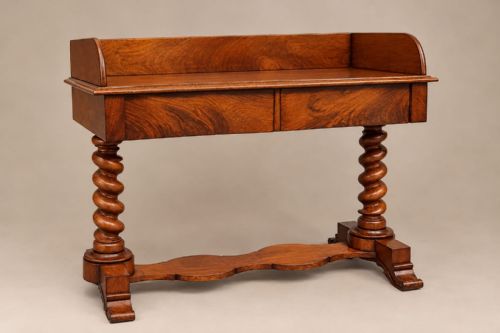
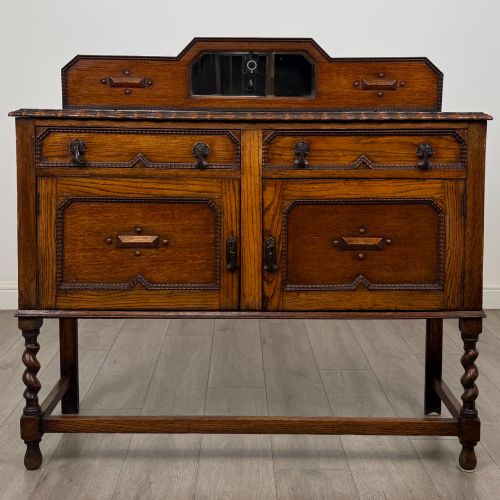
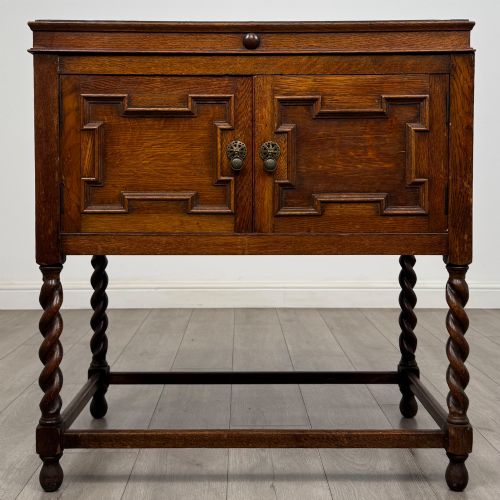
Object types stretch beyond simple surfaces to encompass desks, plant stands, and cabinets sharing the same turned structural vocabulary. Oak remains the predominant timber, though mahogany, walnut, and rosewood appear across nineteenth-century and Regency specimens.
Materials and Construction
Construction relies heavily on solid oak, walnut, and mahogany, shaped by lathe-turning to produce the distinctive spiral profiles. Joinery methods include traditional pegging and mortise and tenon joints, particularly evident in gateleg dining versions and substantial cupboards.
Surface decoration frequently involves hand carving, marquetry, bone inlay, or parquetry, paired with brass hardware. Timbers such as rosewood and goncalo alves are utilised for finer writing tables and nests.
The turning technique creates uniform helical ridges down the length of the leg, whether styled as a tight rope twist or a broader barley form. Finishing typically preserves the natural grain of the hardwood, sometimes with ebonised treatments or polish.
Twist Leg Table Retail Price Guide 2026
Typical asking prices for twist leg table among the pieces listed under this phrase on Sellingantiques today, from the lower quarter to the upper quarter. They describe what is for sale here now, not the wider market.
Object forms span dining tables, side cabinets, writing desks, and plant stands equipped with turned supports.
Assessing Quality
Quality rests upon the crispness of the timber turning and the integrity of the underlying joinery, separating simple utility items from finely carved examples. The depth and precision of hand carving on aprons and legs indicate the level of craftsmanship invested in the piece.
The choice of primary timber and secondary woods influences desirability, with dense nineteenth-century rosewood and seventeenth-century inlaid oak representing distinct tiers of manufacture. Proportions and the retention of original surface patination further distinguish superior specimens from later revivals.
The Twist Leg Table Glossary
- Barley twist
- A turned wooden leg resembling the spiralled shape of barley sugar. This form gains prominence in seventeenth-century furniture and sees a major revival during the Edwardian period.
- Gateleg table
- A drop-leaf table featuring hinged legs that swing outward to support the raised flaps. This form provides an expansive surface when open and folds compactly for storage.
- Marquetry
- Decorative veneer work arranged in pictorial or geometric patterns using various coloured woods. It appears frequently on nineteenth-century tables and cabinets.
- Parquetry
- Geometric mosaic woodwork forming patterns such as cubes or triangles across table tops. This technique demonstrates high joinery skill in seventeenth and nineteenth-century pieces.
- Snap-top table
- A table with a hinged top that tilts vertically when not in use. This mechanism allows the furniture to stand flat against a wall.
Twist Leg Table: Frequently Asked Questions
What is a barley twist leg?
A barley twist leg is a structural support shaped into a continuous spiral resembling barley sugar. This decorative turning method appears widely across Edwardian oak side tables and seventeenth-century furniture.
The profile catches the light along its ridges, adding movement and texture to otherwise plain tables and stands.
How do I date a twist leg table?
Dating relies on examining timber species, construction methods, and hardware alongside stylistic cues. Seventeenth-century examples often employ heavy oak with pegged joints, while Edwardian revivals use lighter golden oak and machine-finished turnings.
Secondary woods and drawer construction further clarify whether a piece originates from the original period or a later revival.
Where were these tables used?
These tables served various domestic functions ranging from primary dining surfaces to compact side tables for holding lamps and correspondence. Gateleg versions accommodated larger gatherings in parlours and dining rooms.
Smaller occasional and plant stands populated hallways and drawing rooms as decorative and functional furniture.
Are gateleg tables stable?
Gateleg tables achieve stability through pivoting legs that swing out to lock beneath the extended drop leaves. Proper alignment of the wooden gate mechanism ensures the leaves bear weight securely during use.
Original hinges and solid timber framing contribute to the overall rigidity of these historic dining and occasional surfaces.