


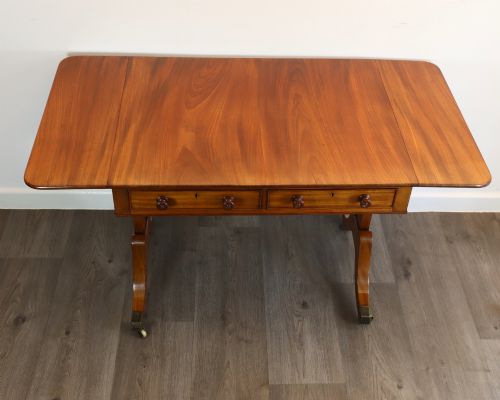


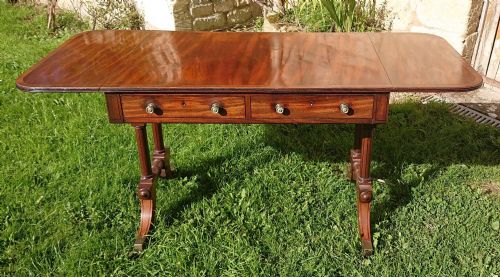


Twin Drawer Console Table
These twin drawer console table pieces span Regency, Victorian, and Georgian periods, offering practical surfaces in mahogany, yew wood, and rosewood.
Twin Drawer Console Table
A twin drawer console table typically manifests in the evidence through forms such as sofa tables, writing desks, and side tables. Buyers searching for a twin drawer console table encounter variations shaped during the 18th century, the Regency era, and the Victorian period.
Makers and craftsmen of the Georgian, Regency, and Victorian periods utilised drop leaves and dual drawer configurations to combine utility with domestic elegance. The selection available represents traditional cabinetmaking traditions spanning multiple centuries of British and European design.
How they were made
Cabinetmakers constructed these tables using solid hardwoods and figured veneers, selecting mahogany, rosewood, and yew wood for their durability and grain pattern. Secondary timbers provided structural stability for the framing and internal drawer components.
Joinery techniques involved precise mortise and tenon connections, dovetailing for the twin drawers, and the incorporation of hinged drop leaves supported by swing brackets. Surface decoration often included boxwood stringing and brass fittings to complement the timber figures.
Twin Drawer Console Table Retail Price Guide 2026
Typical asking prices for twin drawer console table among the pieces listed under this phrase on Sellingantiques today, from the lower quarter to the upper quarter. They describe what is for sale here now, not the wider market.
Listings span the 18th century, Regency period, and Victorian era, utilising materials such as mahogany, rosewood, yew wood, and marble.
What varies in quality
Quality in these tables depends on the selection of timber veneers, such as figured mahogany or burr walnut, and the precision of the cabinetmaker's joinery. Superior examples display seamless grain matching across the twin drawers and drop leaves, alongside crisp execution of decorative inlay.
The structural integrity of the base, whether styled after Regency pedestals or Georgian leg supports, dictates the overall refinement of the piece. Tables retaining their original brass hardware and proportional balance command greater appreciation among collectors.
The Twin Drawer Console Table Glossary
- Sofa table
- A rectangular occasional table traditionally designed to stand in front of a sofa, featuring drop leaves on either side and usually two drawers.
- Drop leaf
- A hinged flap on the side of a table that can be raised to extend the surface area or lowered when space is restricted.
- Stringing
- A narrow strip of contrasting wood inlaid into the surface of a piece for decorative border effect.
- Figure
- The natural pattern and grain configuration visible in wood, highly prized in species such as mahogany and yew.
Twin Drawer Console Table: Frequently Asked Questions
What is a twin drawer console table used for?
These tables served various domestic functions historically, ranging from writing and library tasks to general surface use behind seating.
Today, they adapt readily to hallways, living rooms, and studies as functional surface furniture with storage capacity.
How do I identify a Regency period piece?
Regency pieces often display classical architectural influences, dark timbers like rosewood or mahogany, and specific leg or pedestal formations.
Examining the construction methods, secondary woods, and hardware styles helps distinguish them from later Victorian or Edwardian revivals.
Are drop leaves practical for modern homes?
Drop leaves offer flexibility by allowing the table surface to expand or contract depending on available space.
Lowering the flaps reduces the overall footprint, making these tables suitable for rooms with limited floor area.
What woods were commonly used?
Mahogany and yew wood appear frequently across the listings, alongside rosewood, oak, and burr walnut.
Cabinetmakers selected these hardwoods for their strength, rich colour depth, and suitability for decorative veneering.