


Turquoise Silver Necklace
A turquoise silver necklace brings together bright blue stones and cool metalwork across Victorian, Arts and Crafts, and early twentieth-century designs.
Turquoise Silver Necklace
When searching for a turquoise silver necklace, buyers encounter a range of pieces spanning the nineteenth and twentieth centuries, including Victorian, Arts and Crafts, and Art Nouveau examples. These items appear as pendants, necklaces, and full parure sets combining silver settings with turquoise matrix or solid stones.
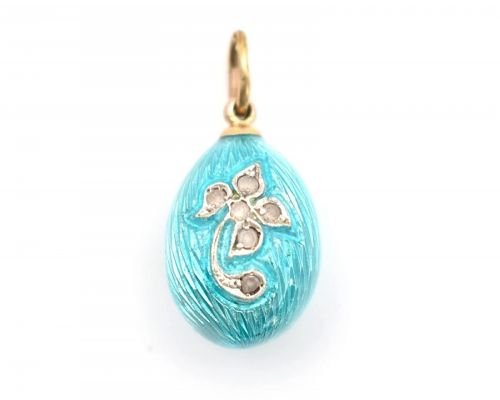
The pieces on this page most commonly show the hand of the Arts and Crafts movement or Victorian period, frequently incorporating pearls, enamel, or diamonds alongside the primary blue gems. Forms stretch from simple chain-hung pendants to elaborate festoon arrangements and imperial egg charms.
Origins across the selection include British workshops, French makers, and Russian ateliers, demonstrating how different regional traditions interpreted the combination of silver and turquoise. Buyers find everything from single drop pendants to matched sets featuring earrings and rings alongside the neck ornament.
How they were made
Maker's hands shaped these pieces using silver as the primary structural metal, often paired with gold in specific Victorian and early twentieth-century settings. Artisans mounted turquoise stones, both smooth cabochons and natural matrix variants, into hand-wrought bezels or filigree frameworks.
Workshops layered additional materials like enamel, blister pearls, coral, and rose-cut diamonds to enrich the designs. Filigree techniques and enamel applications appeared regularly alongside traditional metal fabrication during the Arts and Crafts era and the late nineteenth century.
Listings feature silver, gold, enamel, pearls, and diamonds alongside turquoise across Victorian and twentieth-century periods.
What varies in quality
The distinction between standard and finer examples rests on the complexity of the metalwork and the integration of secondary elements like enamel and pearls. Pieces featuring documented signatures or attributed workshop designs display superior hand-finishing in the silver bezel settings and chain links.
Stone selection also defines the tier of a piece, with high-grade natural turquoise matrix or uniform blue stones holding greater visual strength than lower-grade replacements. The preservation of original enamel work and intact gemstone clusters elevates the integrity of Victorian and Arts and Crafts pieces.
The Gaskins·Dorrie Nossiter·Liberty and Co
The Turquoise Silver Necklace Glossary
- Turquoise matrix
- Stone containing visible web-like host rock veins running through the blue material. This webbing adds distinct natural patterns to the face of the gem.
- Filigree
- Delicate metalwork formed from fine silver or gold threads soldered together in openwork scrolls. It frequently appears in Art Nouveau and Victorian pendant designs.
- Festoon
- A necklace featuring a curved drop of chains or swags suspended across the collarbone. Victorian examples often integrated turquoise stones along these draped links.
- Cabochon
- A gemstone shaped and polished with a smooth, rounded dome rather than faceted edges. Turquoise is almost universally cut in this manner to showcase its colour.
Turquoise Silver Necklace: Frequently Asked Questions
How do I care for turquoise jewellery?
Turquoise is a softer, porous stone that absorbs oils, cosmetics, and water easily. Clean silver settings carefully without submerging the stones in liquid cleaners.
Store the necklace away from direct sunlight and other hard jewellery pieces to prevent surface scratching and colour alteration.
Are these necklaces made of solid silver?
Most pieces utilise sterling or regional silver standards for the primary structure and chain work. Some Victorian examples combine silver fronts with gold backs or incorporate silver gilt.
Examining the metalwork reveals hand-fabricated construction rather than modern mass-produced casting methods.
What period do most pieces come from?
The selections span the late nineteenth century through the mid-twentieth century. Victorian and Arts and Crafts periods form the core of the available inventory.
Edwardian, Art Nouveau, and later Russian or French interpretations also appear frequently across the listings.
Can I wear a pendant necklace daily?
Historic necklaces handle regular wear if treated with proper care, particularly given the age of the delicate silver chains and settings. Removing the piece before sleeping or physical activity protects the mounting.
Checking the security of stone bezels and clasp mechanisms ensures safe daily use.